Occupy Cinema › Exhibition
The Dark Screen Dilemma: What the Loss of Baxter Avenue Theatres Means for Regional Film Culture
The closure of Louisville’s Baxter Avenue Theatres highlights a growing crisis for independent exhibition in mid, sized markets across North America.
By Occupy Cinema ·
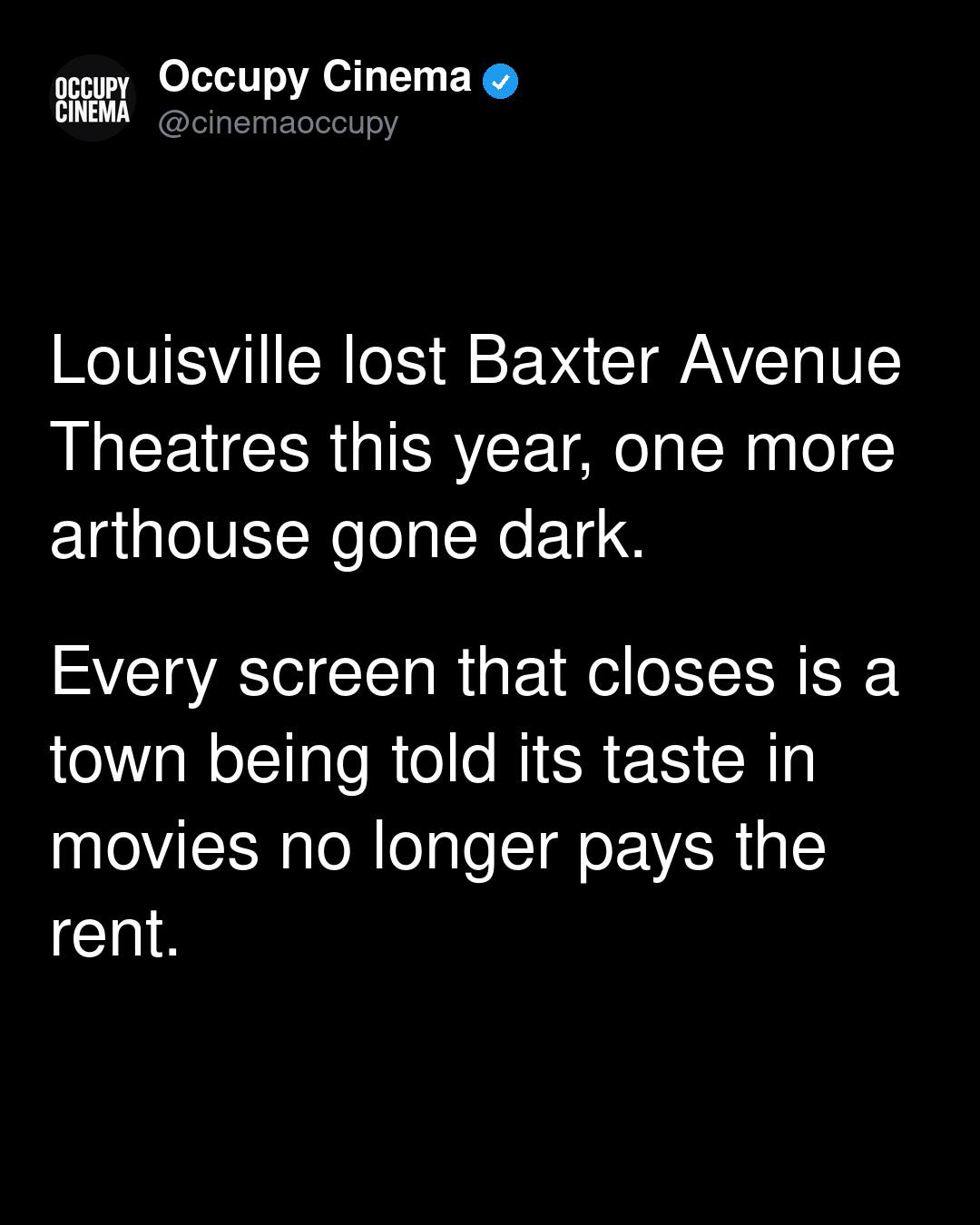
Another neighborhood marquee has turned off its lights. The shuttering of Baxter Avenue Theatres in Louisville, Kentucky, marks the end of a nearly three, decade run for one of the region's most crucial cinematic anchors. Tucked inside the Highlands' Mid City Mall, the eight, screen venue was far more than an ordinary multiplex. It was the rare mid, market cinema that balanced studio tentpoles alongside specialty titles from distributors like A24, Neon, and Searchlight Pictures. For moviegoers outside top ten media markets, venues like Baxter represented the single physical pipeline to award season contenders, foreign cinema, and low, budget American independents.
The math behind independent theater operations has become brutally steep. Soaring commercial lease terms, inflated utility expenses, and strict theatrical windowing policies have squeezed non, chain exhibitors to the brink. While nationwide box office totals recovered partially in recent years, the distribution ecosystem heavily favors massive tentpoles occupying multiple screens per venue. Specialty features that used to enjoy long, slow, burning word of mouth runs in neighborhood theaters now face compressed theatrical windows before landing on premium video on demand. When a film vanishes from screens after two weekends, the operating margins for single site operators collapse entirely.
The Mid, Market Specialty Screen Deficit
Independent exhibition relies on curated variety. When a regional theater closes, the loss reaches beyond a single zip code. It alters how film distribution functions across entire geographic corridors. Major exhibition chains frequently bypass non, tentpole titles in markets of Louisville's size, opting instead to stack auditoriums with wide releases from major legacy studios. According to reporting from IndieWire, specialty distributors increasingly struggle to secure consistent screens in mid, sized cities without specialized local partners willing to guarantee run times.
Without independent venues willing to split screens, audiences in smaller metros lose access to crucial festival favorites. Directors like Sean Baker or Kelly Reichardt built their early audience bases through regional arthouse runs where passionate theater programmers held screens open for weeks. As The Hollywood Reporter has documented in its coverage of exhibition trends, the extinction of mid, market independent screens forces specialty cinema into a bicoastal echo chamber, concentrating arthouse viewership almost exclusively in New York and Los Angeles.
Survival Strategies and Community Ownership
The closure of Baxter Avenue Theatres underscores a vital structural shift in how arthouse cinema survives. Across the country, the classic commercial model for independent theaters is rapidly giving way to non, profit operational structures. Institutions like the Belcourt Theatre in Nashville, the Music Box Theatre in Chicago, and the Coolidge Corner Theatre in Brookline have insulated themselves from real estate volatility by converting into community supported non, profits. These venues treat film exhibition as a public service, funding operations through memberships, educational programming, grants, and philanthropic donations rather than ticket sales alone.
When a commercial independent theater goes dark without a non, profit safety net, recreating that infrastructure takes years. Digital projection equipment, specialized audio calibration, dual, format archival setups, and long term film distribution relationships cannot be rebuilt overnight. Cities that lose their legacy art houses often find that replacement screens never materialize, leaving thousands of film lovers reliant on home streaming devices or long commutes to distant suburbs.
Film culture does not live inside an algorithm. It exists in shared auditoriums where strangers sit in the dark, reacting to the same unspooling frames. Every time a neighborhood venue like Baxter Avenue Theatres locks its doors, a community loses its primary venue for collective cultural discovery. The survival of independent cinema now rests squarely on structural support, local advocacy, and audience members actively choosing to buy a ticket before the lights go out for good.
Related reading: Cinema Treasures: A New Look at Classic Movie Theaters.