Occupy Cinema › Business
Venice 83: Maggie Gyllenhaal Confronts Financing Bias in Women's Filmmaking
Jury President Maggie Gyllenhaal highlighted systemic financing hurdles for female directors at the 83rd Venice International Film Festival, questioning the industry's perception of 'high art' in front of festival programmers.
By Occupy Cinema ·
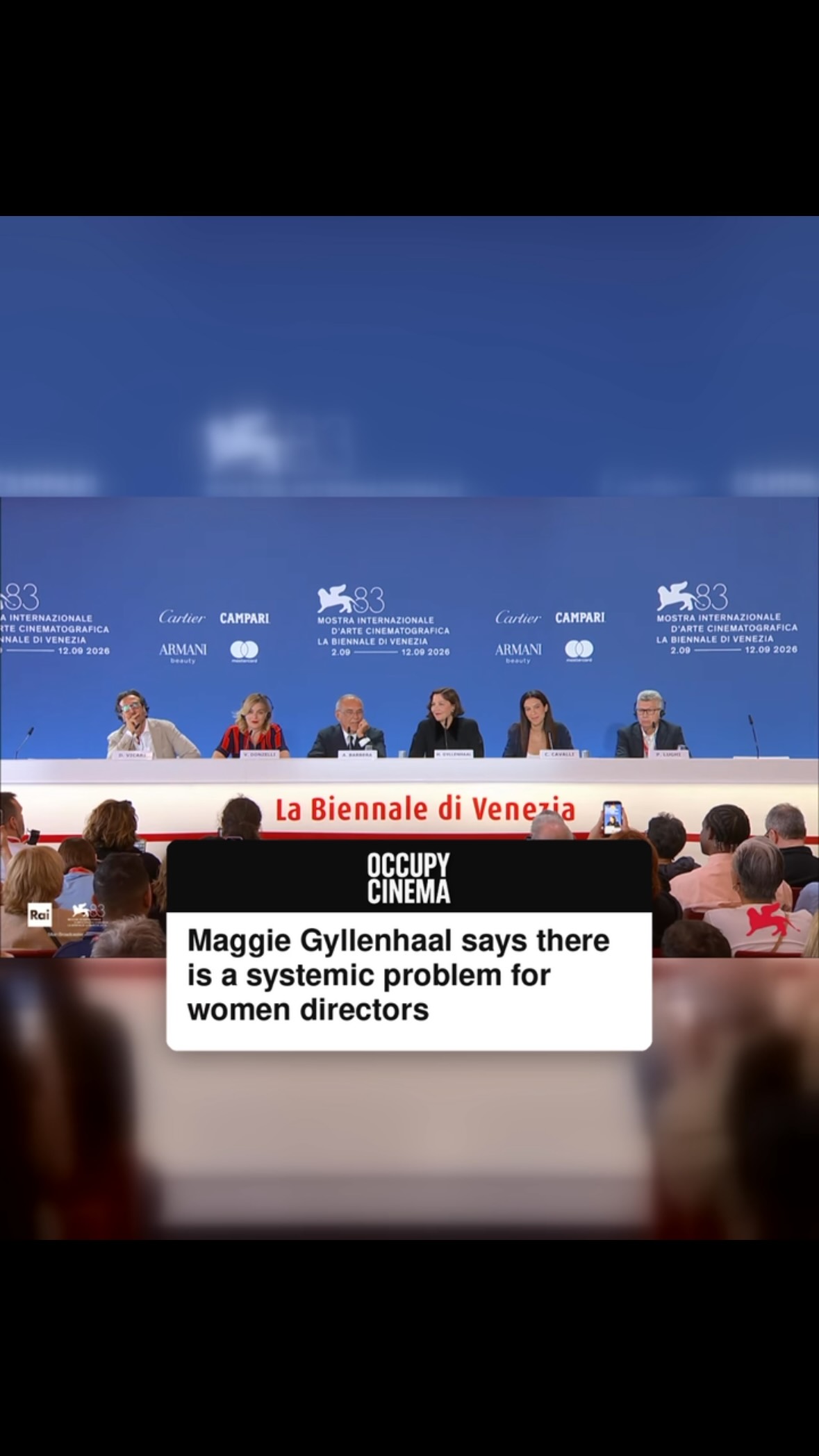
The 83rd Venice International Film Festival opened with a familiar and frustrating statistic: only two films directed by women in its prestigious competition lineup. Presiding over the main jury, actor and filmmaker Maggie Gyllenhaal wasted no time in addressing the glaring disparity. Her remarks cut directly to the heart of a systemic issue that continues to plague the film industry, particularly in Europe's storied festivals.
Gyllenhaal articulated a clear problem: securing financing remains disproportionately difficult for women directors. This isn't a new observation, but hearing it from a prominent industry figure, in a high-profile setting, carries significant weight. Her own directorial debut, The Lost Daughter, garnered critical acclaim and an Oscar nomination for Best Adapted Screenplay, underscoring her firsthand experience with both the creative and logistical challenges of filmmaking. The film, distributed by Netflix, bypassed traditional studio gatekeepers, a path many female directors are increasingly forced to consider.
The Financing Wall: A Perennial Problem
The financing barrier is not merely anecdotal. Studies consistently show that films by women receive significantly less funding than those by men. The European Audiovisual Observatory, for instance, has repeatedly documented the persistent gender gap in film production budgets and financing sources across the continent. This impacts not only the scale of projects women can undertake but also the subjects they are able to explore. Gyllenhaal pointedly asked whether the lived experiences and thematic concerns often explored by female filmmakers are simply not perceived as "high art" by those who control the purse strings. This provocative question, delivered with festival programmers present, challenged the very criteria by which films are greenlit and, subsequently, selected for major festivals.
The economic reality of film production dictates that a project's perceived commercial viability often trumps artistic merit in the eyes of financiers. While independent cinema frequently pushes boundaries, even in that sphere, films by women often face skepticism regarding their audience appeal or international sales potential. This perception can lead to smaller budgets, less marketing support, and ultimately, fewer opportunities for exposure. The festival circuit, ostensibly a champion of diverse voices, inevitably reflects these upstream financing biases.
Venice's Track Record and Industry Accountability
Venice has faced criticism over its gender representation before. While festivals like Cannes and Berlin have also struggled, Venice has at times been singled out for its particularly low numbers of female directors in competition. The festival's leadership, including artistic director Alberto Barbera, has often cited a lack of submissions from female directors or the quality of available films as reasons. However, Gyllenhaal's intervention reframes the debate, shifting focus from selection statistics to the foundational issue of production access. It suggests that the problem isn't just about what festivals choose, but what films are even allowed to be made in the first place.
This year's competition featured 21 films, with only two from female directors: Brady Corbet's The Brutalist, co-directed by Mona Fastvold, and Anne Fontaine's Bolero. While these films represent diverse storytelling, their scarcity highlights a broader failure. The industry's reliance on established formulas and perceived market safety often sidelines narratives that don't fit traditional molds. Gyllenhaal's remarks serve as a direct challenge to the decision-makers, financiers, producers, and festival curators alike, to re-evaluate their criteria and actively dismantle the systemic barriers that prevent a truly equitable cinematic landscape. This isn't just about optics, it's about the very future of storytelling.
Related reading: Cinema Treasures: A New Look at Classic Movie Theaters.