Occupy Cinema › Business
The Micro-Budget Hustle and the Comedy of Bit-Part Stardom
An actor from Curry Barker's breakout indie thriller takes his single credited scene on a street tour, turning the economics of modern viral filmmaking into deadpan performance art.
By Occupy Cinema ·
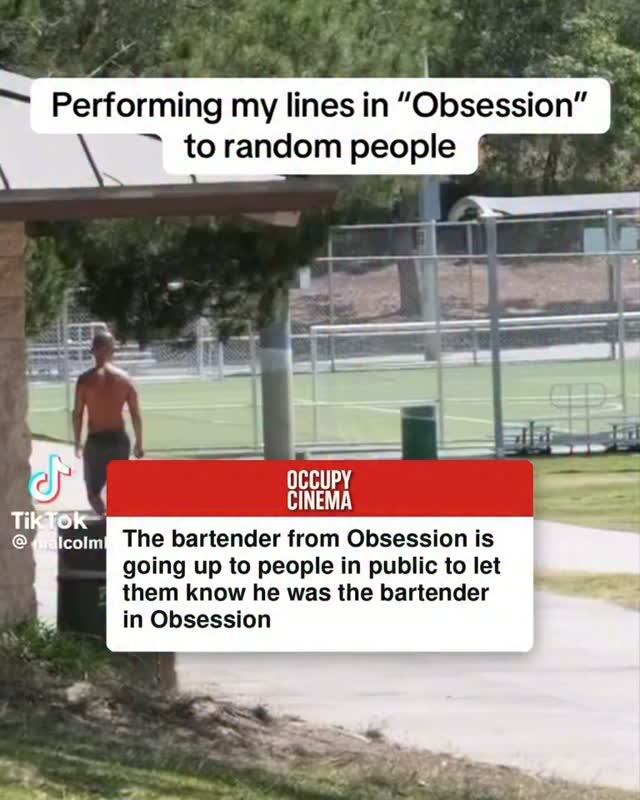
The intersection of low-budget genre filmmaking and relentless self-promotion has found its weirdest mascot. Malcolm Kelner, who played a fleeting bartender in director Curry Barker's suspense thriller Obsession, turned his single on-screen credit into an ongoing piece of guerrilla street comedy. Kelner approaches unsuspecting pedestrians, delivers his dialogue word for word, and pauses for recognition that never comes. It is an exercise in intentional futility, and it captures the strange dynamics of independent visibility in 2025.
It functions as a sharp parody of Hollywood self-importance, but it also reflects the operational reality of contemporary micro-budget cinema. In an era where independent genre projects can explode across social platforms and digital distribution channels overnight, the bridge between viral reach and traditional mainstream stardom has never been stranger. Coverage across independent film circuits increasingly tracks how digital-native creators bypass legacy gatekeepers entirely, yet the cultural footprints of those projects follow entirely new rules.
The Guerrilla Playbook of New Genre Cinema
Barker wrote, directed, and edited the project as a lean, self-contained showcase. The production relied on tight framing, rapid editing rhythms, and efficient digital cinematography to maximize tension on a modest budget. This DIY infrastructure mirrors the trajectory of rising genre directors who build massive core audiences through independent digital channels before ever stepping foot onto a studio lot. When production budgets stay strictly controlled, distribution cannot rely on traditional multi-million-dollar billboard campaigns; it relies on algorithmic curiosity, digital word of mouth, and cast members willing to hustle across social feeds.
Kelner's street tour leans directly into that dynamic. By transforming a brief supporting role into interactive comedy, he exposes the stark gap between collective view counts and individual celebrity. A genre title can rack up millions of impressions and impassioned online discourse, yet its working actors remain completely anonymous to the average person standing at a crosswalk.
Redefining Visibility in the Algorithm Era
The film business has historically operated on the currency of traditional name recognition. For decades, character actors built sustainable careers through recurring studio bit parts, syndication royalties, and print visibility documented by industry observers. Today, modern distribution delivers unprecedented scale while simultaneously fragmenting cultural memory. Audiences consume vast amounts of high-concept independent content, yet few viewers register the faces filling out the background of the frame.
Kelner's comedy works precisely because it embraces that awkward reality. Instead of lamenting the disposable nature of online attention, he weaponizes it as material. For independent filmmakers operating outside legacy studio machines, the takeaway is clear: delivering a completed feature is only half the battle. Surviving the post-release cycle requires finding creative ways to keep audiences talking, even if nobody at the local diner remembers your dialogue.
Related reading: Reflections: Twenty-One Cinematographers at Work.