Occupy Cinema › Craft
Universal's 'Wicked' Sets a Rare Representation Benchmark in Blockbuster Cinema
Marissa Bode breaks ground as the first wheelchair, using actor to play Nessarose, highlighting Hollywood's ongoing gap between disability demographics and screen representation.
By Occupy Cinema ·
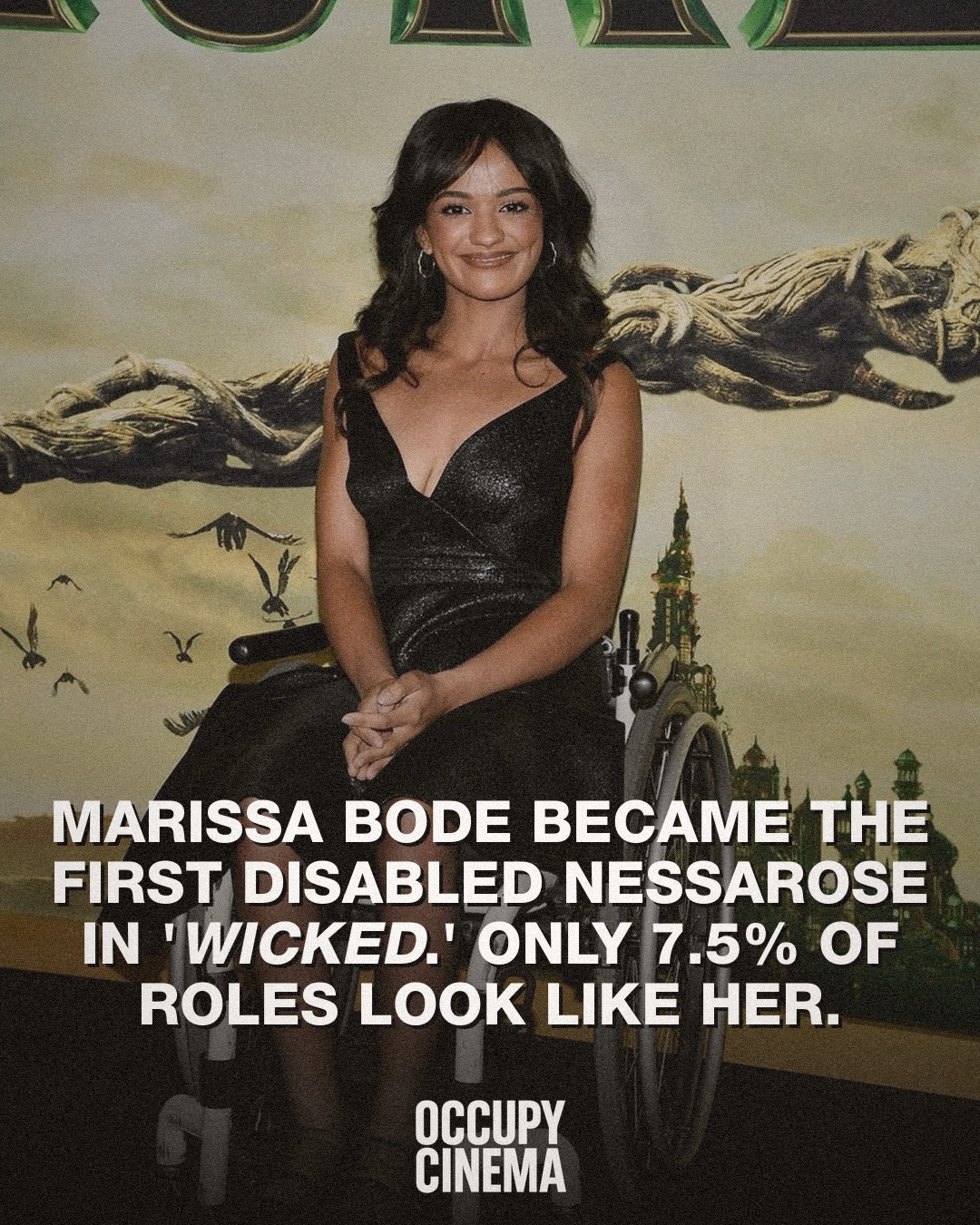
Hollywood loves to sell progress on red carpets, but the ledger sheets tell a slower story. Universal Pictures launched its multi, hundred, million, dollar adaptation of Wicked with massive box office fanfare, bringing Broadway's premiere spectacle to global screens. Amid the gravity, defying tracking shots and lavish practical sets constructed outside London, the film quietly passed a milestone decades in the making. Director Jon M. Chu cast Marissa Bode as Nessarose, making her the first wheelchair, using performer to play Elphaba's younger sister in any professional mounting of the musical.
The casting choice was not merely a ceremonial triumph; it was a long, overdue recalibration for studio tentpoles. For decades, stage and screen productions of Stephen Schwartz and Winnie Holzman's hit musical relied on non, disabled performers to portray Nessarose, relying on physical acting to mimic mobility impairments. Bode, who has used a wheelchair since age eleven following a car accident, stepped directly into a major studio production for her feature film debut. Her presence on set forced a recalibration of large, scale film logistics, requiring production designers and choreographers to integrate actual spatial accessibility into the visual language of Munchkinland.
The broader numbers across the film ecosystem remain stubbornly low. According to the latest data from the UCLA Hollywood Diversity Report, only 7.5 percent of actors in 2024's top 104 English, language theatrical releases publicly identified as having a disability. While that figure marks a microscopic uptick from 7.1 percent in 2023, it exposes a massive demographic void when measured against national statistics. The Centers for Disease Control and Prevention reports that 28.7 percent of American adults currently live with a disability, meaning nearly one in three citizens sees virtually no authentic reflection in mainstream theatrical cinema.
Authentic Process Behind the Camera
Industry observers have pointed out that disability representation in studio filmmaking often gets relegated to low, budget indie dramas or prestige projects focused entirely on illness. Blockbusters traditionally bypass performers with physical disabilities, citing tight insurance parameters, fast, paced action choreography, or physical location constraints. According to reporting by Variety, the production team on Wicked chose to build accessible soundstages and tailored camera rigs specifically to ensure Bode could maneuver without structural hindrances, establishing a template for how major studios can handle inclusive physical infrastructure.
This logistical pivot highlights a deeper creative truth for modern blockbusters. Authentic casting changes how scenes are blocked, how lenses frame physical movement, and how castmates interact within a three, dimensional space. When an actor who uses a wheelchair navigates a set built with genuine ramp infrastructure, the cinematography gains an organic grounding that digital trickery or performance simulation cannot replicate. Bode's dynamic screen chemistry with her co, stars stems directly from this lived physical reality, providing an emotional anchor to Nessarose's dramatic trajectory.
Closing the Demographic Gap
The commercial success of Wicked proves that authentic disability casting carries zero financial liability for major distributors. Universal committed substantial capital into a two, part cinematic event, betting that audiences wanted narrative depth alongside pop, culture grandeur. The film's record, breaking opening frames demonstrated that inclusive casting decisions do not detract from a film's commercial engine; rather, they bolster narrative authority in an era where audiences demand genuine craft over superficial studio posturing.
Until major studios standardize accessible production practices and normalize authentic casting across genres, milestones like Bode's will remain exceptions rather than standard industry protocols. A four, tenths, of, a, percent rise in disabled actor representation year over year is not a systemic victory; it is a statistical rounding error. The success of Wicked proves that physical accessibility on set yields stronger cinematic craft, leaving studio executives with fewer excuses when greenlighting their next wave of global tentpoles.
Related reading: Respect for Acting.