Occupy Cinema › FEATURED
Mary Beth Barone and Joe Alwyn Set to Lead New York Romantic Comedy 'Still We Met'
Comedian Mary Beth Barone writes and stars alongside Joe Alwyn in 'Still We Met', directed by Zackary Drucker and executive produced by Lena Dunham.
By Occupy Cinema ·
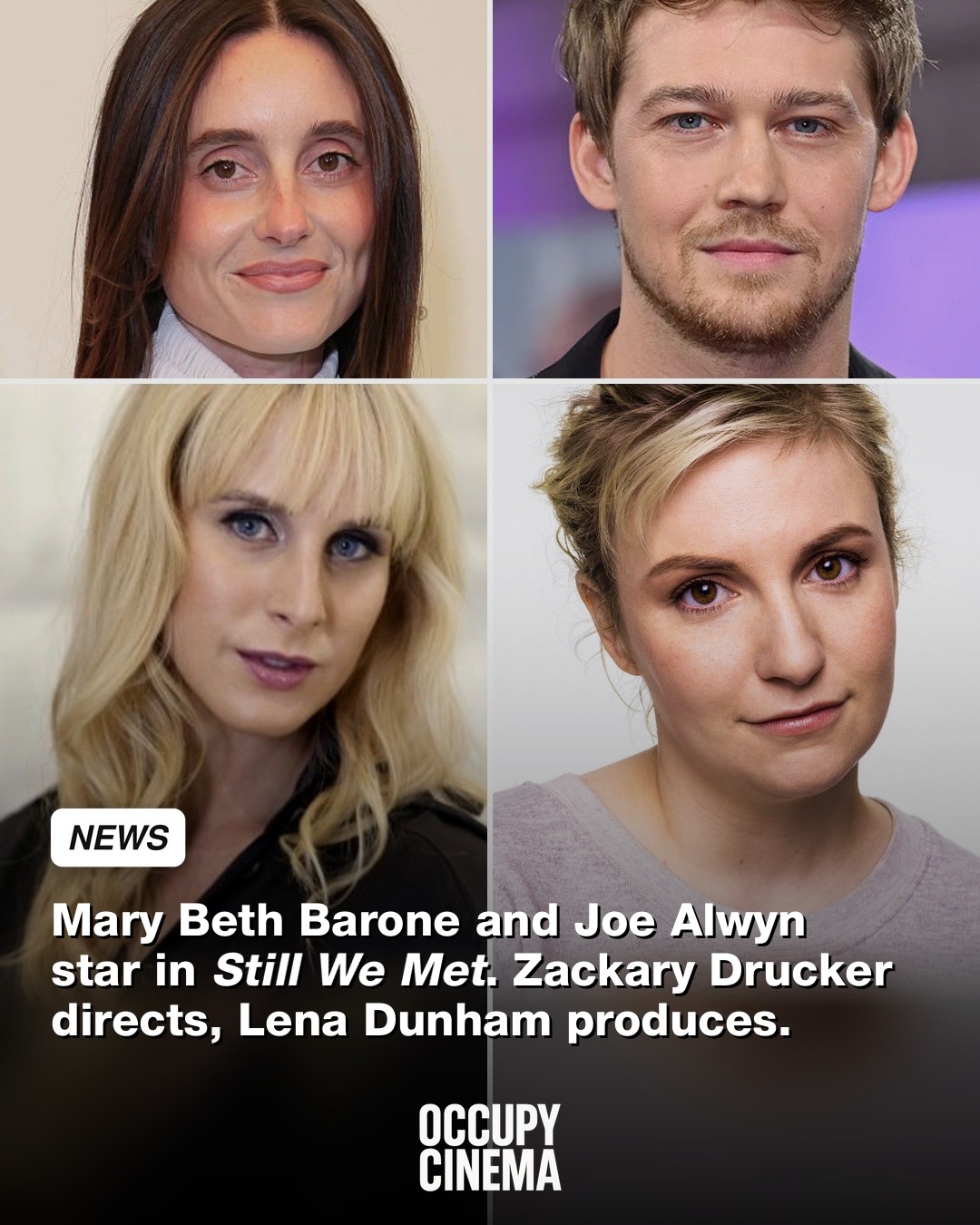
The indie romantic comedy is finding its second wind in New York City. Comedian Mary Beth Barone is set to star opposite Joe Alwyn in Still We Met, an original feature written by Barone and inspired by her own life experiences. Transgender filmmaker and artist Zackary Drucker will direct, marking her narrative feature debut after making waves in documentary non-fiction. The project represents a targeted alignment of rising comedic talent, established international star power, and seasoned independent producers looking to capture lightning in a bottle on the streets of Manhattan.
The financing and production architecture behind the project brings significant indie pedigree to the table. Lena Dunham and Michael Cohen are executive producing under their Good Thing Going banner, alongside production companies Assemble Media and Irony Point. Irony Point has quietly built one of the most enviable track records in contemporary comedy, having backed acclaimed television projects like I Think You Should Leave with Tim Robinson and Broad City. Industry reporting from trade outlets like Deadline underscores how nimble production houses are leaning into performance-driven, location-centric comedies that keep overhead manageable while maximizing talent visibility.
At its core, Still We Met relies on a classic, enduring cinematic device: the single-night wander. Barone plays a woman standing at a personal and professional crossroads who encounters a charming British stranger, played by Alwyn. Together, the pair spend a single night traversing the city. It is a formula that echoes Richard Linklater's landmark Before trilogy as well as recent indie hits like Raine Allen-Miller's Rye Lane. By restricting the timeline to twelve hours and the canvas to the concrete grid of New York, the script forces intimacy, rapid character development, and conversational agility.
For Barone, the film marks a major leap from stand-up stages and digital platforms into feature-length narrative storytelling. Over the past several years, Barone has cultivated a distinct, dry comedic voice through her stand-up specials, live shows, and successful podcast appearances. Her humor balances sharp cultural observation with self-effacing vulnerability, an aesthetic that fits comfortably within the current appetite for creator-driven comedy. Stepping into both the lead role and the screenwriter's chair puts her in direct conversation with predecessors like Dunham, whose Tiny Furniture premiered over a decade ago and established a blueprint for voice-driven indie cinema.
Joe Alwyn's involvement adds an intriguing dynamic to the project's casting calculus. The British actor has methodically curated a filmography rooted in auteur cinema, working with directors like Yorgos Lanthimos on The Favourite and Kinds of Kindness, as well as Claire Denis on Stars at Noon. Choosing a compressed, dialogue-dense American indie rom-com represents an intentional shift in territory for Alwyn. His presence provides international commercial leverage and a steady, understated counterweight to Barone's sharp comedic timing.
A New Aesthetic for the Urban Romance
The appointment of Zackary Drucker as director signals that Still We Met will aim for something visually richer than standard multi-camera comedy staging. Drucker earned widespread critical acclaim for co-directing the HBO documentary series The Lady and the Dale and the Sundance-selected documentary feature The Stroll. Her background in visual arts and documentary filmmaking brings a raw, observant lens to the table. As trade coverage in Variety has frequently noted, documentary directors transitioning to narrative features often bring an acute sensitivity to location, natural light, and unscripted texture.
Shooting on location in New York City during the autumn months provides an unmistakable visual palette. The city has long served as a crucial character in romantic cinema, from When Harry Met Sally to Crossing Delancey. However, modern independent productions face steep practical and financial challenges when shooting on New York streets. Success requires efficient scheduling, lean camera packages, and nimble crews capable of capturing authentic urban energy without choking under logistical bloat.
The presence of Good Thing Going as executive producers brings additional industry weight. Lena Dunham has maintained a consistent footprint in executive producing projects that champion idiosyncratic female voices. Through Good Thing Going, Dunham and Cohen have prioritized projects that balance sharp writing with distinct visual perspectives. Partnering with Assemble Media, a production outfit known for bridging literary properties and original screenplays with independent capital, gives Still We Met a solid framework as it approaches principal photography.
Navigating the Indie Comedy Marketplace
The timing of the production arrives during a pivotal moment for the film industry. The theatrical landscape for mid-budget comedies has faced severe structural shifts over the last decade, with streaming platforms swallowing much of the genre's traditional real estate. However, festival acquisition trends reported by outlets such as IndieWire reveal a renewed interest in tightly budgeted, talent-led romantic comedies that can generate word-of-mouth momentum. Buyers are actively seeking films with clear hook concepts, recognizable co-stars, and strong authorial voices that stand out in crowded digital catalogs.
By keeping the narrative tight and the locations focused, Still We Met positions itself as an attractive proposition for global distributors. High-concept, two-hander films offer low downside risks and high potential returns if the chemistry between the leads connects with audiences. In an era where blockbuster budgets regularly balloon past two hundred million dollars, lean independent productions budgeted in the low to mid single-digit millions offer a sustainable alternative for creative risk-taking.
As cameras prepare to roll in New York this fall, Still We Met represents a test case for contemporary independent comedy. It combines a rising writer-performer with an established dramatic actor, helmed by a director with a documentary eye and backed by producers who know how to navigate the current distribution landscape. If the film delivers on its promise, it will reinforce the enduring truth that compelling characters, sharp dialogue, and a single night in New York remain one of cinema's most reliable engines.