Occupy Cinema › Business
Milwaukee Film Buys Historic Downer Theatre, Launching $8 Million Restoration Campaign
The non-profit cinema operator secures the 1915 landmark, adding 35mm projection and permanent institutional stability to the Upper Midwest exhibition circuit.
By Occupy Cinema ·
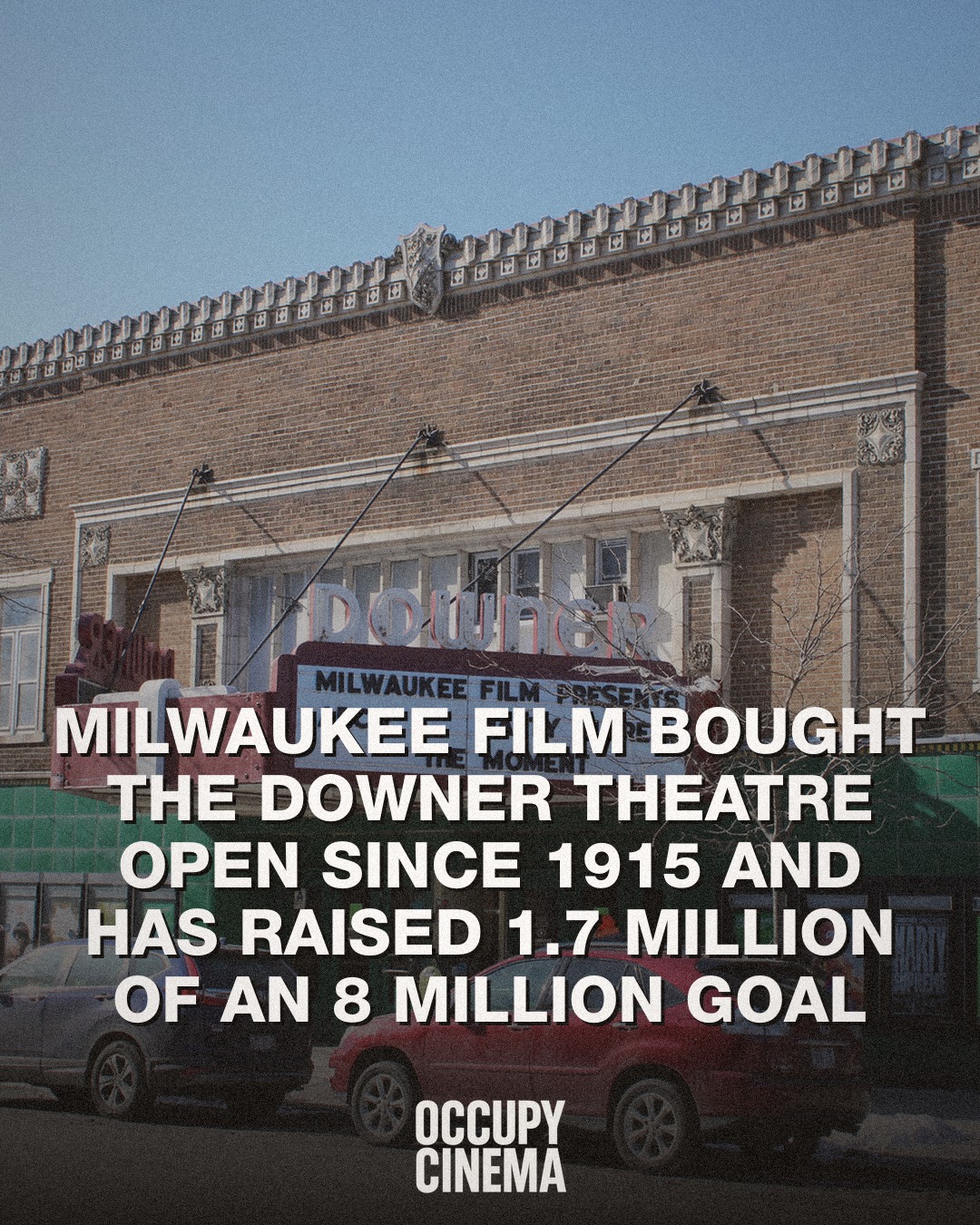
Real estate ownership is the final frontier for independent art-house survival. When commercial landlords hike rents or pivot to mixed-use redevelopment, historic screens usually end up dark. Milwaukee Film just made sure that will not happen to the Downer Theatre. The non-profit arts organization finalized the outright acquisition of the 1915 picture palace from real estate firm Bridge33 Capital, turning a precarious operating lease into permanent institutional custody.
The purchase anchors an ambitious $8 million capital campaign designed to future-proof the twin-screen venue. Backed by a $500,000 lead gift from the Richard and Ethel Herzfeld Foundation, the fund has already secured $1.7 million in committed capital. The renovation blueprint addresses critical mechanical systems, overhauls ADA accessibility infrastructure, installs contemporary seating, and crucially, reintroduces archival 35mm celluloid projection to the auditorium.
The Business of Non-Profit Stewardship
The Downer's trajectory reflects a broader structural shift across the American exhibition landscape. Landmark Theatres, long the primary commercial chain for specialty distribution in secondary markets, abruptly abandoned the century-old location in late 2023. Commercial exhibitors have repeatedly buckled under the weight of uneven specialty box office returns and inflexible commercial leases. Non-profit cultural institutions, bolstered by municipal memberships and philanthropic foundations, have proven far more durable.
As documented across trade coverage at IndieWire, regional film societies are increasingly transitioning into the role of property owners. The strategy mirrors successful historic preservation models established by venues like Nashville's Belcourt Theatre and the Coolidge Corner Theatre in Massachusetts. When non-profit operators own the underlying real estate, the volatile pressure to maximize per-seat concession yields on opening weekend yields to curated repertory calendars, educational outreach, and regional film festival showcases.
Preserving Celluloid and Main Street Commerce
Adding 35mm capability to the Downer Theatre is an intentional market positioning move rather than simple nostalgia. In an era where directors such as Christopher Nolan and Quentin Tarantino actively champion photochemical distribution, dual-format projection creates substantial programming advantages. Archival prints from major studio vaults require certified photochemical equipment; venues without physical film transport systems remain locked out of prestigious retrospective touring packages.
The secondary economic returns for the surrounding neighborhood are equally clear. Urban cultural studies confirm that single-screen and twin-screen art houses act as high-frequency foot-traffic anchors. Municipal non-profit data indicates that every dollar spent at the Downer box office generates an estimated $1.50 in secondary economic activity for adjacent restaurants, bars, and retail shops. The venue functions as an economic engine for the East Side commercial corridor.
By taking title to the Downer Theatre, Milwaukee Film has insulated the city's oldest operating cinema from the speculative swings of commercial real estate. An $8 million capital target represents a major fundraising lift, but the strategic calculation is clear: an organization cannot be displaced from property it holds on the balance sheet. In the unforgiving modern theatrical market, property deeds remain the most effective preservation tool available.
Related reading: The Prestige [4K Ultra HD + Blu-ray].