Occupy Cinema › Box Office
The $4.6 Billion Yellow Behemoth: How Illumination Mastered Box Office Economics
Illumination turned $80 million budgets into the highest grossing animated franchise in cinema history. Love them or hate them, the Minions rule multiplexes.
By Occupy Cinema ·
The math of modern theatrical animation is brutal, except at Illumination. Universal's animation house does not chase $200 million budgets or prestige auteur angst. They build efficient slapstick engines designed for absolute global conversion. With total franchise grosses crossing $4.6 billion, the Despicable Me and Minions ecosystem stands as the highest grossing animated franchise in cinema history.
The strategy began in 2010 when producer Chris Meledandri launched Despicable Me. While Pixar spent upwards of $175 million per film perfecting volumetric lighting and realistic physics, Illumination capped production costs around $69 million to $80 million. Co, directors Pierre Coffin and Chris Renaud relied on silent era physical comedy, high contrast character design, and streamlined pipeline animation through Mac Guff in Paris. The result was pure, frictionless kinetic comedy that translated instantly across foreign markets.
The $80 Million Slapstick Engine
That cost control remains the studio's sharpest weapon. When Minions: The Rise of Gru landed in 2022, it carried an estimated budget of roughly $80 million. It went on to earn over $930 million worldwide, according to theatrical tracking data from Box Office Mojo. Comparatively, Disney's Lightyear cost a reported $200 million that same summer and stalled out under $230 million. Illumination does not need a movie to break cinematic ground to achieve a massive return on investment. They need tight 90 minute runtimes, clear sight gags, and relentless brand discipline.
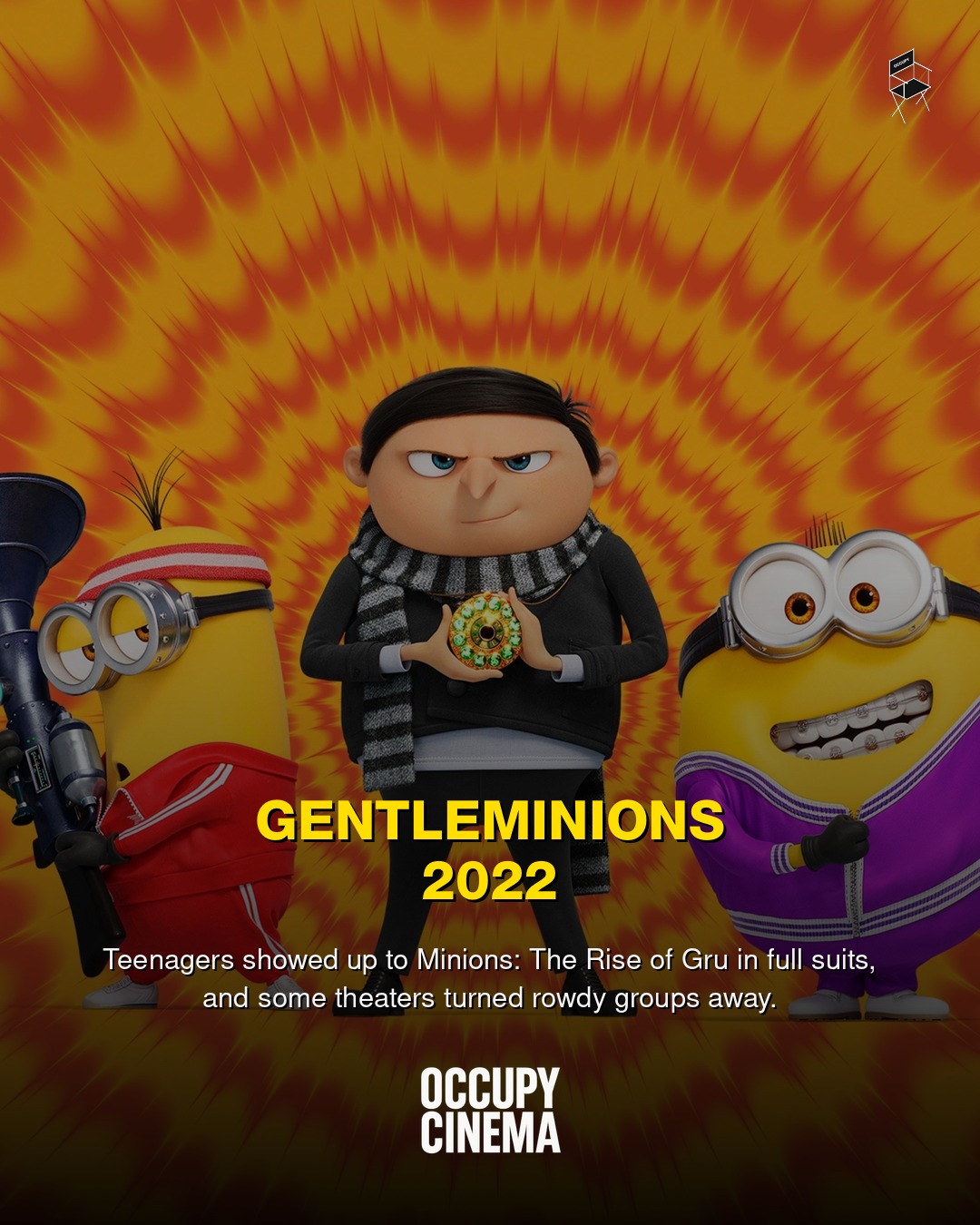
The cultural impact of these yellow henchmen reached an absurd peak during the Gentleminions phenomenon in the summer of 2022. Driven by viral social media trends, legions of teenagers dressed in formal suits flooded multiplexes globally, ironically applauding and occasionally disrupting screenings. Some British cinema chains were forced to ban suit wearing groups entirely to maintain order. It was a bizarre moment where corporate property, internet irony, and actual box office turnout converged, proving that the characters had transcended mere screen time to become a populist ritual.
Artistic Plague or Populist Triumph?
Critics frequently dismiss the franchise as loud visual noise tailored for short attention spans. The narrative structures are deliberately simple, leaning heavily on musical numbers, gibberish dialogue, and physical humiliation. Yet, from a craft perspective, the character animation executes classic squash and stretch principles with surgical precision. Coffin, who personally voices the Minions using an improvised blend of French, Spanish, Italian, and English food terms, built a universal language that sidesteps cultural barriers entirely.
That broad accessibility has turned the studio into a box office fortress. Industry analysis from Deadline underscores how Illumination consistently captures family demographics across multi generational lines. While rival animation divisions struggle with shifting streaming windows and inflated overhead, Illumination maintains its lean manufacturing model.
Whether film purists view the yellow horde as a cultural plague or a theatrical savior matters little to the balance sheet. Illumination proved that low overhead, high gag density, and aggressive physical comedy can outperform prestige budgets every single time. As long as multiplexes need guaranteed foot traffic, the Minions will continue to dictate the rhythm of commercial animation.
Related reading: High-Rise: A Novel.