Occupy Cinema › Film News
UK Performers Demand Voice Copyright: A New Front in the AI Battle
Over 80 prominent British actors have signed an open letter, urging the UK government to recognize individual ownership of vocal likenesses. The move highlights escalating concerns over AI voice cloning and its profound implications for both entertainment and public safety.
By Occupy Cinema ·
The Fight for Vocal Identity
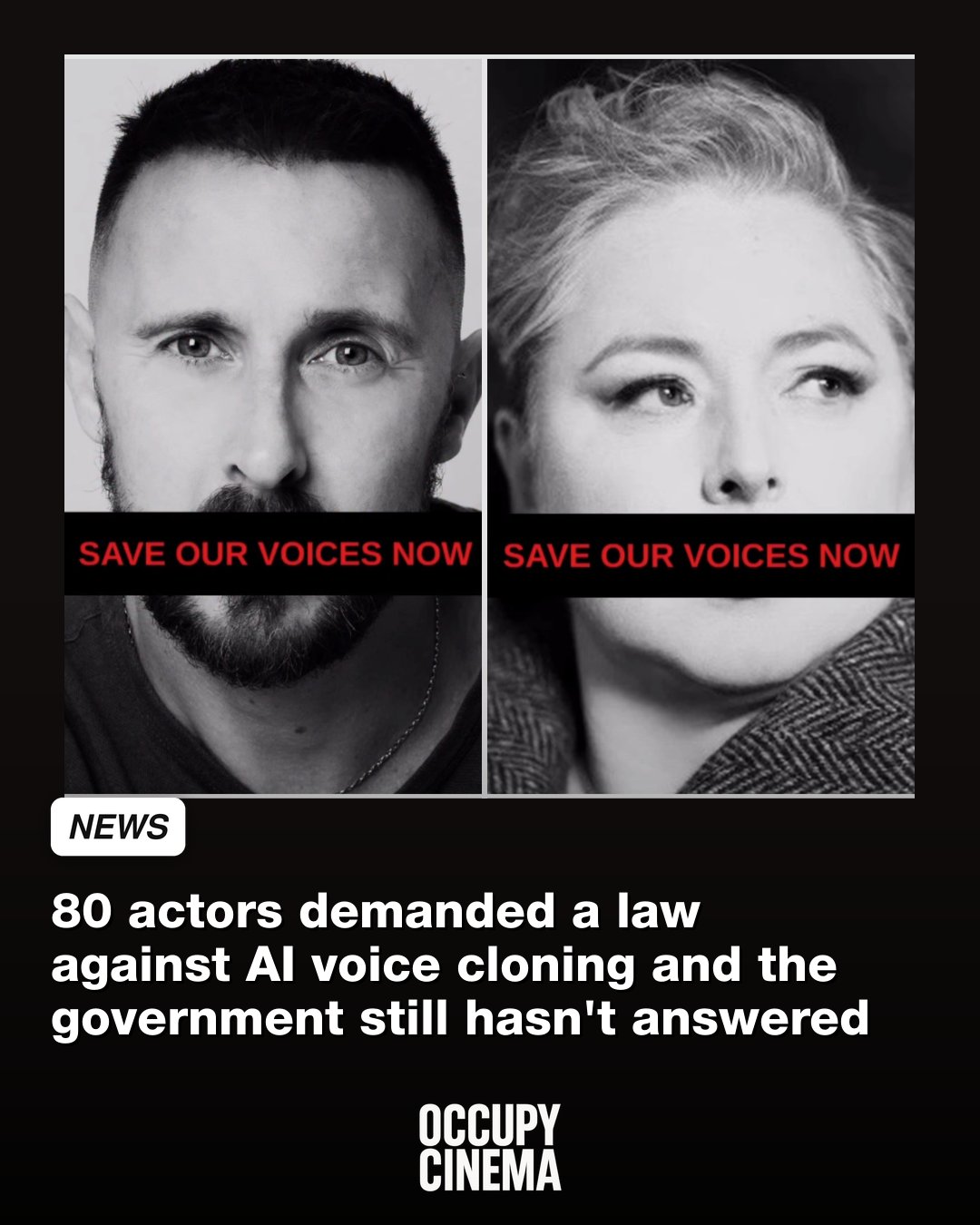
A formidable collective of over 80 British performers has formally petitioned the UK government, demanding enforceable copyright ownership for individual voices. This unprecedented call to action, backed by stars like Nicola Coughlan of Bridgerton, Hugh Bonneville from Downton Abbey, Matt Lucas, and Luke Evans, underscores a rapidly escalating crisis at the intersection of entertainment, technology, and personal rights. The industry faces a reckoning as generative AI tools become indistinguishable from reality, posing an existential threat to performers' livelihoods and personal security.
The impetus for this campaign is stark. Peter Caulfield, who initiated the movement, warns that sophisticated AI systems can clone a voice from a mere three seconds of audio. This technological leap has direct, alarming consequences beyond the silver screen. Reports indicate a significant societal impact, with approximately 28 percent of UK adults having already been targeted by voice cloning scams. The problem extends far past Hollywood or Pinewood Studios, infiltrating the daily lives of millions and eroding trust in digital communication.
The Industry's Inertia and Impending Legislation
The entertainment sector has been grappling with the implications of AI for months, particularly in the wake of the WGA and SAG-AFTRA strikes in Hollywood, where AI safeguards were a central negotiation point. Performers worldwide are increasingly aware that their unique vocal qualities, once considered an intangible asset, are now a vulnerable digital commodity. The UK government's response, or lack thereof, has been a growing point of contention. As Deadline reported, the prevailing answer from Westminster has been inertia, not proactive legislation, leaving a vacuum where legal protections should be.
This campaign is not merely about protecting actors' residuals; it is about establishing a fundamental right to one's own identity in the digital age. Without clear legal frameworks, performers risk having their voices used in perpetuity, for any purpose, without consent or compensation. This could mean unauthorized voice-overs, deepfake audio in commercials, or even malicious content. The current legal landscape is ill-equipped to handle such complex issues, operating on outdated definitions of intellectual property that predate the generative AI boom.
The economic stakes are immense. The global voice acting market alone is projected to reach billions, and the ability to replicate voices instantly and cheaply could devalue human talent dramatically. Studios and advertisers, keen to cut costs, might opt for synthetic voices over human performers, creating a downward pressure on wages and opportunities. This is not a hypothetical future; it is already happening in nascent forms. The demand for enforceable copyright is a pre-emptive strike against a future where human voice work becomes obsolete without fair compensation or control.
The signatories to the letter represent a broad swathe of the British acting community, lending significant weight to the petition. Their collective voice amplifies a concern that affects not just A-listers, but every working performer. The call for a "right to voice" is a plea for recognition of individual sovereignty over one's unique vocal signature, arguing that it is as integral to identity as a photograph or a signature. Such legislation would set a crucial precedent, not only for the UK but potentially for other nations grappling with similar challenges.
The entertainment industry, often a bellwether for broader societal shifts, is at the forefront of this battle. As technology outpaces legislation, the onus falls on governments to act decisively. Granting enforceable copyright for voices would provide a vital shield against exploitation, securing the future for voice artists and offering a blueprint for protecting personal digital identities across all sectors. The silence from policymakers is deafening, and the industry awaits a legislative response that matches the urgency of the threat.
Related reading: A Challenge for the Actor.