Occupy Cinema › Film News
Neon Unearths William Greaves' Lost Harlem Doc, Sets Unusual Festival Rollout
A long-lost documentary from pioneering filmmaker William Greaves, unfinished since 1972, is finally seeing the light of day. Neon is distributing, with an unprecedented festival strategy already underway.
By Occupy Cinema ·
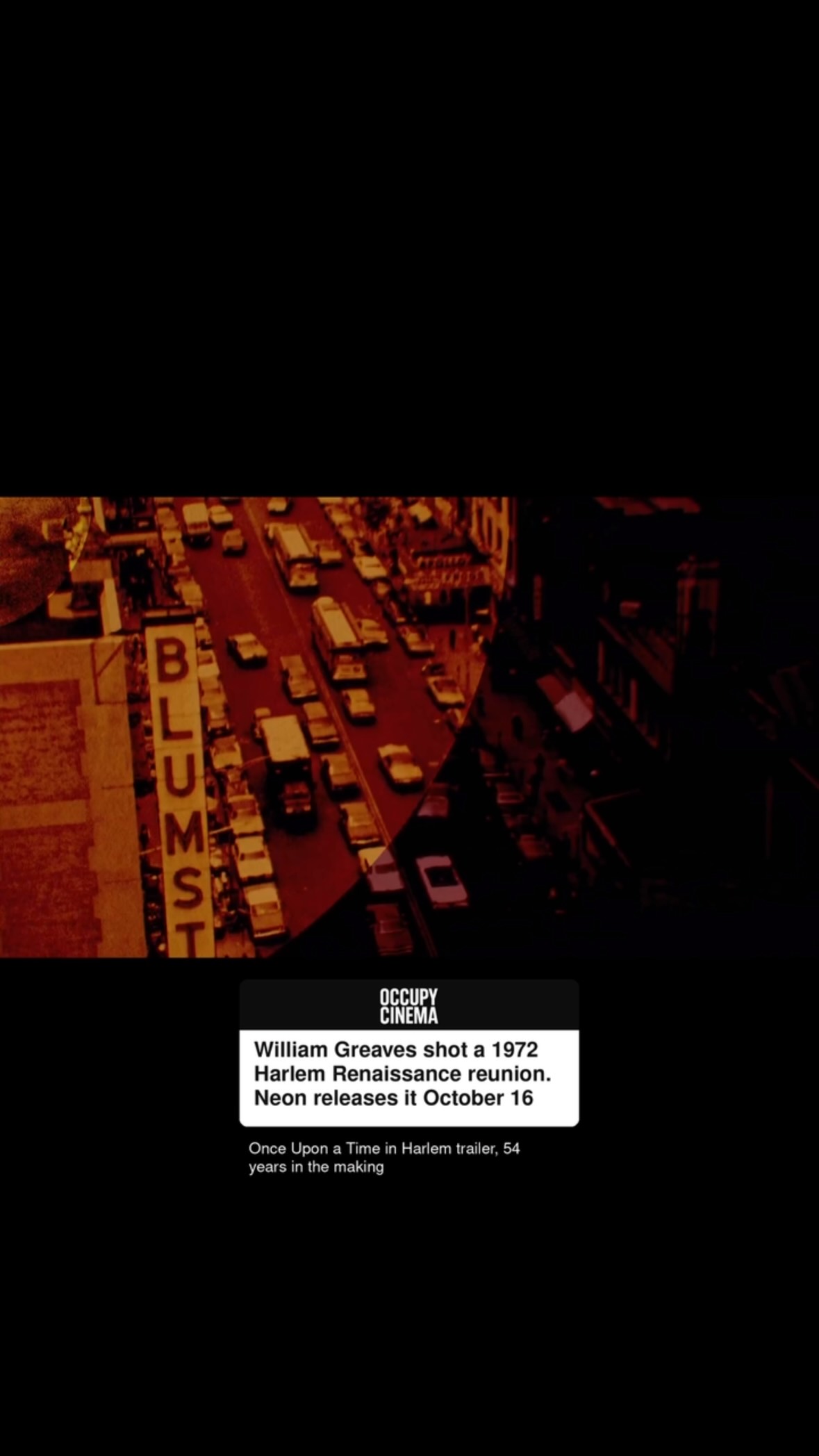
Lost Vision From a Groundbreaking Auteur
Neon is poised to release Once Upon a Time in Harlem, a documentary from the influential filmmaker William Greaves. What makes this particular release noteworthy is its history: Greaves filmed the project in 1972, but it remained unfinished for decades. Now, over 50 years later, the film is finally completed and heading for a theatrical run. This resurrection speaks volumes about the enduring power of archival work and the continued relevance of Greaves' unique cinematic voice.
The film's journey to completion is a story in itself. Greaves, a prolific and often experimental director, left behind a vast body of work, much of which pushed boundaries in non-fiction filmmaking. His output included everything from groundbreaking public television series like Black Journal to the meta-documentary Symbiopsychotaxiplasm: Take One. The discovery and completion of Once Upon a Time in Harlem adds a significant piece to his already impressive legacy, offering a fresh perspective on a pivotal moment in American culture through his lens. The project's re-emergence highlights the ongoing efforts to preserve and present the work of underappreciated masters.
Strategic Rollout and Industry Implications
Neon, known for its audacious distribution strategies, is orchestrating an unprecedented festival circuit for Once Upon a Time in Harlem. The documentary holds the unique distinction of being the only 2026 title currently programmed across the industry's most prestigious film festivals: Sundance, Cannes, Toronto International Film Festival, Telluride, and the New York Film Festival. This highly unusual, forward-looking scheduling for a 2026 release suggests a calculated play for long-term awards traction and sustained buzz, a tactic few distributors would attempt, let alone execute.
The commitment of such major festivals to a film that won't see its wider release for another two years underscores the project's perceived artistic merit and historical significance. It also speaks to the industry's recognition of Greaves' importance. While the specific financial terms of Neon's acquisition remain undisclosed, the investment in a multi-year, top-tier festival campaign implies a substantial outlay, reflecting confidence in the film's commercial and critical potential. This kind of staggered festival rollout builds anticipation, transforming a historical document into a cultural event. For context, films typically debut at these festivals in the year of, or immediately preceding, their commercial release. Neon is playing a different game here, leveraging the long lead time to cultivate an air of prestige and exclusivity.
The decision to open the film commercially on October 16th, which will be in 2026 given the festival placements, positions it squarely within the awards season corridor. This window is fiercely competitive, dominated by prestige dramas and established auteurs. Placing a rediscovered, archival documentary here signals Neon's belief that Once Upon a Time in Harlem can not only compete but genuinely contend for major accolades. The distributor's track record with films like Parasite, Flee, and All the Beauty and the Bloodshed demonstrates their prowess in navigating this landscape, turning critically acclaimed features into Oscar contenders. The documentary category, in particular, has seen increased visibility and competition in recent years, making strategic timing and buzz generation more crucial than ever.
The film's focus on Harlem in the 1970s promises a rich exploration of a vibrant cultural moment, captured by a filmmaker deeply embedded in the era's social and political currents. Greaves' work often explored identity, representation, and the mechanics of filmmaking itself, making this rediscovered piece a potentially vital addition to the canon of cinema focused on the Black experience in America. Its release will undoubtedly spark renewed interest in Greaves' extensive filmography, prompting a re-evaluation of his contributions to documentary and experimental cinema. This isn't just a film release; it's a cultural excavation, offering audiences a rare glimpse into a past vision brought to life in the present. This strategic long-game by Neon isn't just about one film, it's about cementing a legacy and making a statement on how films of historical significance can be positioned in a modern market. Neon's aggressive acquisition and distribution tactics continue to redefine the landscape for independent and international cinema, proving that unconventional approaches can yield significant dividends. Their handling of Once Upon a Time in Harlem is another bold stroke in that ongoing narrative.
Related reading: Parasite (The Criterion Collection) [Blu-ray].