Occupy Cinema › Development
The High, Wire Act: How Five Masterpieces Were Built Without a Script
From Soviet montage to French New Wave and Hong Kong street hustles, abandoning the screenplay has produced some of cinema's greatest leaps forward.
By Occupy Cinema ·
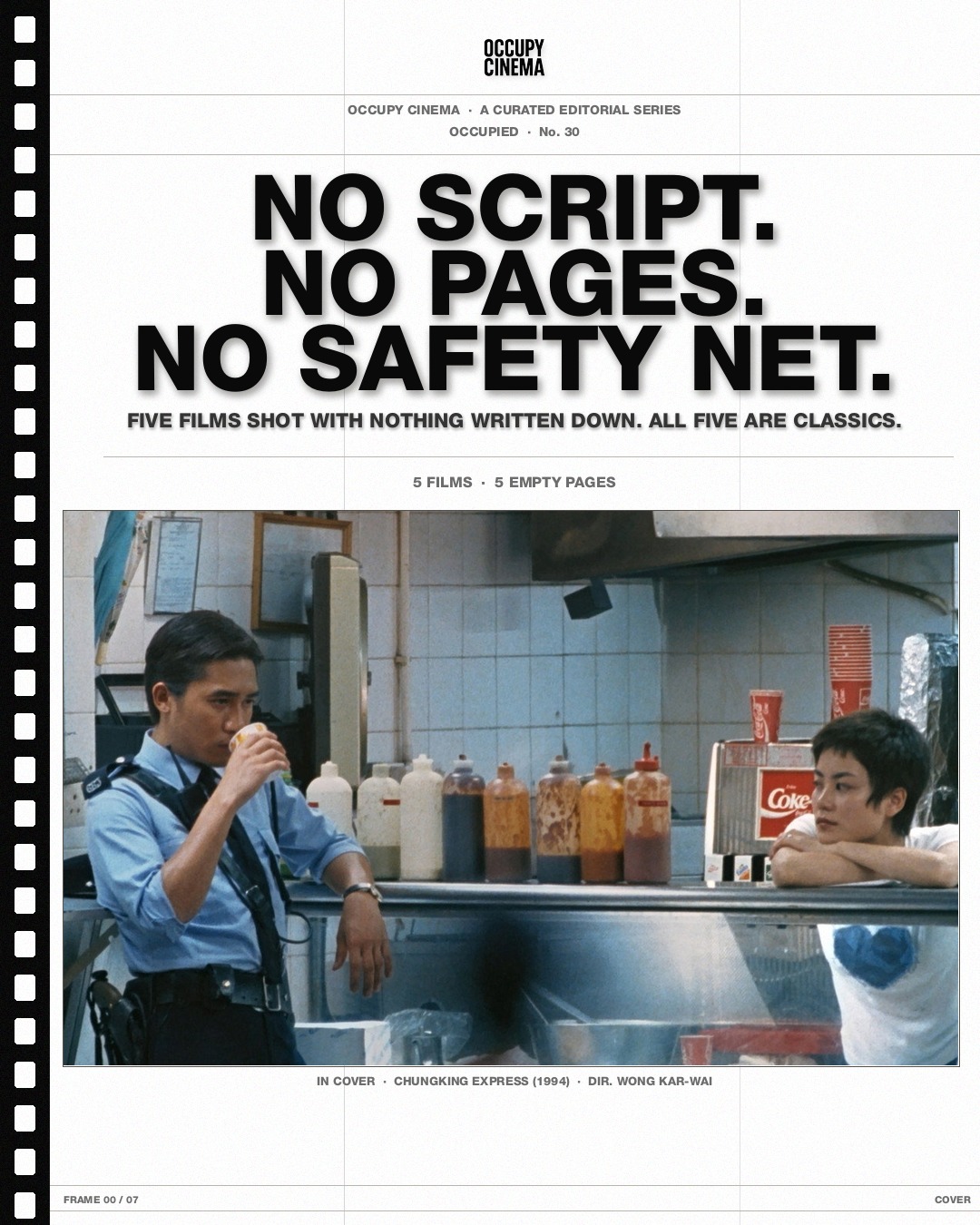
The modern studio machine runs on coverage, greenlights, and bulletproof screenplays. De, risking capital requires paper trails. Yet some of the most influential motion pictures in cinema history were launched without a bound script, a daily call sheet, or a safety net. Operating on pure instinct, structural improvisation, and radical trust in the camera, directors have repeatedly proven that cinema is a visual and rhythmic language, not merely recorded theater. When the rigid structure of a traditional screenplay is discarded, the resulting work often redefines the medium itself.
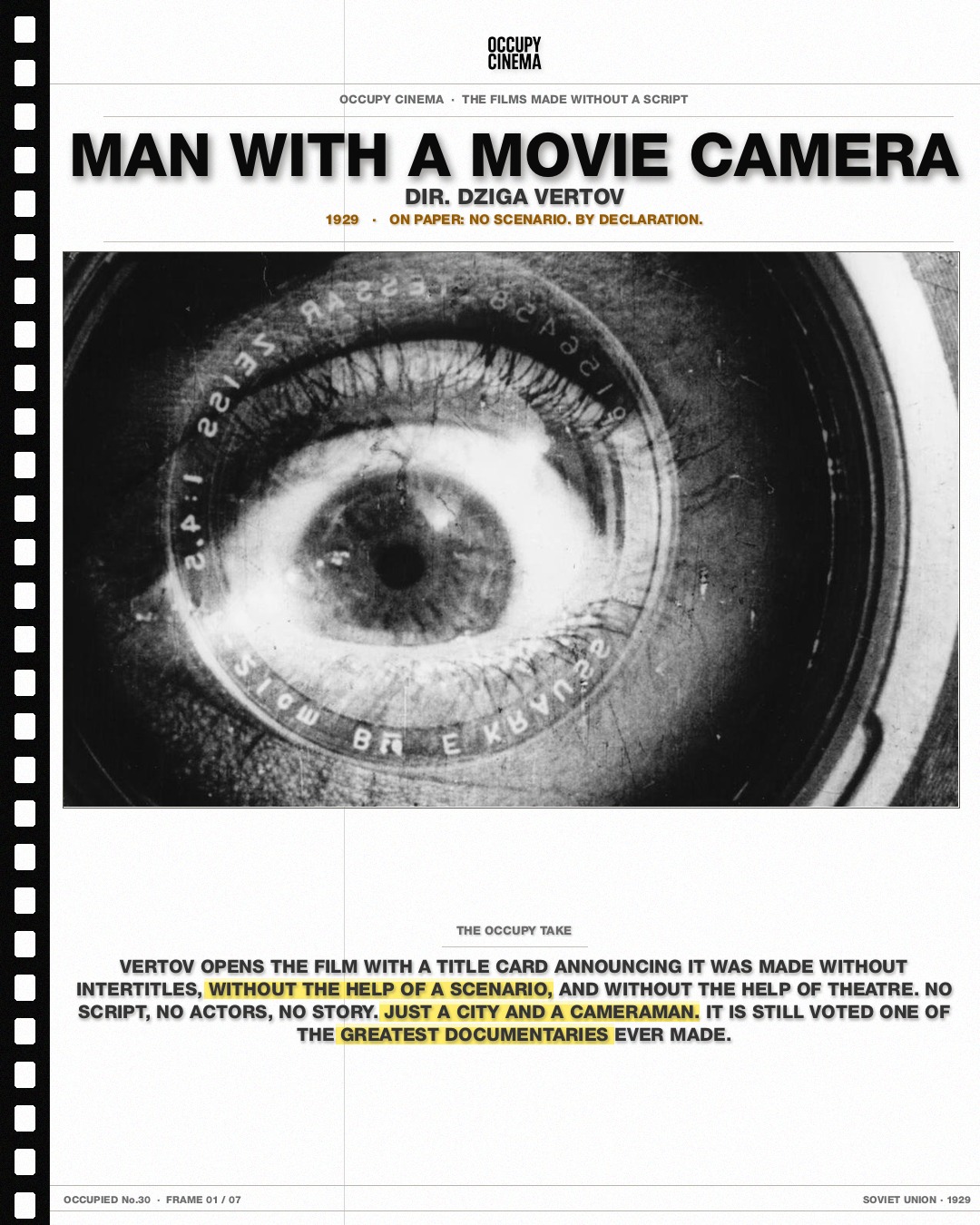
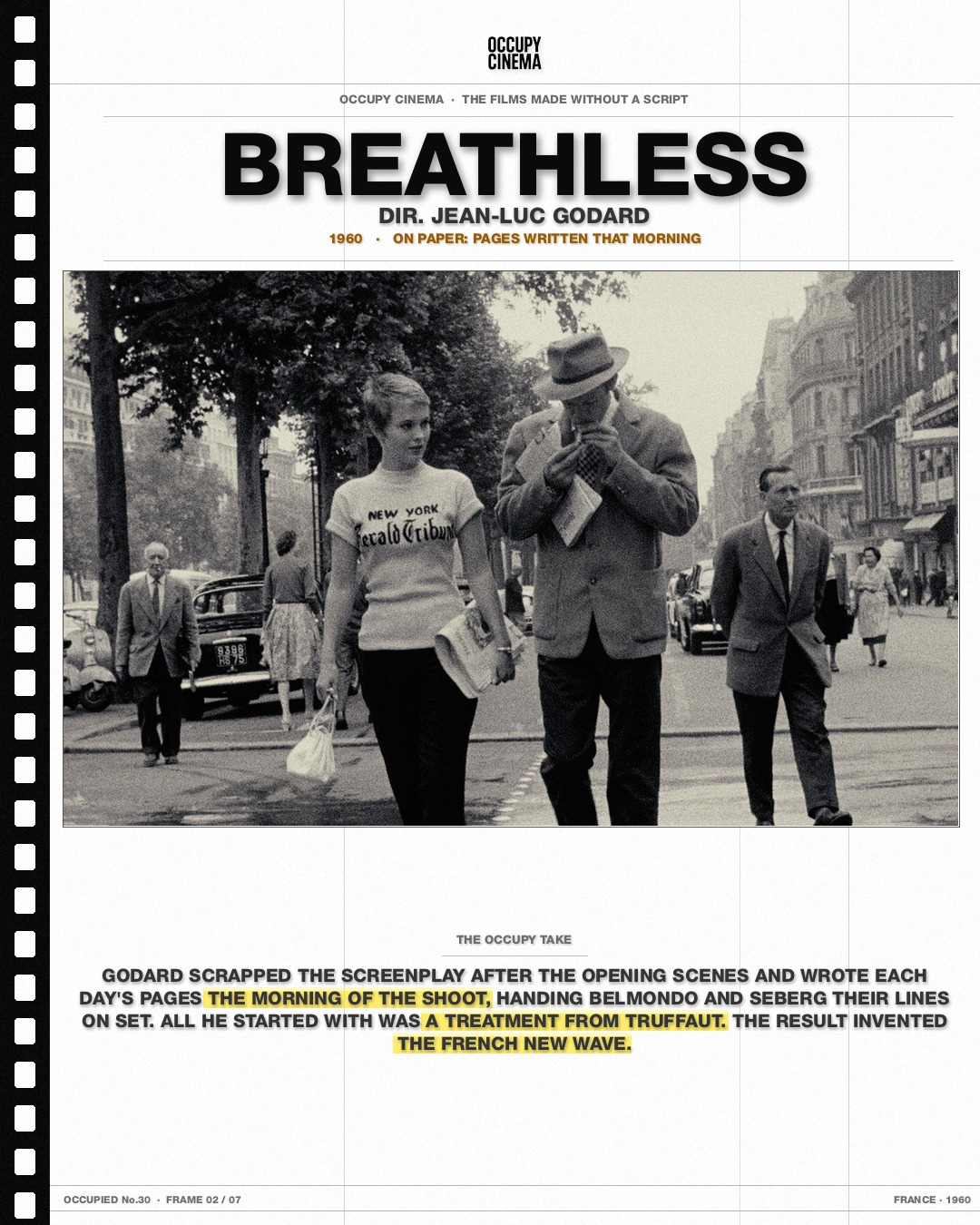
In 1929, Soviet pioneer Dziga Vertov unleashed Man with a Movie Camera, an unscripted documentary, manifesto explicitly designed to prove that film could exist free from the constraints of intertitles, theater, and literature. Shot across Moscow, Kyiv, and Odesa, Vertov and his editor wife Elizaveta Svilova deployed double exposures, fast motion, jump cuts, and split screens to engineer a kinetic symphony of Soviet life. Three decades later, Jean, Luc Godard dismantled narrative convention in Paris with Breathless (1960). Operating with a micro, budget financed by distributor Georges de Beauregard, Godard wrote dialogue on scraps of paper in local cafes every morning before handing them to Jean, Paul Belmondo and Jean Seberg. Cinematographer Raoul Coutard shot handheld on high, speed Agfa stock, capturing a raw energy that helped spark the French New Wave. According to contemporary reports in Sight and Sound, the film destroyed classical continuity editing while grossing over two million admissions in France alone.
Improvisation as Cinema Architecture
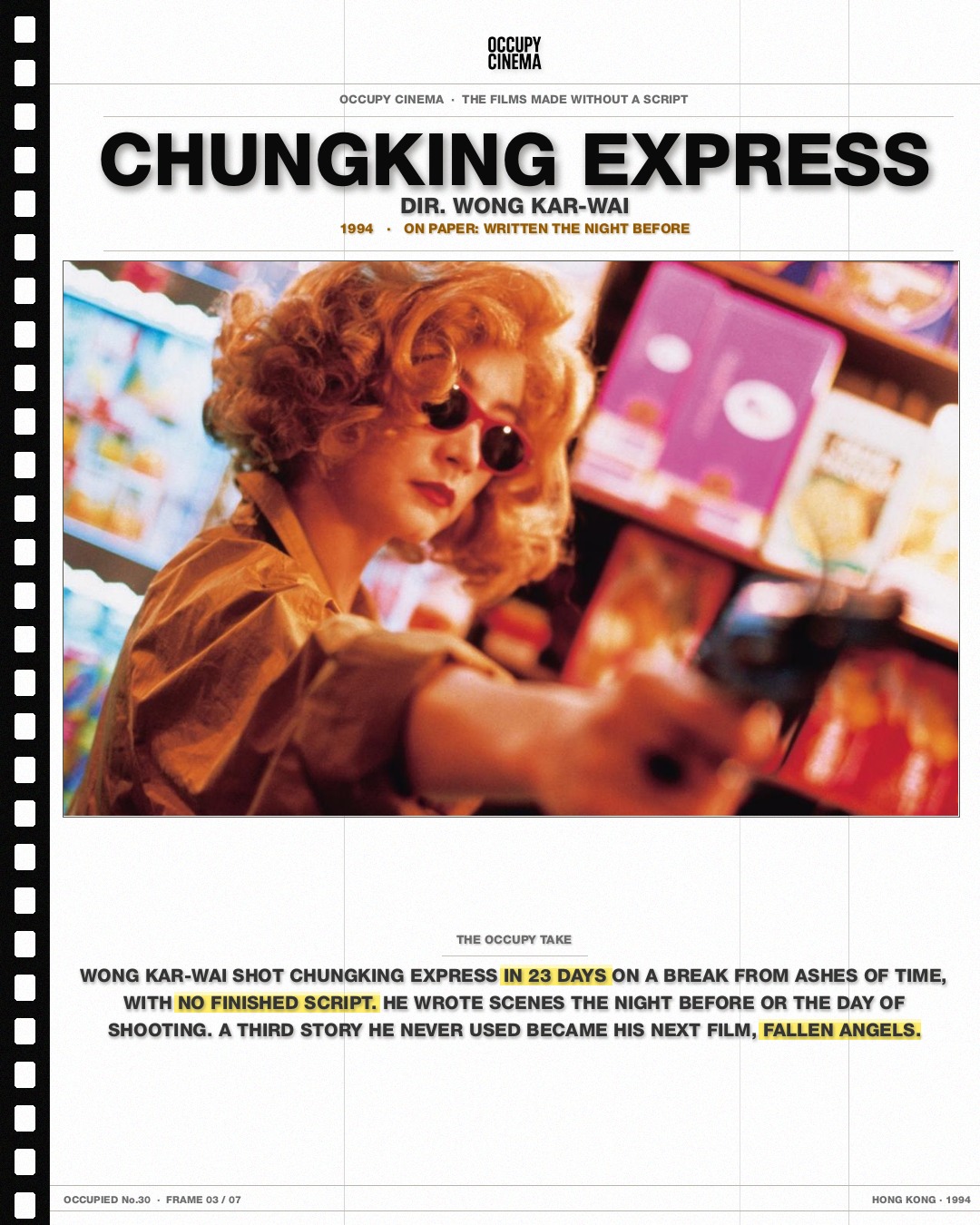
Going off, script is not merely an exercise in chaos; for auteur filmmakers, it is a deliberate method to unlock organic performance and real, world texture. In 1994, Wong Kar, wai was locked in a grueling, year, long editing process for his martial arts epic Ashes of Time. Exhausted and facing a mandatory deadline, he took a two, month hiatus and shot Chungking Express in roughly 23 days without a finished script. Wong penned scenes the night before or directly on set inside Hong Kong's crowded Chungking Mansions. Cinematographers Christopher Doyle and Andrew Lau utilized step, printing and handheld camera work, turning ambient street light and improvised character beats into a landmark of 1990s international cinema.
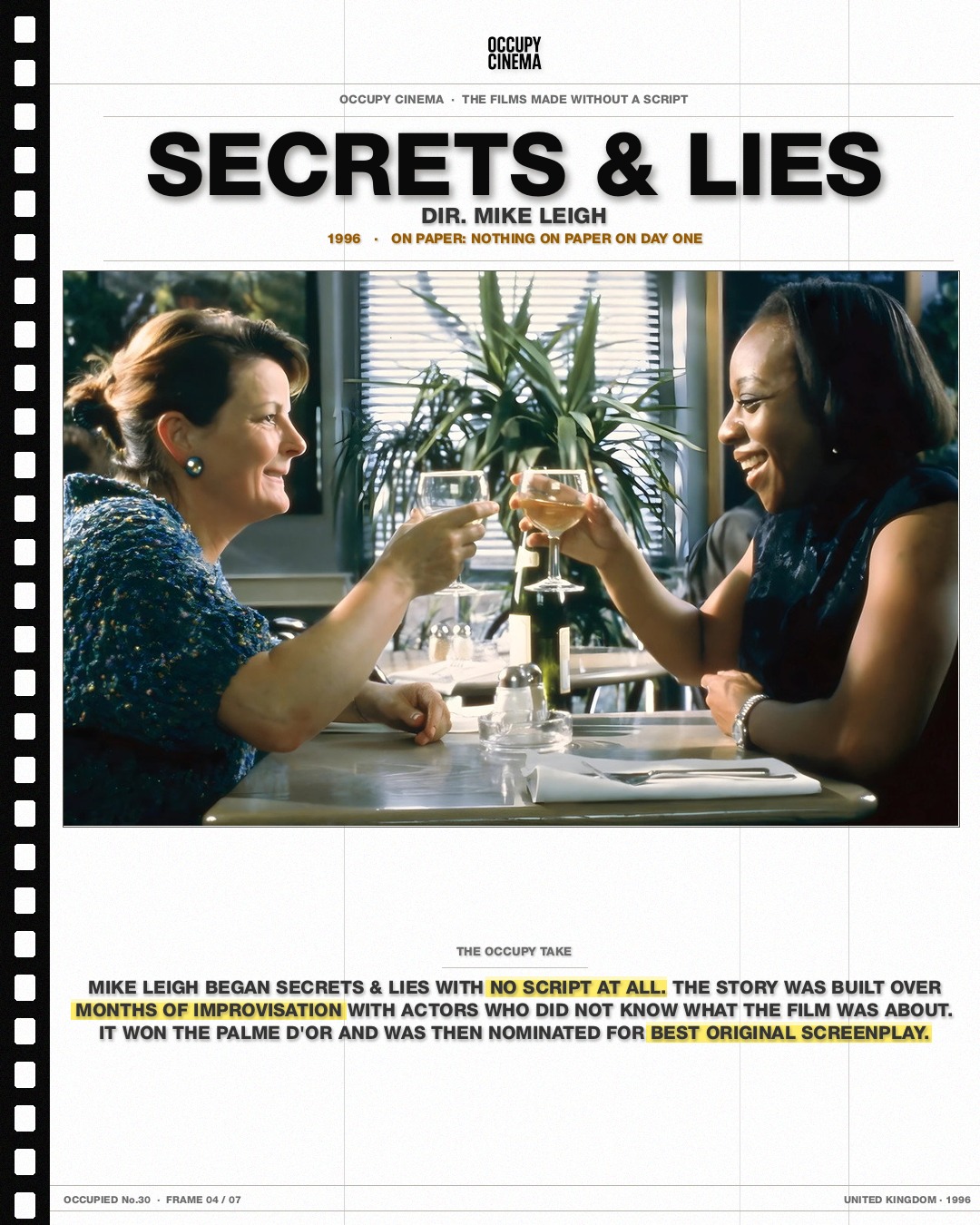
In the United Kingdom, British auteur Mike Leigh perfected a completely distinct scriptless paradigm. Leigh builds his features through months of intense, confidential one, on, one improvisations with actors before a single camera is set up. His 1996 masterpiece Secrets & Lies featured no written screenplay handed to the cast, culminating in emotional revelations captured live on set. The film earned the Palme d'Or at Cannes and went on to grab five Academy Award nominations.
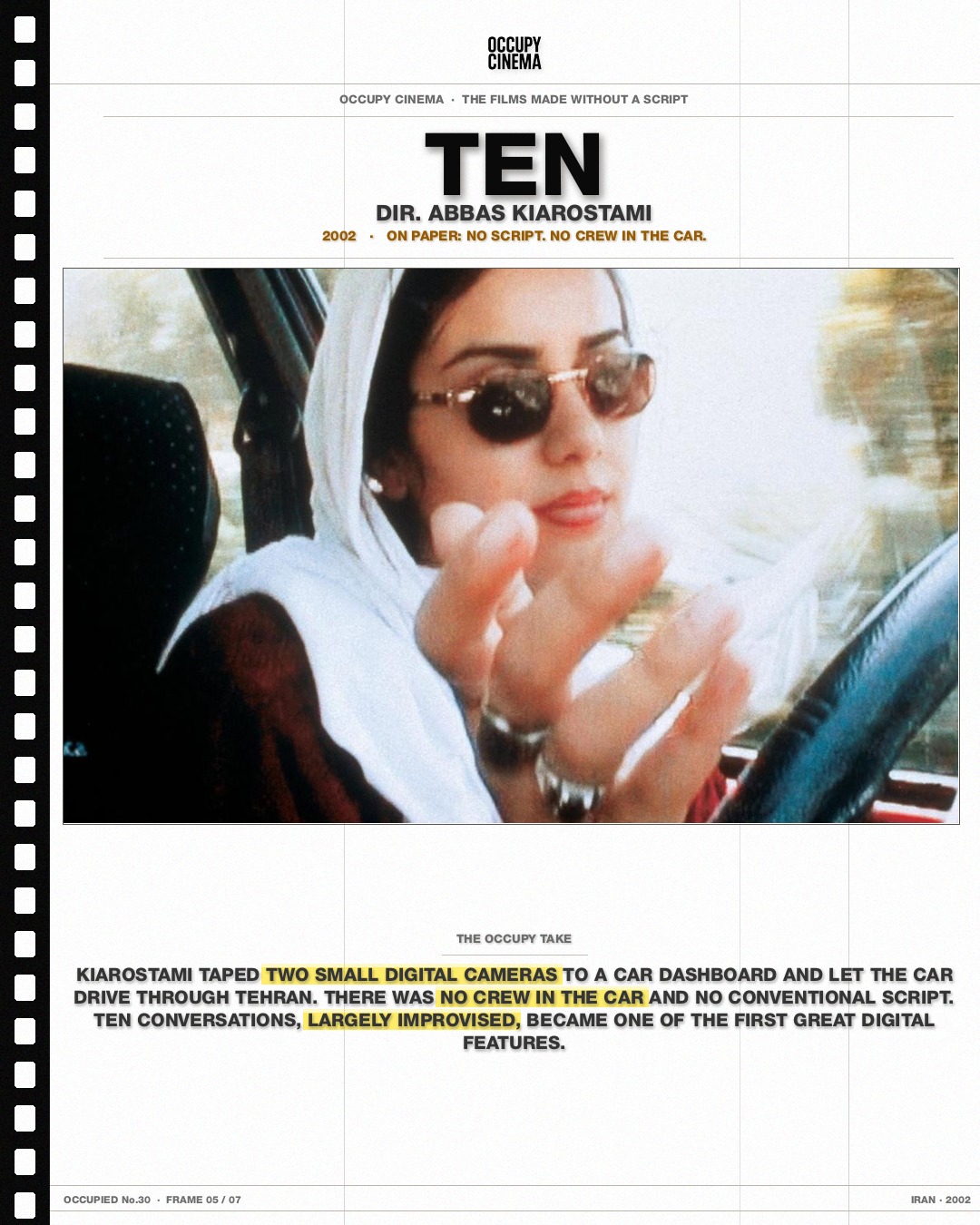
By the turn of the century, digital camera technology democratized this high, wire act even further. Iranian master Abbas Kiarostami mounted two small digital video cameras onto the dashboard of a vehicle for his 2002 drama Ten. Without a crew present in the car, Kiarostami instructed non, professional actors to drive through Tehran and engage in raw, unscripted conversations about gender, faith, and survival. The filmmaker then shaped the narrative structure entirely within the editing room. As detailed by IndieWire, the production demonstrated how digital tools could strip away studio excess and isolate the human face.
The Calculated Risk of Pure Process
The financial math behind these non, traditional productions reveals a compelling reality. Unscripted films require low overhead and high creative autonomy. They trade expensive set pieces for atmosphere, time, and performance. In an industry currently consumed by pre, visualization and intellectual property management, these five projects stand as proof that the script is merely a blueprint, not the building itself. True cinematic magic happens when directors trust the camera to capture life in real time.
Related reading: The Complete Films of Agnes Varda (The Criterion Collection) [Blu-ray].