Occupy Cinema › FEATURED
Godard's Truth: The Enduring Power of "Le Petit Soldat" at 24 Frames Per Second
Jean-Luc Godard’s iconic dictum, “Photography is truth. Cinema is truth twenty-four times a second,” remains a cornerstone of film theory. Its origins lie in a film banned for its political audacity, a reminder of cinema's volatile power.
By Occupy Cinema ·
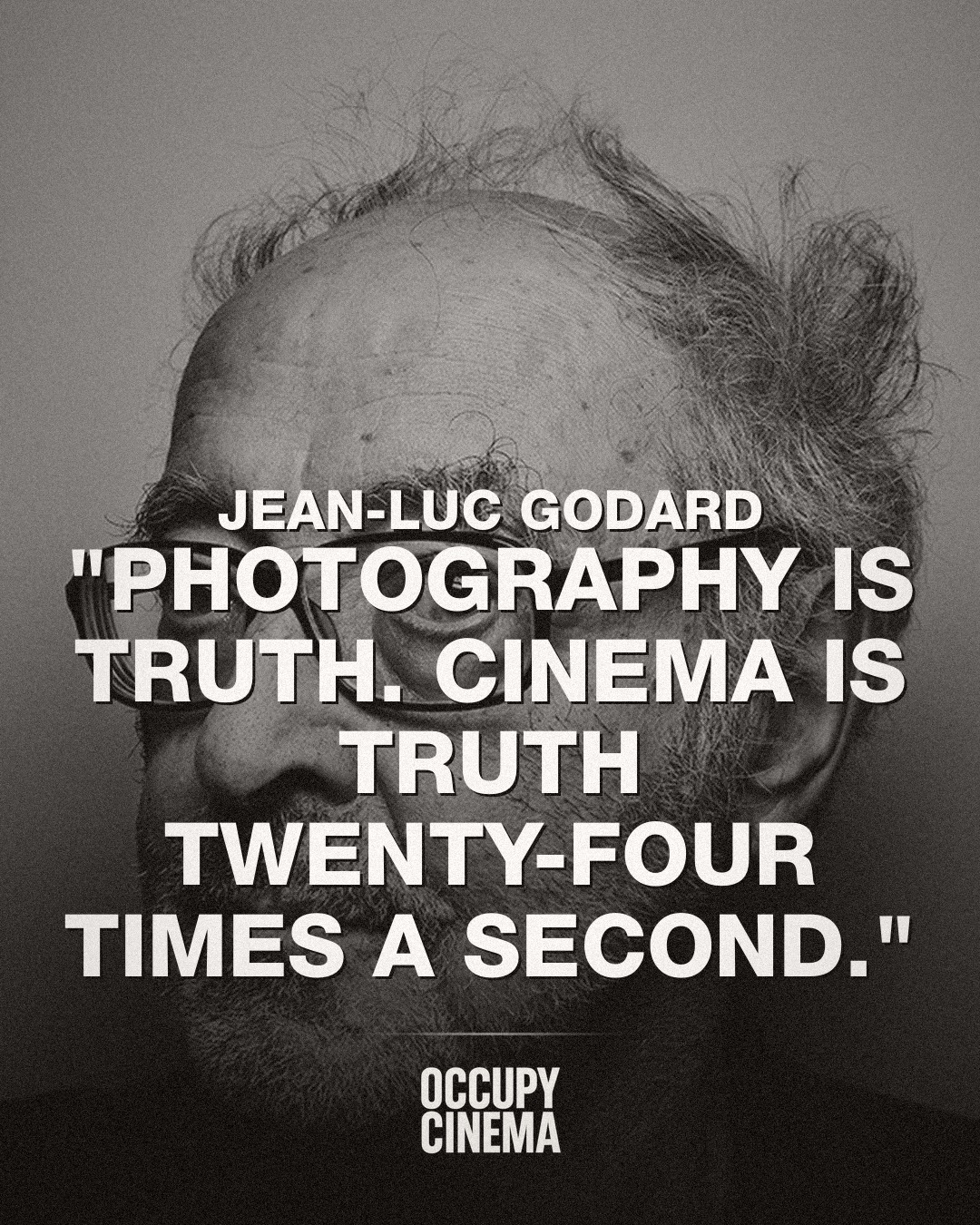
Jean-Luc Godard, the enfant terrible of the French New Wave, articulated a foundational truth about cinema that continues to resonate decades later. His declaration, “Photography is truth. Cinema is truth twenty-four times a second,” delivered within the fabric of his own film, 1963’s Le Petit Soldat, was more than a mere philosophical musing. It was a defiant statement on the medium’s power, a power so potent it earned the film a three-year ban from French censors. Today, as digital manipulation blurs the lines of cinematic reality, Godard’s pronouncement serves as a stark reminder of film's inherent capacity to both reflect and shape perception.
The quote itself is spoken by Bruno Forestier, the protagonist of Le Petit Soldat, directly to the camera. This meta-commentary, a hallmark of Jean-Luc Godard’s style, transforms a simple observation about frame rates into a profound meditation on the nature of reality and representation. Released following Godard’s debut, Breathless, Le Petit Soldat immediately plunged into politically charged territory, exploring the moral ambiguities of the Algerian War through the lens of a deserter. Its unflinching portrayal of torture, even if implied, and its complex stance on patriotism were deemed too incendiary for contemporary French audiences and authorities, leading to its suppression until 1963.
The Ban and The Box Office
The French government's intervention was a stark illustration of cinema’s political weight. Banning a film like Le Petit Soldat was not just about content; it was about controlling narrative during a sensitive national conflict. This act of censorship inadvertently amplified the film's message and cemented Godard's reputation as a provocateur unafraid to tackle societal taboos. While Breathless had already established Godard’s formal innovations, employing jump cuts and breaking the fourth wall, Le Petit Soldat pushed the boundaries of thematic engagement, setting a precedent for political cinema that would influence generations of filmmakers.
The initial box office impact of Le Petit Soldat was, by necessity, minimal due to its ban. However, its delayed release and the surrounding controversy undoubtedly fueled its later critical re-evaluation and cult status. The film, shot in black and white, utilized available light and handheld cameras, further blurring the lines between documentary and fiction. This raw aesthetic, combined with its challenging themes, positioned it as a seminal work of the French New Wave, a movement defined by its rejection of traditional cinematic conventions and its embrace of a more personal, auteur-driven vision. For an insight into the era, the BFI offers a retrospective on French New Wave.
Cinema's Enduring Truth
Godard's statement on truth and frames per second encapsulates the essence of cinematic realism, even when that realism is constructed. Each frame, a photograph, captures a specific moment, and the rapid succession of these moments creates the illusion of continuous motion, a temporal truth. This mechanical process underpins cinema's unique ability to immerse viewers in a constructed reality, making it a powerful tool for both art and propaganda. The quote challenges us to consider not just what we see, but how we see it, and the inherent veracity, or lack thereof, in the moving image.
In an age saturated with manipulated media, deepfakes, and algorithm-driven narratives, Godard's insight feels more urgent than ever. The notion of photography as truth, and cinema as accelerated truth, prompts critical engagement with every image we consume. It demands an awareness of the filmmaker’s hand, the editor’s cut, and the political context surrounding a production. Le Petit Soldat remains a testament to cinema's capacity to confront uncomfortable truths, even at the cost of immediate public exposure, proving that some narratives are simply too vital to be suppressed indefinitely. The Hollywood Reporter often covers such historical intersections of film and politics.
The enduring power of Godard's quote, and the film from which it sprang, lies in its refusal to simplify. It acknowledges the medium's technical foundation while simultaneously elevating its philosophical implications. Cinema, at 24 frames per second, does not merely record. It interprets, it questions, and sometimes, it exposes inconvenient truths that societies are not yet ready to confront. This makes its study not just an academic exercise, but a vital lens through which to understand our own complex realities.
Related reading: The Complete Films of Agnes Varda (The Criterion Collection) [Blu-ray].