Occupy Cinema › Craft
Mars and Miracles: The Enduring Allure of Solitary Survival on Screen
Ridley Scott's 2015 blockbuster, "The Martian," redefined sci-fi survival, blending spectacle with grounded storytelling. As "Project Hail Mary" prepares for release, comparisons are inevitable, highlighting a decade of craft evolution and thematic consistency.
By Occupy Cinema ·
Nine years on, Ridley Scott's The Martian continues to resonate, a testament to its blend of high-stakes survival and pragmatic ingenuity. The 2015 film, adapted from Andy Weir's debut novel, captivated audiences and critics alike, earning seven Academy Award nominations, including Best Picture. Its success wasn't merely commercial; it solidified a particular brand of hard science fiction that prioritizes scientific accuracy and problem-solving over fantastical elements. Now, with another Weir adaptation, Project Hail Mary, on the horizon, the industry is poised to revisit the formula, examining how much the craft of cinematic world-building has evolved, or perhaps, remained steadfast, in the intervening decade.
The Martian launched with considerable anticipation, boasting a formidable director in Ridley Scott and a bankable star in Matt Damon. Scott, a veteran of sci-fi epics like Alien and Blade Runner, brought a seasoned hand to the material, grounding its ambitious premise in a sense of tangible reality. The film’s narrative, centered on astronaut Mark Watney's struggle for survival after being stranded on Mars, demanded a convincing visual environment. This was achieved through a meticulous combination of practical sets and digital enhancements, a balance that became a hallmark of its production.
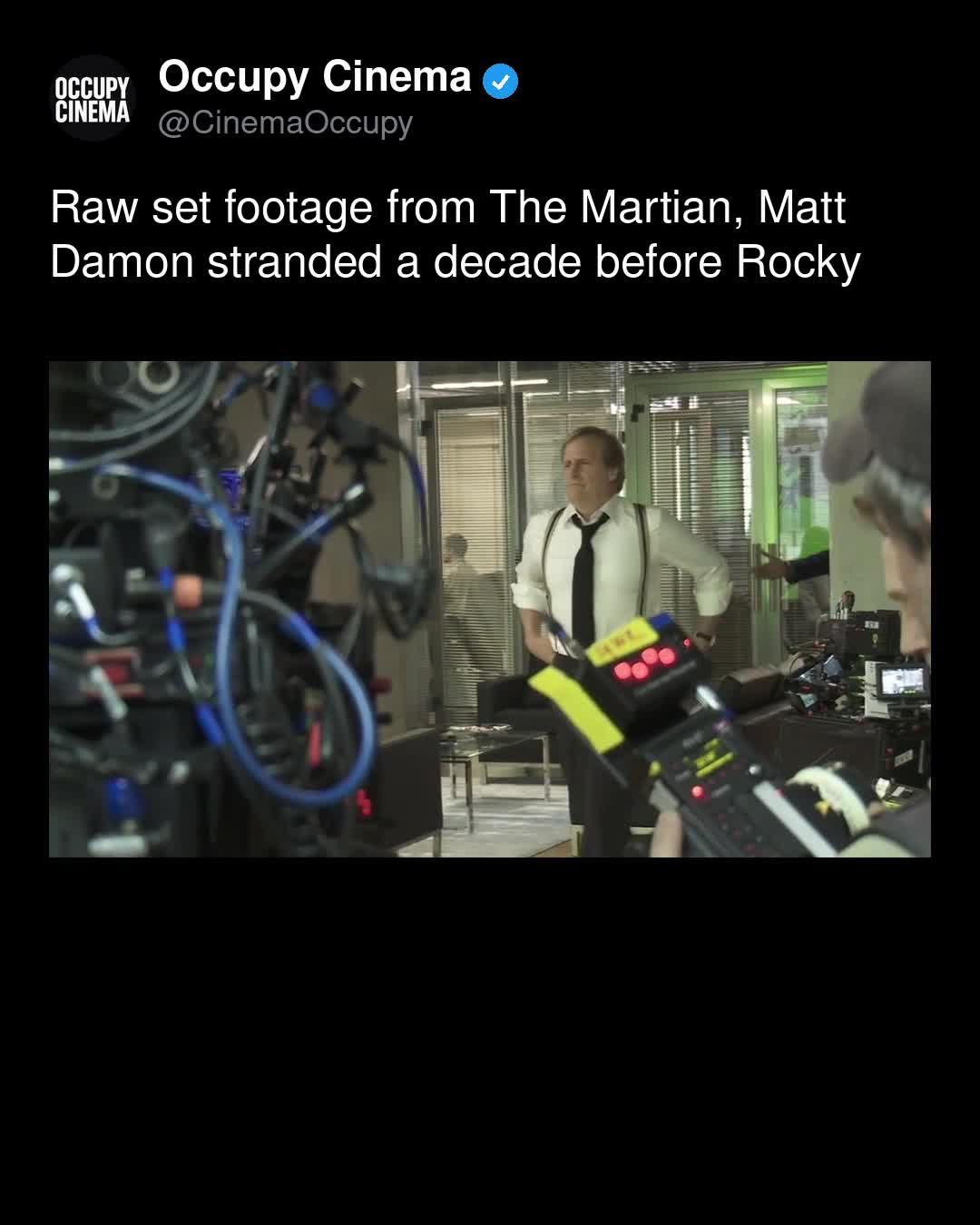
The scale of the production was immense. Much of the Martian surface, for instance, was meticulously constructed on soundstages. Budapest's Korda Studios, home to what was then Europe's largest soundstage, housed vast sections of the red planet's landscape. This commitment to practical environments extended to the intricate interiors of Watney's habitat and the Ares III spaceship, all built to exacting specifications to enhance realism and provide actors with tangible spaces to interact with. The decision to prioritize physical sets over purely green-screen environments was a deliberate choice, aiming to give the film a tactile quality that digital backdrops often struggle to achieve.
This approach extended to the filming locations as well. Wadi Rum in Jordan, with its strikingly red sandstone mountains and vast desert plains, served as a primary stand-in for Mars. The landscape provided an authentic, epic backdrop that digital artists then enhanced, rather than created from scratch. This methodology, blending real-world locations with state-of-the-art visual effects, allowed for a seamless integration that made the alien world feel undeniably present. The dust and grit seen on screen were often real, kicked up by wind machines or the actors themselves, adding an immersive layer to the survival narrative.
The Martian was a critical and commercial triumph. It grossed over $630 million worldwide against a production budget of $108 million, making it Scott's highest-grossing film to date. Its success underscored an appetite for intelligent, character-driven sci-fi that doesn't shy away from scientific detail. The film was praised for its optimistic tone, its celebration of human ingenuity, and Damon's compelling central performance, which carried much of the film's solo runtime. It demonstrated that complex scientific concepts could be made accessible and entertaining for a broad audience, a lesson not lost on Hollywood.
The Evolution of Survival Sci-Fi
The impending release of Project Hail Mary, another Andy Weir story of solitary space survival, naturally invites comparison. While details on its production are still emerging, the film, starring Ryan Gosling and directed by Phil Lord and Chris Miller, faces the challenge of carving its own identity while operating within a similar thematic framework. The narrative again centers on a lone individual, Ryland Grace, who wakes up with amnesia on a mission to save humanity, far from Earth. The core premise, a single protagonist solving complex problems in isolation, mirrors The Martian's central conceit, albeit with different cosmic stakes.
A key question for Project Hail Mary will be its approach to visual effects and world-building. Will it lean into the practical aesthetic that defined The Martian, or will it embrace the advancements in virtual production and photorealistic CGI that have become more prevalent in recent years? The landscape of filmmaking technology has shifted considerably since 2015. Tools like LED volumes and real-time rendering have offered filmmakers unprecedented control over virtual environments, blurring the lines between practical and digital. The Hollywood Reporter has extensively covered this shift, noting how these technologies allow for immersive on-set experiences that can rival, or even surpass, traditional green screen methods.
The choice between practical sets and cutting-edge virtual production is not merely aesthetic; it has implications for budget, schedule, and the very performances captured on screen. While a large portion of The Martian's Mars was built physically, the soundstages for Project Hail Mary might incorporate more advanced digital backdrops, allowing for greater flexibility and dynamism in the environments. Lord and Miller, known for their innovative and visually distinctive work on films like Spider-Man: Into the Spider-Verse and The Lego Movie, are likely to bring a fresh perspective to the visual language of space survival. Their track record suggests a willingness to push boundaries, potentially leveraging animation or stylized visuals in ways The Martian, with its more grounded approach, did not.
Ultimately, both films share a common ancestor in Andy Weir's meticulous, problem-solving narratives. They celebrate human resilience and ingenuity in the face of impossible odds. The Martian set a high bar for this subgenre, proving that scientific accuracy and emotional depth can coexist with blockbuster appeal. Project Hail Mary has the opportunity to build upon this legacy, not just by telling another gripping survival story, but by showcasing how cinematic craft continues to evolve, finding new ways to immerse audiences in the vast, unforgiving, yet strangely beautiful reaches of space. The industry waits to see if its illusion, too, will feel as tangible as the dust of a Martian soundstage.