Occupy Cinema › Exhibition
San Francisco’s Next Arthouse Cinema Is 49 Seats and $50,000 Away from Reality
Programmer Nellie Killian has cleared $116,000 on Kickstarter for The Portal Cinema, but high-voltage 35mm projection requires one final infrastructure push before the Mission District venue can open.
By Occupy Cinema ·
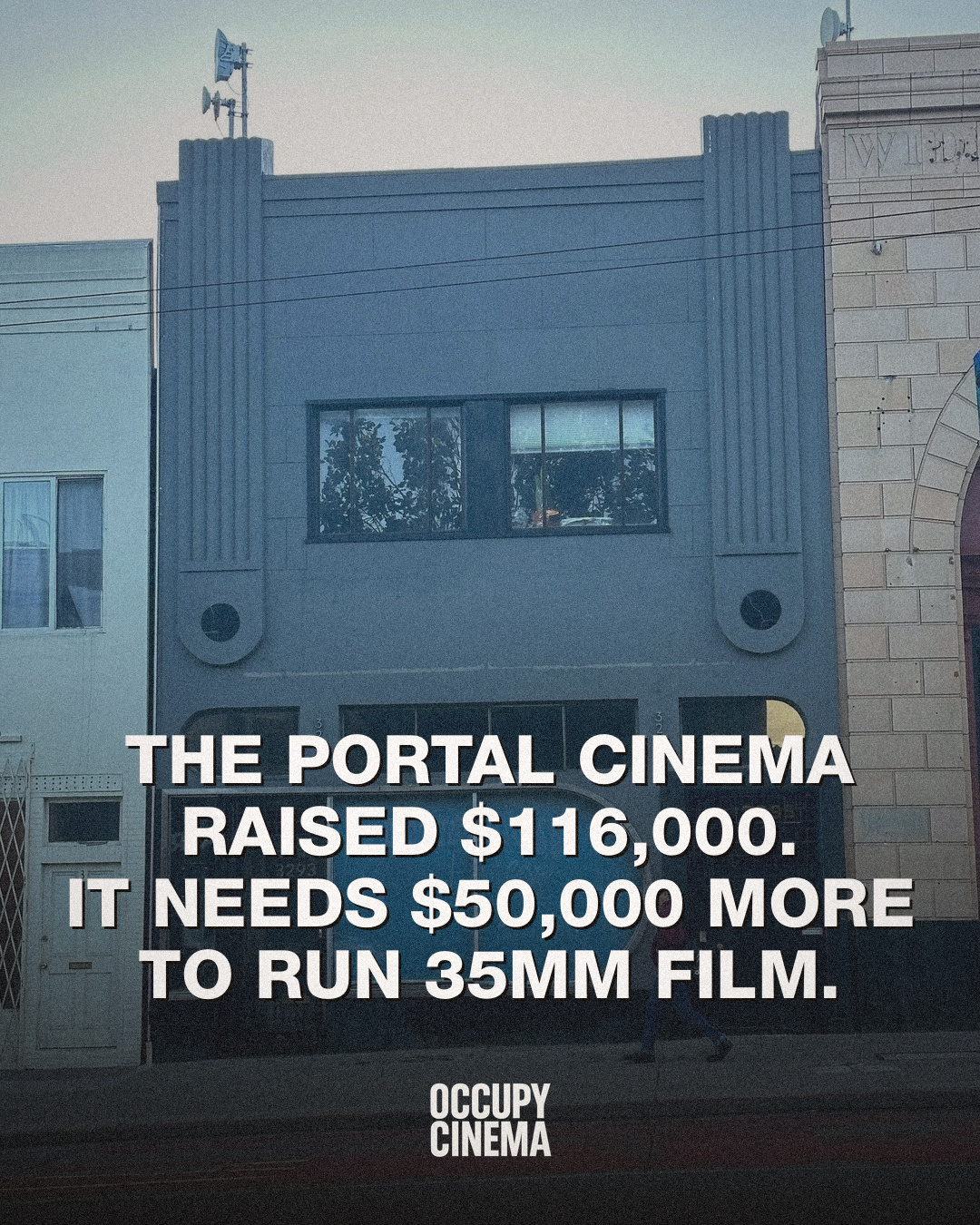
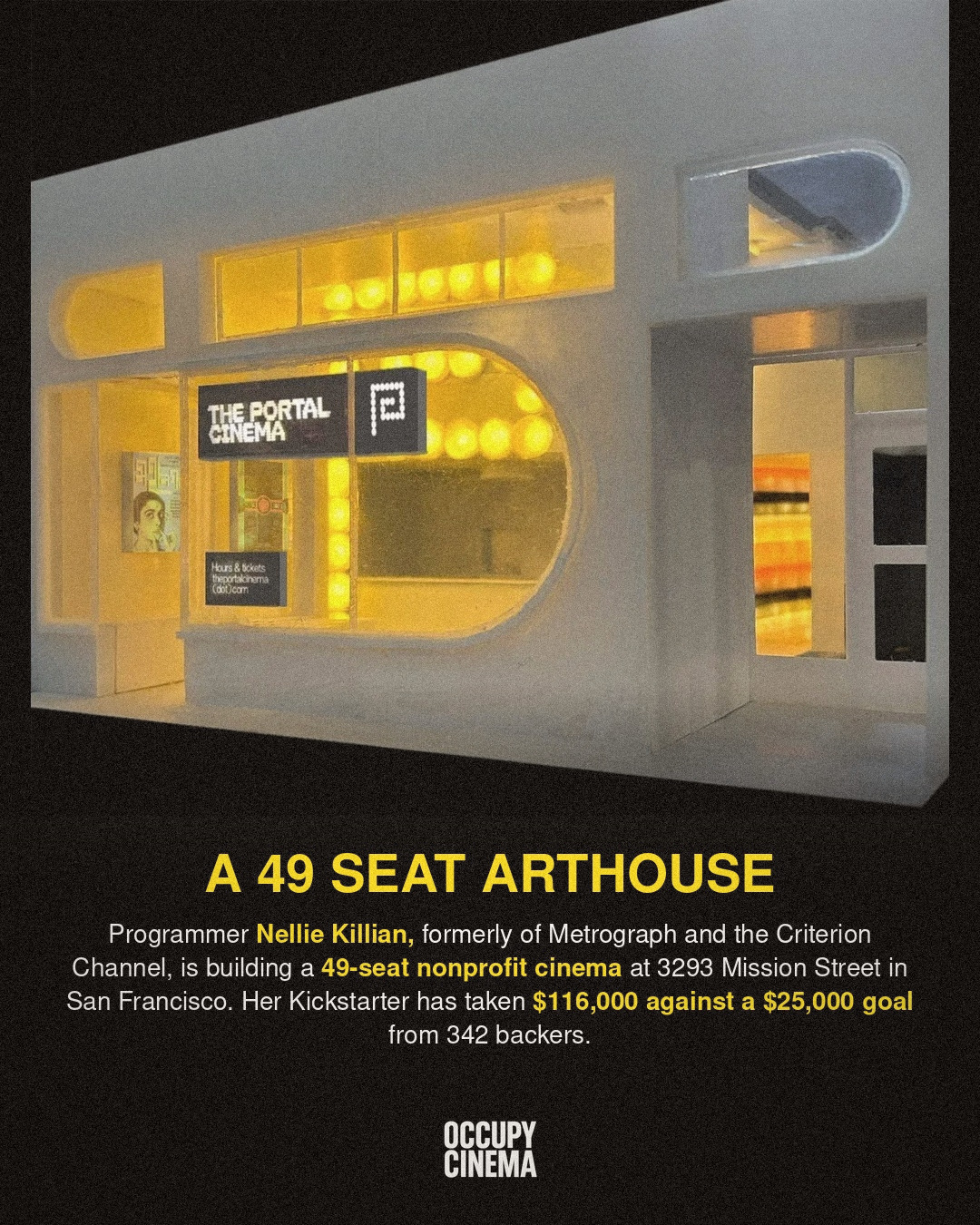
San Francisco is forty-eight hours away from finding out whether its newest independent cinema becomes a physical reality or remains an ambitious blueprint. At 3293 Mission Street, programmer Nellie Killian is constructing The Portal Cinema, a nonprofit 49 seat arthouse venue aimed at reviving neighborhood repertory film culture. The financial momentum is real. Her crowd-funding campaign on Kickstarter has pulled in $116,000 from 342 individual backers, easily shattering the initial baseline goal of $25,000. The campaign window closes on Friday, September 18. Yet in a city known for exorbitant contractor rates and tangled municipal utility hurdles, raising six figures is merely the opening down payment.
Killian is not a novice chasing a cinematic pipe dream. Her resume carries substantial weight across the independent film landscape, having built film series for Metrograph in New York, curated programs for the Criterion Channel, and organized retrospectives for the British Film Institute. She understands the exact mechanics of repertory film demand, archival print sourcing, and audience retention. In an era where major exhibition chains struggle to fill multi-screen multiplexes, Killian is pitching a lean, hyper-focused model. The Portal Cinema targets a hyper-specific niche: filmgoers who value curated celluloid experiences over generic commercial runs.
The financial math for Bay Area build-outs is notoriously unforgiving. While $116,000 demonstrates immense public goodwill, the physical realities of opening a specialty theater require deep capital. Killian still needs another $50,000 specifically designated for infrastructure work with local utility provider Pacific Gas and Electric. The build requires a dedicated electrical panel upgrade capable of powering high-draw projector lamps and sensitive audio equipment, alongside a modern HVAC system designed for proper air turnover in an enclosed public space.
The Physicality of Photochemical Film
The decision to install physical film projectors is both a creative statement and an engineering bottleneck. The Portal Cinema plans to run both 35mm and 16mm projection equipment alongside modern digital setups. Running physical film stock is not as simple as plugging a digital cinema package into an off-the-shelf server. Legacy xenon arc lamps and carbon-arc equipment demand high voltage, steady amperage, and specialized exhaust ducting to prevent heat buildup and electrical fires.
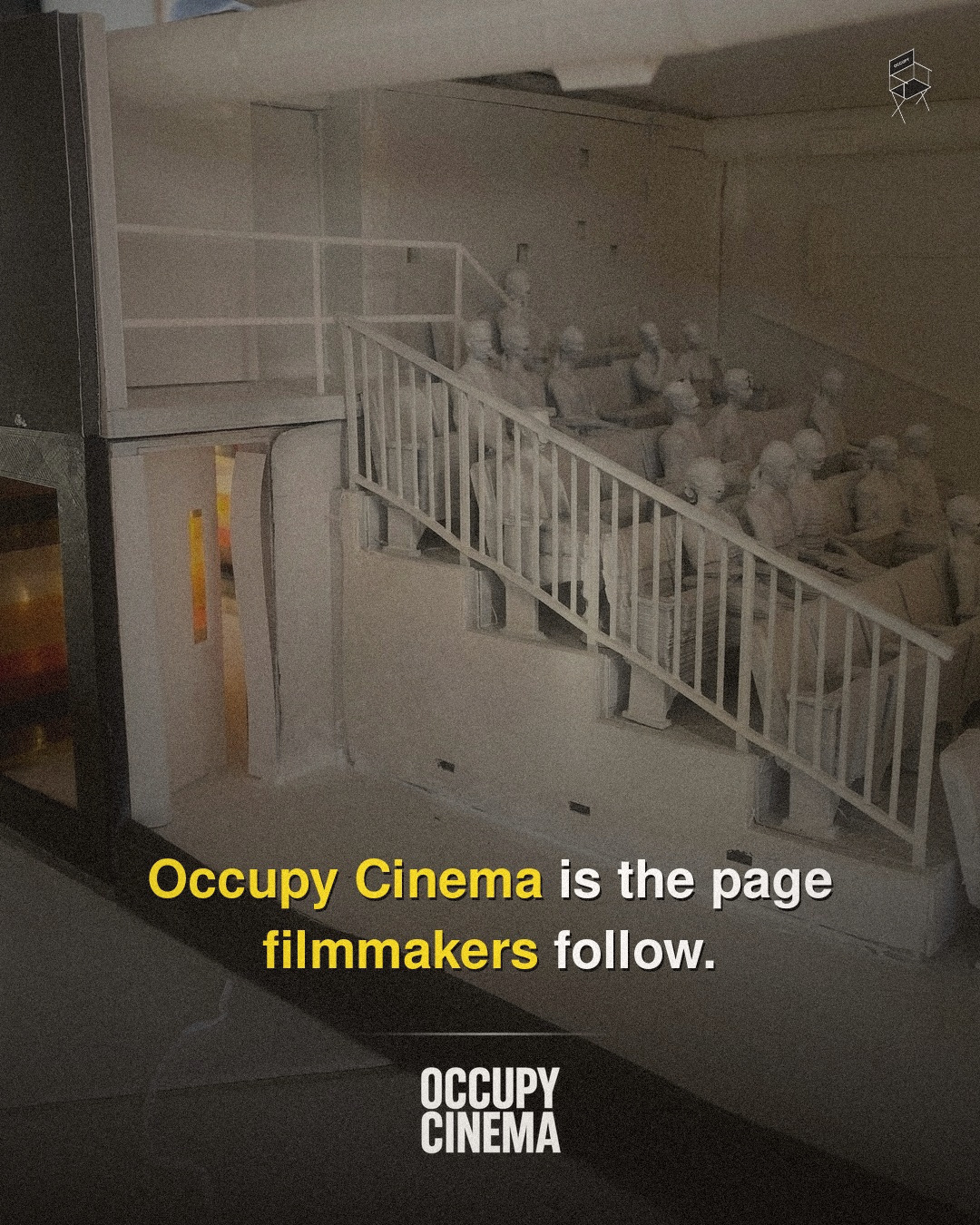
San Francisco firm Atkinson Architecture drew the preliminary spatial and structural blueprints for 3293 Mission Street, optimizing the limited square footage to accommodate a functional projection booth, acoustic isolation barriers, and sightlines for forty-nine custom seats. Isolating projection noise in a tight room requires careful wall layering, while mounting optical projection glass demands precision installation. In traditional theatrical distribution, as regularly covered by trade publications like IndieWire, print projection has moved from an industry standard to a rare boutique discipline. Maintaining mechanical film projectors requires distinct infrastructure investments that modern multiplex developers abandoned decades ago.
The Bay Area cinematic landscape has suffered major closures over the last decade, making new venue initiatives vital for film preservation and community access. While historic commercial venues like the Castro Theatre have transitioned toward live music and event programming, independent operators must find smaller, more resilient footprints. Venues like the Roxie Theater in the nearby Mission District have demonstrated that localized, community-backed exhibition can survive economic turbulence. By setting seat capacity at forty-nine, The Portal Cinema intentionally operates below certain municipal zoning thresholds while establishing built-in ticket scarcity.
Scarcity as a Sustainable Business Engine
A forty-nine seat room transforms the economics of repertory programming. Selling out a forty-nine seat auditorium on a Tuesday evening is achievable for rare print revivals, foreign discoveries, and local filmmaker Q&A sessions. A thousand-seat theater running the same archival print of a film by Chantal Akerman or Wong Kar Wai faces massive overhead and visually empty rows. Scarcity generates urgency. High occupancy rates drive concession sales, membership sign-ups, and word-of-mouth chatter far more effectively than under-attended large auditoriums.
The micro-cinema movement has quietly emerged as the most viable counter-weight to corporate multiplex decline. Similar intimate venues across North America have proved that cinephiles will pay premium ticket prices for pristine presentation, unique curatorial voices, and authentic community spaces. According to reporting from The Hollywood Reporter, specialty distribution relies increasingly on independent tastemakers who can guarantee packed houses for unrated, imported, or newly restored titles. Directors like Paul Thomas Anderson have long advocated for celluloid exhibition, noting that physical prints offer a tactile depth that digital formats cannot mirror.
The remaining capital gap illustrates the friction between grassroots support and commercial utility costs. Utility grid connections, commercial transformer upgrades, and modern HVAC installation routinely consume a major fraction of independent arts budgets in California. Pacific Gas and Electric upgrades frequently require specialized city permits, sidewalk trenching, and dedicated line feeds. Killian and her team must secure these physical improvements before the first reel can spin on Mission Street.
Community-funded exhibition bypasses the demands of corporate landlords and venture capital return schedules. When 342 individual backers put up six figures, they are purchasing a stake in the city's cultural infrastructure. Independent cinema has survived for over a century precisely because small groups of obsessive programmers and filmgoers refused to let physical moviegoing disappear.
As Friday's Kickstarter deadline approaches, The Portal Cinema stands as a real-time stress test for Bay Area arts funding. If Killian closes the financial gap and clears the municipal utility hurdles, 3293 Mission Street will not just be another address in the Mission District. It will become a working sanctuary for photomechanical film, proving that even in the heart of the digital tech empire, forty-nine seats and a pair of vintage film projectors can still command an audience.