Occupy Cinema › FEATURED
Sean Gunn Retires From Rocket Raccoon Mocap Duty After a Decade of Physical Toll
At age 50, actor Sean Gunn is hanging up the motion-capture suit for Rocket Raccoon after a decade of physical wear on Marvel sets.
By Occupy Cinema ·
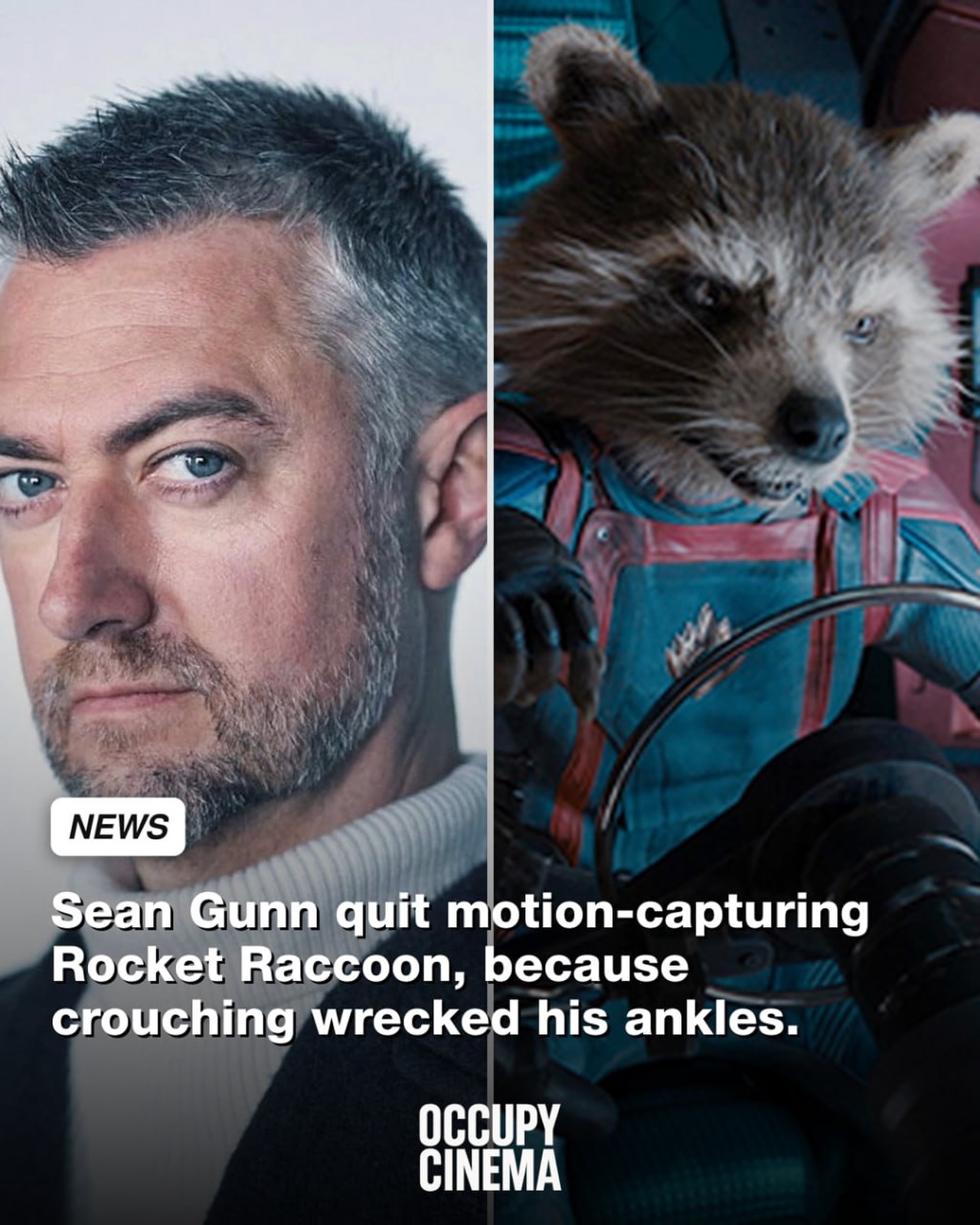
Ten years, seven films, and nearly five billion dollars in global ticket sales later, Sean Gunn is hanging up the motion-capture suit. The 50-year-old actor has officially retired from providing the physical, on-set performance for Rocket Raccoon, the hyper-intelligent mammal who anchored Marvel Studios' Guardians of the Galaxy trilogy. While Oscar nominee Bradley Cooper supplied the sharp vocal delivery in post-production, it was Gunn who spent a decade crawling on dirt, concrete, and soundstage floors to give the digital creature a physical anchor. His retirement from the crouched suit marks the end of one of the most grueling, uncredited physical commitments in modern superhero cinema.
The decision comes down to raw biomechanics. Spending full production days ducked down on knees and ankles takes a permanent toll on a performer. Gunn spent years pivoting at waist height to maintain accurate eye-lines for co-stars like Chris Pratt, Zoe Saldana, and Dave Bautista. On a sprawling tentpole set, an actor playing a three-foot-tall CGI creature cannot simply stand upright while cameras roll. Every take required full-body physical exertion, constant crouching, and low-angle duck-walking across massive physical sets built at Pinewood Studios in Atlanta and London.
That labor was rarely featured in glitzy publicity campaigns, which heavily prioritized Cooper's voice performance during press tours. Yet visual effects supervisors from Framestore and Weta FX have repeatedly noted that Rocket's physical presence, weight, and timing were entirely defined by Gunn's live work. When actors reacted to Rocket on screen, they were reacting to Gunn's immediate physical rhythm, emotional beats, and comedic timing. Cooper then matched his vocal delivery to the precise performance framework Gunn established on camera months earlier.
The Physical Rigors of Digital Performance Architecture
Gunn's tenure as Rocket began in 2014 when his brother, director James Gunn, mounted the original Guardians of the Galaxy. The project was considered Marvel's biggest gamble at the time. A space Western featuring a walking tree and a gun-toting raccoon seemed like a high-risk gamble for a studio building on the grounded heroism of Iron Man. Instead, the film grossed $773 million worldwide and turned its oddball ensemble into top-tier cultural icons. Sean Gunn pulling double duty, playing the Ravager Kraglin Obfonteri in full makeup while simultaneously acting as the physical proxy for Rocket, became the essential engine behind the film's unexpected natural chemistry.
As the franchise expanded, so did the physical demands. Gunn reprised the physical reference role in Guardians of the Galaxy Vol. 2 ($863 million global box office) and stepped onto the massive, multi-unit productions of Avengers: Infinity War ($2.05 billion) and Avengers: Endgame ($2.79 billion). By the time production wrapped on 2023's Guardians of the Galaxy Vol. 3, which earned $845 million according to reporting on Deadline, Gunn had logged hundreds of shooting days in extreme physical postures.
The strain on joints and tendons is a familiar reality for suit actors and reference performers across film history. Legendary creature actors like Doug Jones, who spent decades inside suffocating latex and foam suits for The Shape of Water and Hellboy, have spoken candidly about the career shelf-life of extreme physical labor. Similarly, Andy Serkis revolutionized motion capture with Gollum in The Lord of the Rings and Caesar in Planet of the Apes, but Serkis often operated within specialized motion-capture volumes designed for posture mapping. Gunn, by contrast, performed live on location in real time alongside main cast members, sacrificing his knees and ankles to ensure the visual effects team had real lighting cues and spatial interactions.
A Changing Universe and the Future of Set Reference
Beyond the physical wear, the timing aligns with a larger industrial shift across the superhero landscape. James Gunn has since departed Marvel Studios to take over as co-CEO of DC Studios, effectively closing the chapter on the original Guardians lineup. While Sean Gunn remains active in the industry, taking on on-screen roles like Kraglin and transitioning into new DC Universe projects such as Creature Commandos and Superman, the era of his physical crouching as Rocket has permanently closed. He noted with characteristic dryness that Marvel has not called him back for the suit anyway, pointing to the natural conclusion of the character's primary arc in Vol. 3.
The technology behind digital creature reference is also evolving rapidly. Modern virtual production techniques, including real-time spatial tracking and advanced camera rigs, are reducing the necessity for actors to physically crawl through scenes for months at a time. High-resolution volume capture and automated camera alignment allow VFX artists to construct accurate digital characters with far less physical strain on live reference performers, as covered extensively in tech breakdowns by The Hollywood Reporter.
Marvel Studios now faces a prospective shift in how it handles physical character stand-ins for future ensemble projects. While digital artists can paint over any proxy, the organic chemistry generated by a live, responsive actor on set remains difficult to replicate algorithmically. Gunn's decade in the suit set a high benchmark for how CG characters interact with human actors in blockbusters.
Sean Gunn leaving the Rocket suit at age 50 highlights an ongoing truth in modern cinema: the real weight of blockbuster filmmaking is often carried off-camera by performers operating without top-line billing. His physical commitment gave a digital raccoon a human soul, proving that even in an era dominated by computer graphics, real movie magic still depends on human endurance.