Occupy Cinema › FEATURED
Seth MacFarlane's Close Call: A Brush with History and a Career Defined
A hungover morning, a travel agent's error, and a missed flight placed Seth MacFarlane mere minutes from catastrophe on September 11, 2001. This pivotal non-event shaped the trajectory of a comedic empire.
By Occupy Cinema ·
The Clock, The Gate, The Tower
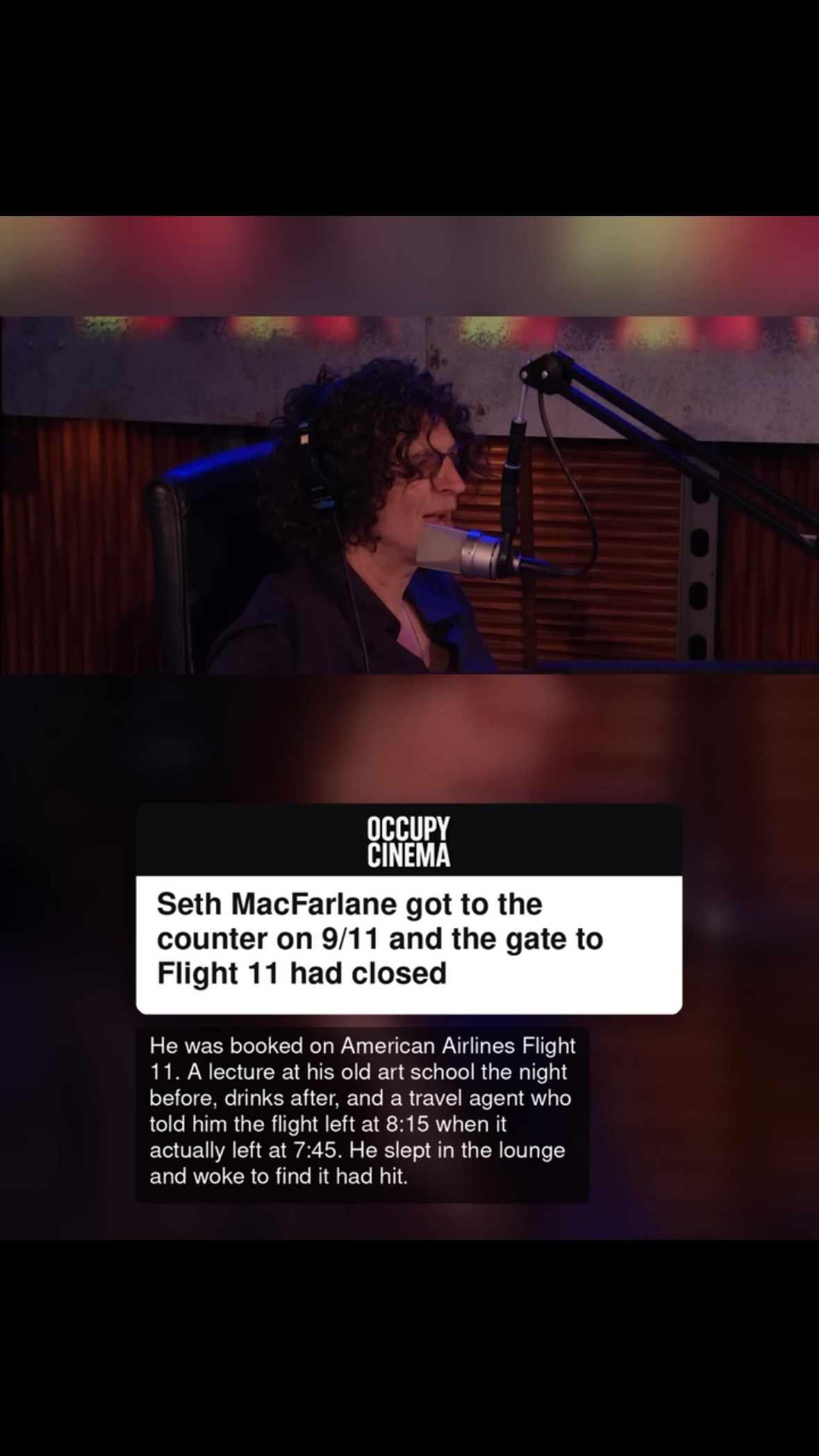
The morning of September 11, 2001, began for Seth MacFarlane with a punishing hangover. He had lectured at his alma mater, the Rhode Island School of Design, the previous evening, followed by a celebratory night out. His travel agent had provided an incorrect departure time for his Boston to Los Angeles flight, American Airlines Flight 11. Arriving at Logan International Airport, MacFarlane found the gate had just closed. He settled into the lounge, falling asleep. He awoke approximately 40 minutes later to the news that the flight, which had taken off at 7:59 AM ET, had struck the North Tower of the World Trade Center at 8:46 AM ET.
This near-miss, a stark, visceral encounter with a national tragedy, is a story MacFarlane has recounted, including on The Howard Stern Show. He has consistently maintained that he does not ascribe any deeper, fated meaning to the event, preferring to see it as a confluence of mundane errors and unfortunate timing. Yet, the proximity to such a catastrophic moment inevitably casts a long shadow, influencing perspective, even if subconsciously. For a creator whose work often treads the line between the irreverent and the deeply personal, this foundational experience provides a unique, if unacknowledged, backdrop.
At the time, MacFarlane was already a rising star at Fox, having launched Family Guy two years prior. The series, a groundbreaking animated sitcom, was known for its rapid-fire cultural references, cutaway gags, and often controversial humor. The first three seasons, airing from 1999 to 2002, garnered a cult following but faced cancellation after its third season. Fox’s decision, though initially disheartening, inadvertently set the stage for a remarkable industry comeback.
From Cancellation to Comedy Kingpin
The 9/11 incident occurred just as Family Guy was finding its footing, and its initial cancellation would pave the way for an unprecedented revival. Strong DVD sales, coupled with popular reruns on Adult Swim, demonstrated a significant and hungry audience. Fox, recognizing the untapped potential and financial viability, made the highly unusual decision to resurrect the series in 2005. This move was a watershed moment in television history, proving that audience engagement, even outside traditional Nielsen ratings, could dictate a show's fate. The show's return was a massive success, leading to a sprawling multimedia empire for Seth MacFarlane.
Post-resurrection, MacFarlane leveraged his success into a string of hit projects. He created two more successful animated series, American Dad! and The Cleveland Show, solidifying his reputation as a television animation mogul. His foray into live-action film proved equally potent, starting with 2012's Ted, a raunchy comedy starring Mark Wahlberg and a foul-mouthed teddy bear. Ted grossed over $549 million worldwide on a $50 million budget, a phenomenal return that cemented MacFarlane's mainstream appeal and directorial bona fides. He followed this with A Million Ways to Die in the West and Ted 2, further diversifying his portfolio.
MacFarlane's influence extends beyond comedy. His passion for music led to several acclaimed big-band albums, earning him multiple Grammy nominations. His commitment to classic Hollywood artistry is also evident in his work on The Orville, a sci-fi dramedy that deliberately evoked the optimistic spirit of classic Star Trek, garnering critical praise for its nuanced storytelling and visual effects. This multi-hyphenate career, from voice actor and writer to director, producer, and singer, reflects an ambition and a creative drive that few in Hollywood can match. His brush with tragedy on 9/11, while not directly influencing his creative output, undoubtedly underscored the preciousness of time and the unpredictable nature of existence, perhaps fueling a relentless pursuit of his artistic vision.