Occupy Cinema › Business
Late Night Gets Its First Gen Z Cast Member: Grace Reiter’s Viral DIY Cinema Engine Moves to Studio 8H
From a three-day, low-budget Hunger Games parody that racked up nearly 14 million views to Lorne Michaels’ Studio 8H, Grace Reiter represents a seismic pipeline shift for network comedy talent.
By Occupy Cinema ·
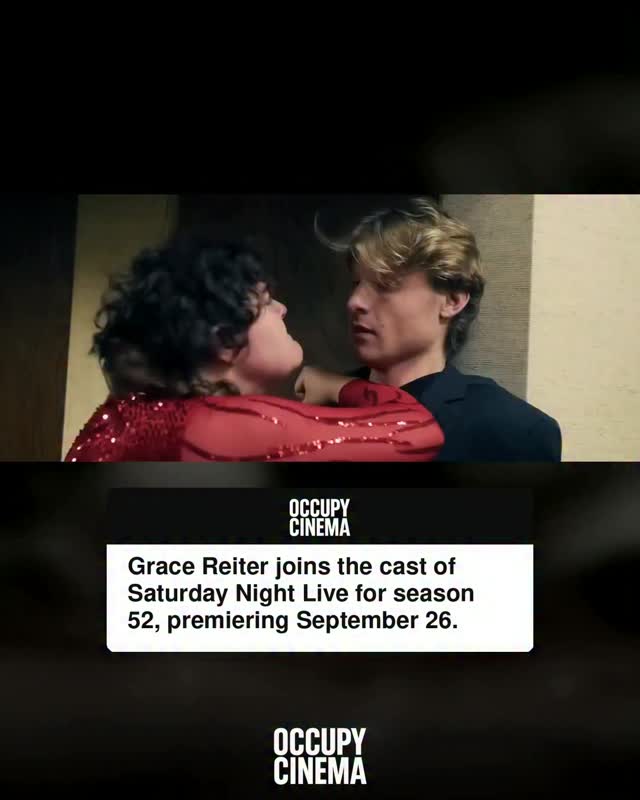
NBC's flagship comedy institution Saturday Night Live is gearing up for its 52nd season, launching September 26 with a casting decision that signals a clear generational pivot. Grace Reiter is officially joining the roster in Studio 8H. The move carries dual significance for the long-running late-night program. Reiter becomes the very first cast member in the history of the franchise to be born in the 21st century. She enters the doors of 30 Rockefeller Plaza not through the traditional pipeline of regional improv stages, but on the heels of a massive digital filmmaking hit that generated nearly 14 million views in a matter of weeks.
The catalyst for her hiring was an ambitious, low-budget narrative experiment completed in May 2025. Reiter and a tight group of creative collaborators produced The Hunger Games (but better), a full-scale comedic reimagining of the blockbuster franchise originally directed by Gary Ross and later expanded by Francis Lawrence. Shot in just three days with minimal gear and endless resourcefulness, the project subverted studio blockbuster tropes while proving Reiter's multi-hyphenate capabilities as a writer, performer, and producer. The resulting video went wildly viral, securing close to 14 million views and capturing the immediate attention of industry talent scouts.
Industry trade publications like Deadline have long tracked the shifting talent pipelines powering broadcast comedy. For decades, Saturday Night Live executive producer Lorne Michaels turned almost exclusively to established comedy institutions to stock the show's writer's room and performance roster. Venues like The Groundlings in Los Angeles, Upright Citizens Brigade in New York, and The Second City in Chicago served as the primary incubators. Those stages produced comedy legends including Will Ferrell, Tina Fey, Kristen Wiig, and Bowen Yang. However, the rise of creator-led digital platforms has completely disrupted that traditional ecosystem, creating direct avenues from online distribution to network television.
From Low-Budget Parody to Late-Night Prime Time
The DIY production method behind Reiter's Hunger Games parody reflects a broader movement within contemporary independent filmmaking. Rather than waiting for studio greenlights, agency representation, or formal development deals, young creators are treating public video platforms as test beds for narrative craft. The three-day production schedule required hyper-efficient scheduling, agile camera operating, and deadpan comedic timing that kept viewers hooked across a sustained runtime. The video did not merely offer quick punchlines. It delivered full narrative arcs, stylized visual gags, and a sharp parody of dystopian cinema tropes.
Reports from The Hollywood Reporter highlight how network television executives increasingly look to digital engagement metrics to gauge an artist's built-in audience. Reiter's transition from internet sensation to network late-night performer is reminiscent of past digital hires, but with a structural twist. In 2005, the show brought on Andy Samberg, Akiva Schaffer, and Jorma Taccone of The Lonely Island, revolutionizing the broadcast through SNL Digital Shorts. More recently, the trio of Ben Marshall, John Higgins, and Martin Herlihy, known as Please Don't Destroy, carved out a recurring digital slot on the show. Reiter, however, arrives with a track record of self-contained narrative parody that operates like a rogue micro-budget feature film.
The financial dynamics of late-night casting have changed alongside viewer habits. Network pilot seasons and traditional screen testing can run studios hundreds of thousands of dollars per talent search. A project like The Hunger Games (but better) provides executives with real-time focus group results at zero cost to the network. With nearly 14 million organic views, Reiter proved she could capture the hyper-competitive attention of Gen Z audiences who have largely abandoned linear broadcast television in favor of digital streams and social video feeds.
Bridging the Gap Between Digital Cinema and Live Television
As IndieWire regularly highlights in coverage of emerging filmmakers, the line between digital video and cinema craft continues to blur. Reiter's work relies on kinetic visual editing, genre literacy, and precise comedic subversion. Translating those cinematic instincts to the live theater environment of Studio 8H will present an exciting test. Live sketch television demands vocal projection, rapid costume transitions, precise mark-striking, and instant adaptation to live audience reactions without the safety net of multiple takes or post-production editing.
The inclusion of a post-2000 performer in the cast also marks a critical cultural threshold for Saturday Night Live. As the show moves deeper into its fifth decade on the air, staying culturally relevant requires talent who inherently speak the linguistic and comedic dialect of the youngest media consumers. Reiter brings a native understanding of internet culture, visual memes, and contemporary satire that cannot be easily replicated by older writers' rooms attempting to simulate youth culture from a distance.
For independent comedic filmmakers, Reiter's leap to NBC offers a compelling case study in self-empowerment. The tools for capturing high-definition footage, editing fast-paced narrative projects, and distributing work directly to millions of viewers are now accessible to anyone with basic gear and editing software. The traditional gatekeepers of television no longer hold an exclusive monopoly on star-making power. A well-executed three-day shoot with friends can open the doors to 30 Rockefeller Plaza just as effectively as years on the improv circuit.
When Season 52 of Saturday Night Live premieres on September 26, all eyes will be on how the show incorporates its youngest cast member yet. Grace Reiter's journey from a whirlwind three-day DIY parody set to the iconic stage of Studio 8H is more than a personal triumph. It represents a fundamental shift in how comedy stars are discovered, developed, and elevated in the modern entertainment landscape.