Occupy Cinema › Craft
Framing Totality: Danny León and Gonzalo De Vega Capture a Single-Take Eclipse Stunt
Filmmaker Gonzalo De Vega and Olympic skateboarder Danny León executed a single-take stunt against Europe's total solar eclipse, merging optical compression with extreme sports precision.
By Occupy Cinema ·
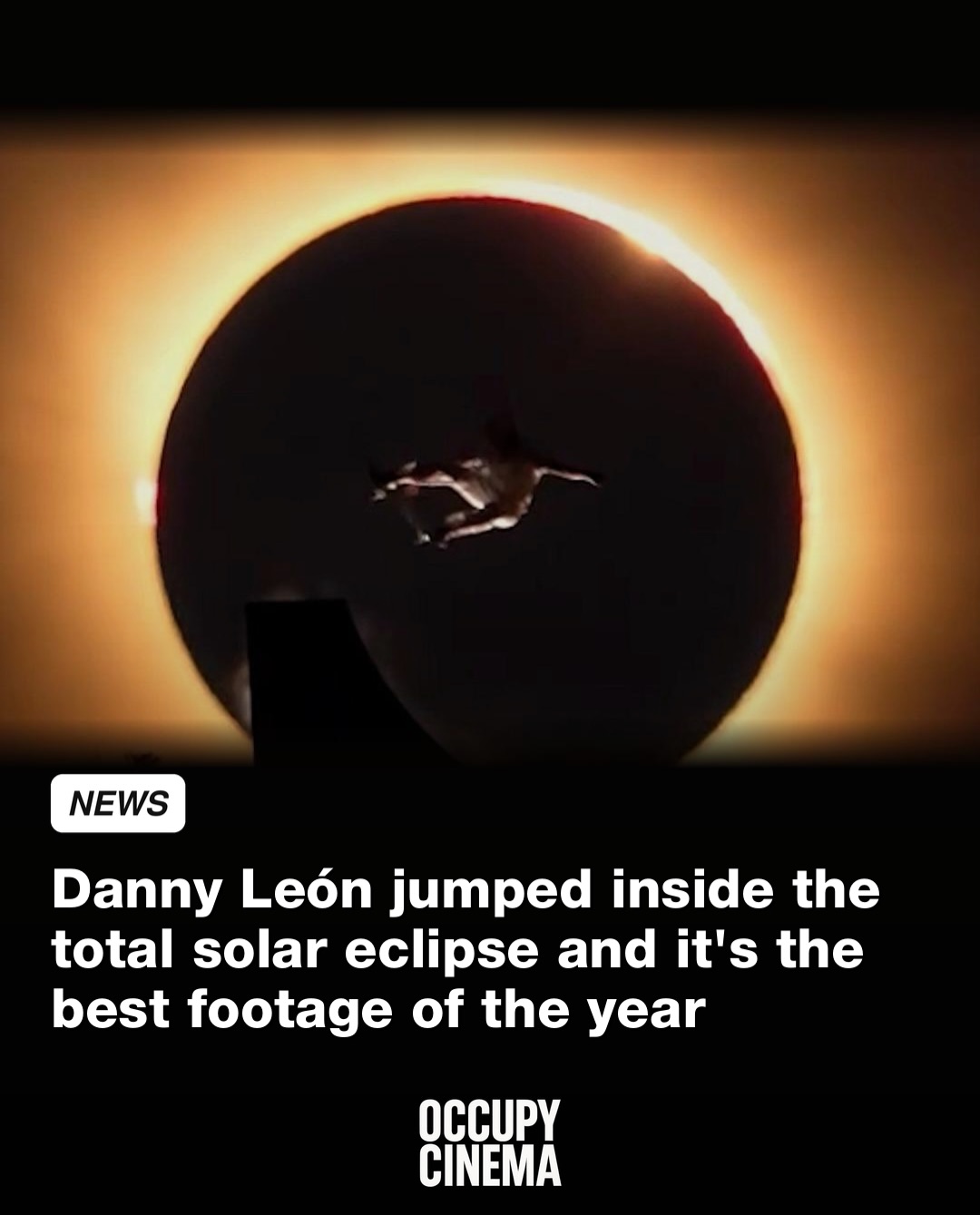
Timing is everything in high-concept cinematography, but when the celestial clock is running, there are no second takes. On August 12, Spanish Olympic skateboarder Danny León dropped into a custom ramp built against the backdrop of Europe’s first total solar eclipse in a quarter-century. Captured in real time by filmmaker Gonzalo De Vega and photographed by Jose Izquierdo, the stunt placed León’s airborne silhouette directly inside the ring of totality. It was an extraordinary intersection of action sports engineering and high-stakes natural phenomenon photography.
The logistics behind a stunt of this nature are brutally unforgiving. A total solar eclipse provides only a brief window of totality depending on the precise geographical location along the path of the moon’s shadow. In action sports filmmaking, dynamic shots usually rely on repeated attempts, fine-tuning ramps, camera angles, lighting setups, and athlete speed over dozens of passes. De Vega had one single opportunity. If León missed his cue by half a second, or if the camera operator miscalculated the focal vector, the entire project would be lost to history.
One Frame, Zero Margin for Error
To pull off the illusion of a human body perfectly centered within the sun’s outer atmosphere, the camera setup required extreme lens compression. Standard visual coverage would render the sun as a tiny, blown-out speck in the background. De Vega utilized long telephoto glass positioned hundreds of yards away from the ramp structure. This optical compression enlarged the eclipse behind León, transforming the celestial event into a colossal stage setting for a fleeting air trick.
Dynamic range management presented an equally daunting technical hurdle. The shift from full daylight to the eerie twilight of totality happens rapidly. Exposure values drop sharply in seconds. Photographers and cinematographers covering eclipses must constantly adjust shutter speed and exposure configurations to capture the delicate, faint tendrils of the solar corona without crushing the foreground completely into noisy oblivion. Izquierdo’s still frames and De Vega’s motion footage hit the razor-thin sweet spot between highlight retention and shadow clarity, according to coverage in IndieWire's craft reporting on non-traditional cinematography.
The Mechanics of High-Speed Astrophotography
The visual language of extreme sports has evolved dramatically over the last decade. Production teams and specialized camera operators have raised the stakes for practical, non-CGI imagery, driving camera crews into extreme environments from polar ice caps to active volcanoes. As highlighted by The Hollywood Reporter in their analysis of modern stunt documentation, audiences increasingly crave verified authenticity over digital manipulation. Landing an aerial move framed by a cosmic alignment represents the absolute peak of this practical ethos.
León himself called the jump the move of his life, a sentiment shared across the action sports community after the footage surfaced online. Beyond the viral social media metrics, the production serves as a masterclass in spatial planning, optical physics, and ice-cold execution under pressure.
In an era dominated by generative visual effects and post-production composite tricks, De Vega and Izquierdo delivered a stark reminder of cinema’s foundational magic. Real light, real optics, and real physical risk still possess an unrivaled power to stun an audience. When nature provides the backdrop, precision filmmaking turns a brief moment of darkness into an enduring visual monument.
Related reading: Reflections: Twenty-One Cinematographers at Work.