Occupy Cinema › FEATURED
Paramount and Legendary's 'Street Fighter' Stakes Out October Release Date With Stacked Ensemble Cast
With $80 million poured into Sydney production and a star-studded cast led by Jason Momoa and 50 Cent, Legendary and Paramount test the endurance of video game adaptations.
By Occupy Cinema ·
Video game adaptations are no longer risky speculative bets for Hollywood studios. They are foundational tentpoles. Legendary Entertainment and Paramount Pictures are pushing their new distribution partnership into the arena with a high-stakes, big-budget live-action reboot of Capcom's flagship fighting franchise. Street Fighter is officially locked for an October 16 theatrical release. The project marks the first major feature to roll out under the multi-year distribution arrangement between Legendary and Paramount. It is an aggressive play that signals both companies' belief in gaming intellectual property as a primary driver of global box office revenue.
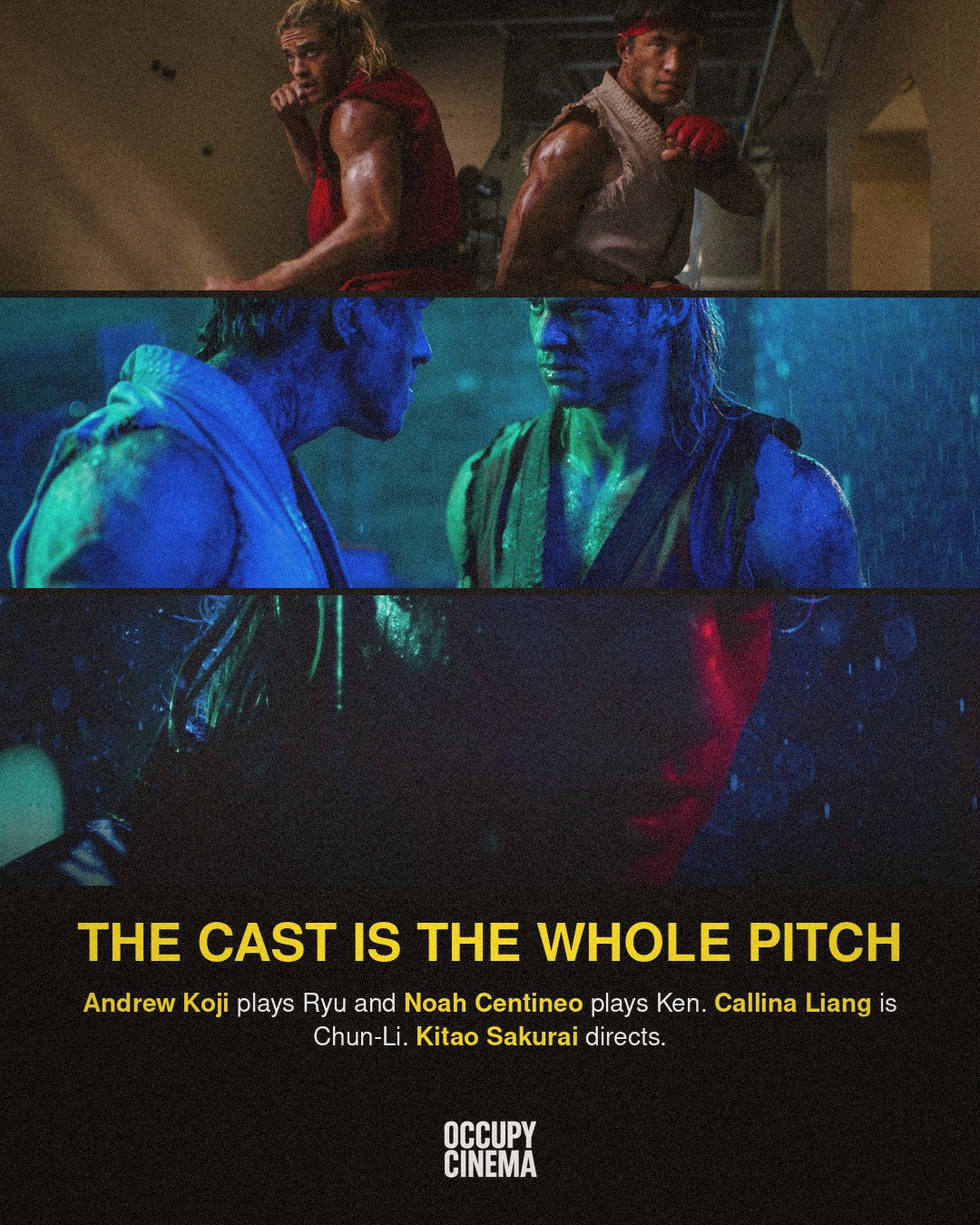
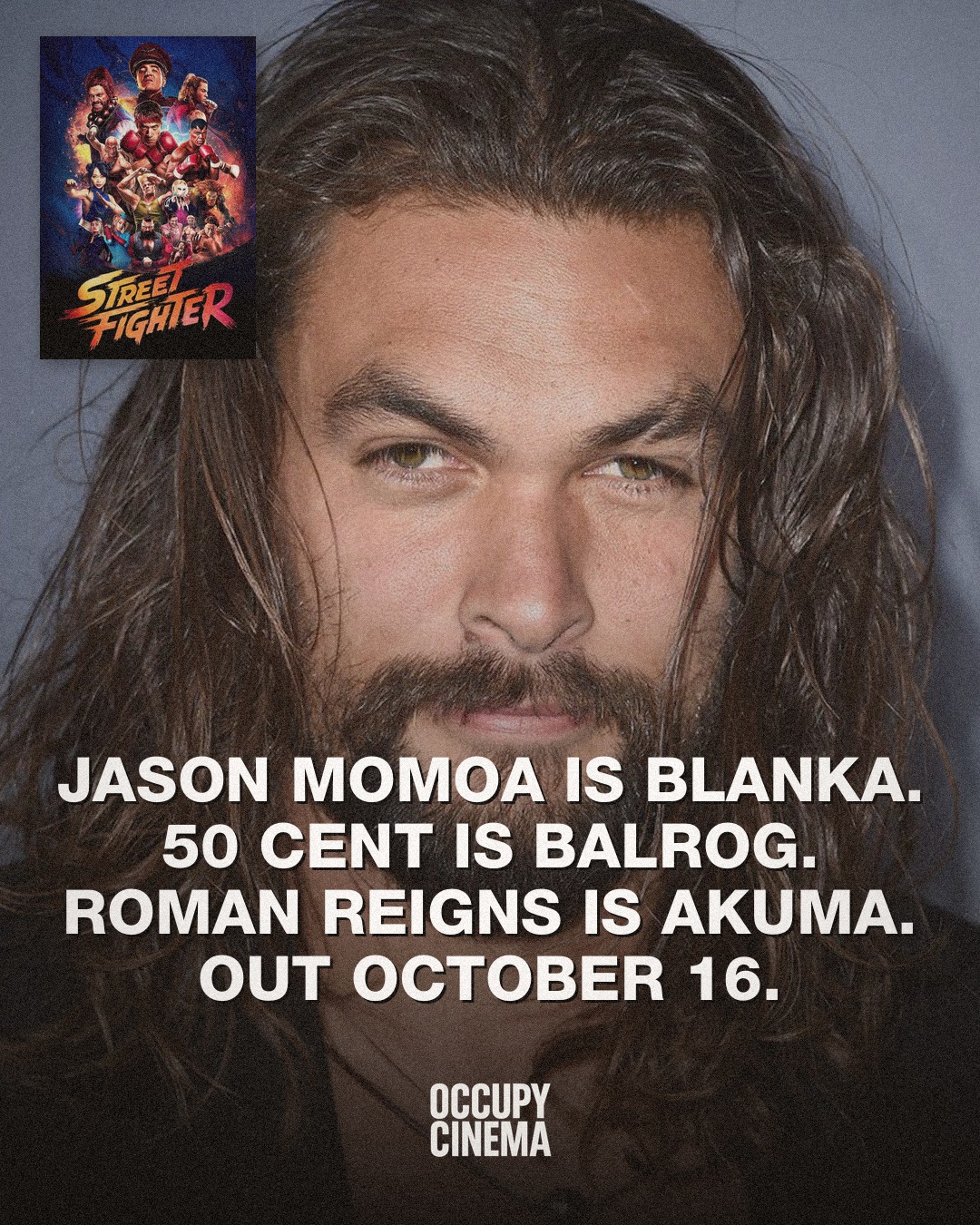
The film arrives with an eccentric, stacked ensemble designed to cross over between martial arts cinema, mainstream action, hip-hop culture, and professional wrestling. Jason Momoa leads the eccentric ensemble as the feral, green-skinned mutant Blanka. Hip-hop icon and entrepreneur Curtis "50 Cent" Jackson signs on as the heavyweight boxer Balrog. WWE superstar Roman Reigns makes a heavy-hitting leap into blockbuster cinema as the terrifying martial artist Akuma. On the technical martial arts front, Andrew Koji, who anchored Cinemax's acclaimed series Warrior, steps into the white gi of series protagonist Ryu. Noah Centineo co-stars as his American rival Ken Masters, while Callina Liang takes on the role of Interpol officer Chun-Li.
In the director's chair is Kitao Sakurai, best known for directing Netflix's prank comedy hit Bad Trip and his extensive work on Adult Swim's anarchic series The Eric Andre Show. Sakurai's hiring signals an intention to lean into the heightened, kinetic energy of the source material rather than grounding the world in dour, gritty realism. Translating the colorful, bombastic universe of Capcom's fight mechanics into live action requires a director capable of managing visual chaos, fast cuts, and physical comedy. Industry tracking outlets like Deadline have closely followed the production, noting that Paramount is eyeing an expansive worldwide rollout across IMAX and premium large format screens.
The Down Under Production Strategy
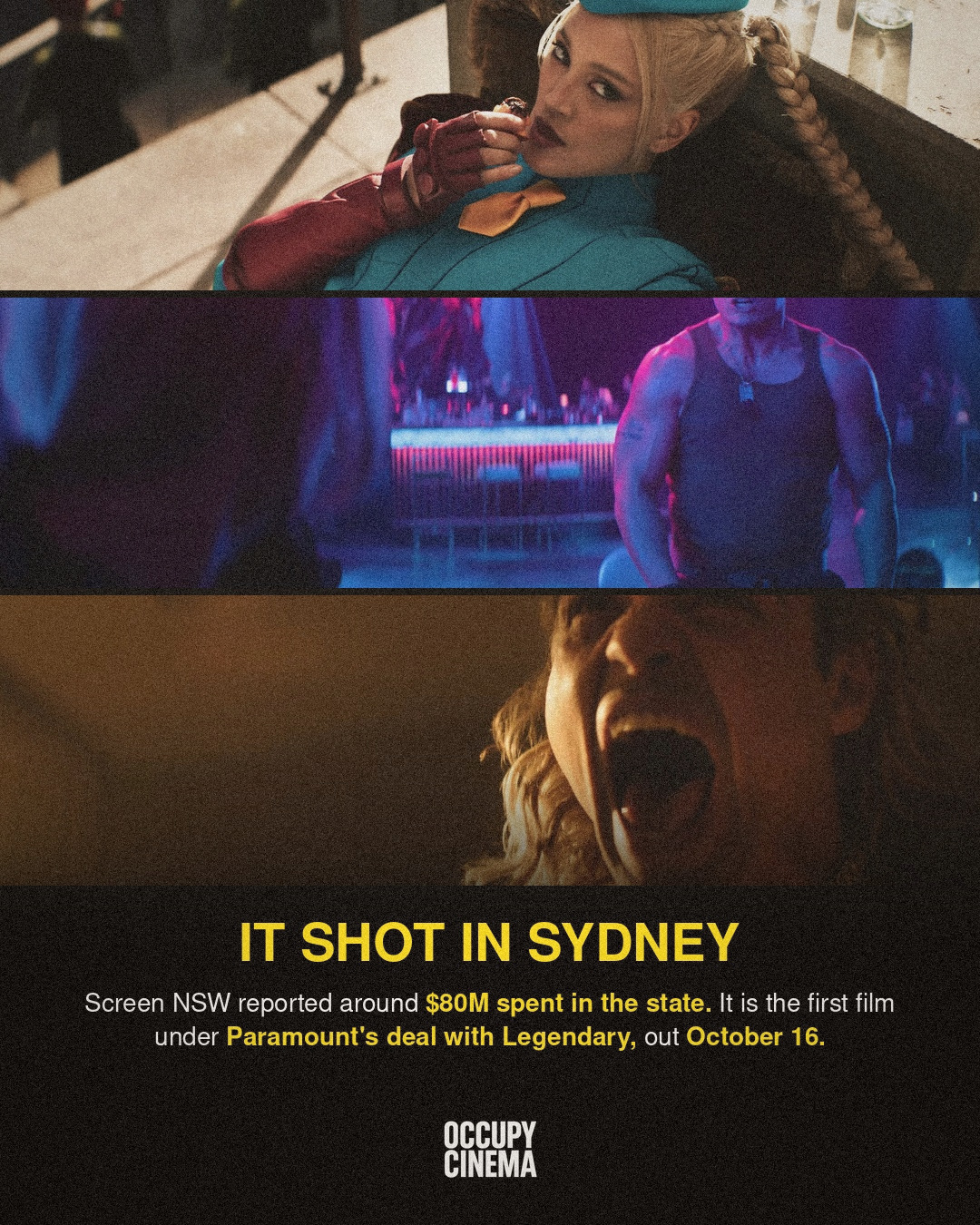
The scale of the production is reflected in its balance sheet. Principal photography took place on location and across soundstages in Sydney, Australia. According to state screen agency Screen NSW, the production injected approximately $80 million directly into the local New South Wales economy. The production leveraged Australia's competitive location incentives and skilled local crew infrastructure, joining a long line of American studio blockbusters that have turned Sydney into a reliable production hub.
The financial commitment underscores the stakes for Legendary and Paramount. Legendary previously maintained a lucrative distribution relationship with Warner Bros. Pictures, yielding massive monster hits like Dune and the Godzilla-Kong MonsterVerse. Shifting key titles to Paramount represents a recalibration of international distribution, physical home media, and streaming windows. A successful launch for Street Fighter would validate Paramount's ability to market and distribute Legendary's massive theatrical slates worldwide. Modern trade reports from The Hollywood Reporter highlight how crucial international co-productions and regional rebates have become to offset rising production budgets.
For Capcom, the project represents another leg in an ongoing media revival. Video game adaptations have enjoyed an unprecedented golden era over the last five years. Releases like The Super Mario Bros. Movie, Sonic the Hedgehog, and Uncharted proved that gaming franchises can generate hundreds of millions of dollars in theatrical revenue without alienating core players. Capcom has already seen massive success in the interactive space with Street Fighter 6, which sold millions of units within months of launch. Aligning the cinematic brand with peak game engagement is crucial to capturing both casual moviegoers and long time arcade fans.
Fighting the Ghost of 1994
Adapting Street Fighter comes with significant historical baggage. Director Steven E. de Souza helmed the original live-action movie in 1994, starring Jean-Claude Van Damme and Raul Julia. While that film earned over $99 million worldwide against a modest budget, critical consensus was harsh, though Julia's theatrical performance as M. Bison eventually achieved camp cult status. A second attempt, the 2009 film Street Fighter: The Legend of Chun-Li, flopped critically and commercially, earning less than $13 million globally. Coverage in outlets like IndieWire often references those previous missteps as cautionary tales for modern studios handling classic gaming properties.
Sakurai and his creative team are taking a distinctly different approach by anchoring the action in legitimate martial arts credentials and spectacle. Casting Andrew Koji brings immediate credibility to the fight choreography. Koji's extensive training in taekwondo and karate, alongside his performance work on Warrior, guarantees that Ryu's signature combat moves will carry physical weight on screen. Combining Koji's martial arts background with the physical presence of WWE performers like Roman Reigns allows the film to blend legitimate stunt choreography with grand, theatrical sports entertainment flair.
Visual effects will play an equally critical role. Recreating iconic special moves like Ryu's Hadouken or Chun-Li's Lightning Kick requires a seamless blend of practical stunt work and digital augmentation. The production team in Sydney worked extensively with top tier visual effects houses to design a visual style that mirrors the vibrant painterly aesthetics of modern Capcom titles. Rather than muting the colors, the costume and production designers opted for saturated, combat-ready garments that preserve the iconic visual silhouettes established in the original arcade games.
The inclusion of 50 Cent as Balrog and Jason Momoa as Blanka points toward a blockbuster that embraces the camp, personality, and scale of the original game roster. Momoa's physical presence and charismatic screen persona make him an inspired choice for Blanka, a character who demands a delicate balance between animalistic fury and crowd-pleasing charisma. Meanwhile, 50 Cent brings decades of star power and pop culture authority to Balrog, the disgraced Las Vegas heavyweight turned villainous enforcer.
When Street Fighter opens on October 16, it will face a competitive autumn theatrical window. The film is not just testing whether a thirty-year-old fighting game franchise can sustain a modern cinematic universe. It is testing Paramount's ability to convert legendary gaming IP into a sustainable theatrical event. If the combination of $80 million in Sydney production values, stunt-driven action, and star power pays off, Paramount and Legendary will have unlocked their next major multi-film action franchise.