Occupy Cinema › Awards
Jonathan Glazer Handed Cameras to Children in War Zones. The Result is NYFF’s Most Urgent Addition.
Film at Lincoln Center has added 'Joy of Joys' to the 64th New York Film Festival. The War Child documentary marks Glazer's first project since 'The Zone of Interest'.
By Occupy Cinema ·
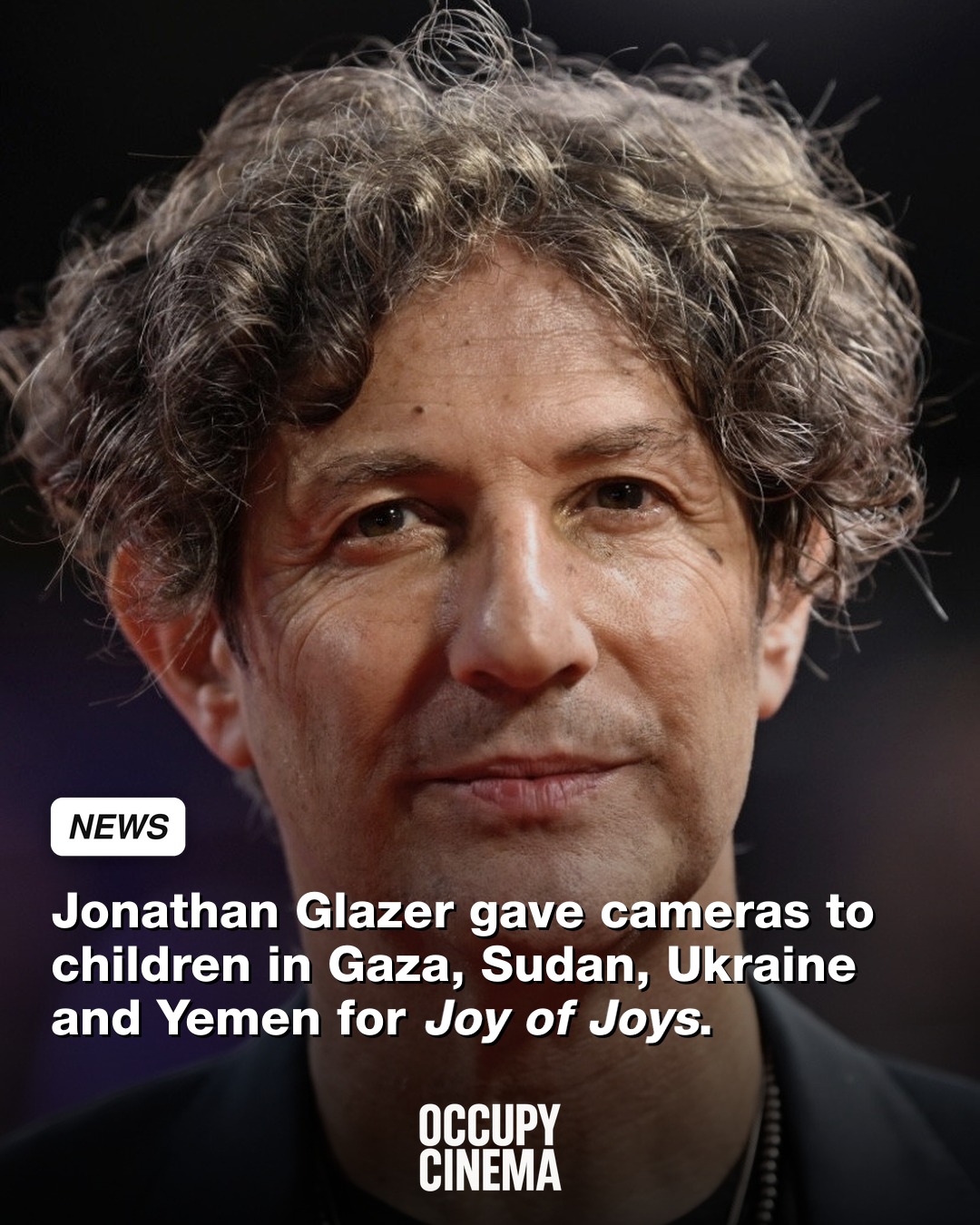
Jonathan Glazer does not operate on traditional Hollywood timelines. The British director spent nearly a decade developing The Zone of Interest, a film that ultimately earned five Academy Award nominations, won two Oscar statuettes, and grossed over $24 million worldwide for A24. His output is famously sparse, yielding only four feature films across a twenty-five-year career. That makes the announcement from Film at Lincoln Center all the more startling. On August 11, the 64th New York Film Festival officially added Glazer's new non-fiction project, Joy of Joys, to its prestigious Spotlight lineup.
The project captures the high-stakes creation of HELP(2), a major charity album produced for War Child at Abbey Road Studios in London. The original 1995 HELP compilation raised over 1.2 million pounds for children caught in the Bosnian War, recorded in a single twenty-four-hour session by icons of the Britpop era. Decades later, HELP(2) revives that urgent spirit. But rather than approaching the session with standard multi-camera coverage or high-end cinema rigs, Glazer introduced a radically democratic production method. He handed basic digital cameras to local London schoolchildren, instructing them to capture the Abbey Road sessions according to their own instincts and impulses.
A Global Lens Without Hierarchies
The camera hand-off extended far beyond London. Glazer shipped identical digital cameras to children living in active conflict zones across the globe, including Gaza, Sudan, Ukraine, and Yemen. These young participants documented their daily environments and personal lives, creating a stark visual counterpoint to the music being tracked inside Abbey Road. The resulting film was shaped alongside composer and long-time collaborator Mica Levi, who previously crafted the haunting, microtonal scores for Under the Skin and The Zone of Interest. Together, Glazer and Levi describe Joy of Joys as a piece made "by children, for children."
The technical approach deliberately upends traditional documentary grammar. By replacing professional cinematographers with unprompted pediatric operators, Glazer surrenders auteurist control in favor of observational immediacy. There are no polished camera moves or calculated lighting setups. Instead, raw, pixelated handheld imagery from war-torn neighborhoods sits directly beside chaotic, playful coverage of famous musicians inside Studio Two at Abbey Road. The collision of these worlds reflects the ethos of War Child itself, linking artistic expression in the West directly to humanitarian crises elsewhere. Coverage from Deadline and The Hollywood Reporter points to a growing trend of non-fiction filmmakers abandoning formal staging to pursue raw, primary-source footage.
Festival Strategy and Industry Impact
Securing a Spotlight slot at NYFF64, which runs from September 25 through October 12, positions Joy of Joys at the absolute center of autumn festival commentary. Film at Lincoln Center uses its Spotlight section to champion bold works from established masters, outside the strict confines of the Main Slate competition. For Jonathan Glazer, the premiere serves as his first major public artistic statement since his polarizing, widely discussed Oscar acceptance speech in March 2024. While industry tracking initially suggested Glazer would retreat into another lengthy development cycle before delivering a narrative feature, Joy of Joys proves his focus has shifted toward immediate, real-world intervention.
Ultimately, Joy of Joys represents a profound re-examination of who holds the authority to record history. Glazer has built a career on meticulous visual precision, from the slick commercial iconography of Sexy Beast to the terrifying, static frame compositions of The Zone of Interest. Giving up the viewfinder to children residing in active war zones is a radical act of humility for a director at the peak of his prestige. By placing consumer cameras into the hands of those most vulnerable to global violence, Glazer and Levi have fashioned a movie that functions less as a traditional concert film and more as an urgent, unvarnished dispatch from the modern world.
Related reading: Film Festival Secrets: The Ultimate Handbook for Independent Filmmakers.