Occupy Cinema › Box Office
Onslaught's Mixed Reception: Audiences and Critics Disagree, Box Office Stumbles
A24's latest action-thriller, 'Onslaught', starring Adria Arjona and directed by Adam Wingard, faced a tough Labor Day weekend debut. Despite a wide release, its box office performance and CinemaScore reflect a disconnect between critical and audience reception.
By Occupy Cinema ·
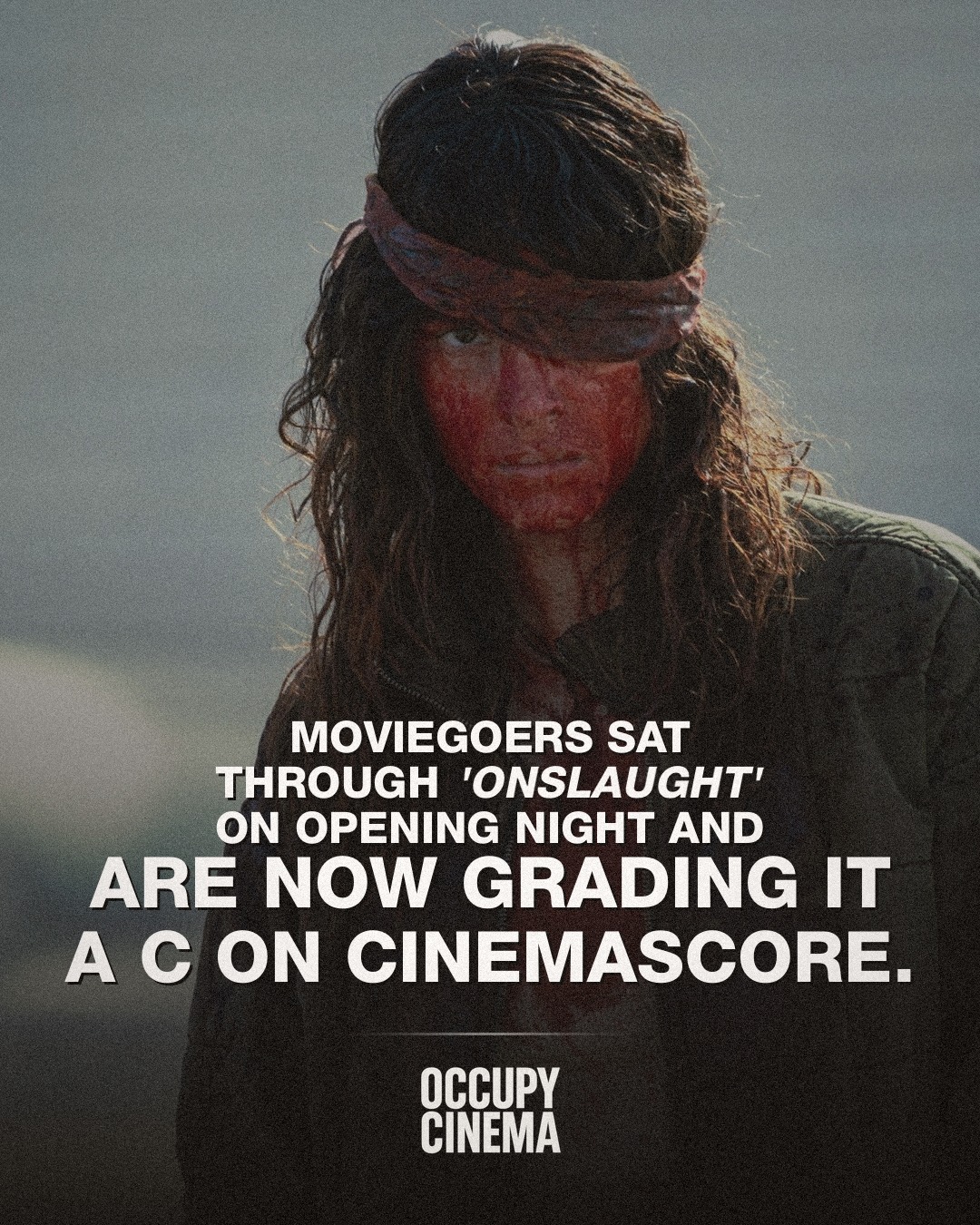
A Troubled Debut for A24's 'Onslaught'
The Labor Day weekend saw A24's action-thriller, Onslaught, land in nearly 2,000 theaters. Directed by Adam Wingard, the film aimed for a wide commercial play, a notable move for a distributor often associated with more arthouse fare. However, its opening weekend numbers tell a story of struggle. Debuting across 1,918 screens, Onslaught mustered a modest $2.3 million over the four-day holiday frame. This figure, particularly for a film with genre appeal and recognizable talent, suggests an uphill battle for profitability against its production budget, which remains undisclosed but is likely significant for an action-heavy title.
Audience sentiment quickly became a focal point. Moviegoers graded Onslaught a C on CinemaScore, a metric often considered a bellwether for word-of-mouth and subsequent box office legs. For context, a C grade typically indicates a poor reception, usually leading to steep drops in attendance in following weeks. PostTrak figures reinforced this, with only 33 percent of respondents giving a definite recommend. This audience disinterest stands in contrast to the film's aggregate critical score of 54 percent, which, while not stellar, is a full 13 points lower than the 67 percent reported for audiences. This disparity highlights a schism that rarely bodes well for a film's commercial prospects, indicating critics found more to appreciate than the general public did, or at least evaluated it on a different scale.
Genre Expectations and Industry Context
The film, written by Wingard and Simon Barrett, centers on Adria Arjona as Celeste, a retired Army sniper defending her family from genetically engineered super soldiers. Dan Stevens and Rebecca Hall co-star, lending additional star power to the ensemble. Wingard's previous work, notably in the horror and monsterverse genres, has often garnered a passionate fan base. His shift towards a more grounded, albeit still heightened, action-thriller with A24 signals an ambition to expand his directorial range and the studio's genre footprint. The casting of Arjona, an actress with a growing resume in action-oriented roles, further solidified the film's commercial intent. However, the market for mid-budget action thrillers can be fiercely competitive, often requiring strong critical endorsement or exceptional audience buzz to break through.
A24's strategy for Onslaught appears to have been a calculated risk. While the studio has achieved significant success with critically acclaimed dramas and horror films, a wide theatrical release for an action picture represents a different kind of investment and expectation. The Labor Day weekend, historically a challenging period for new releases, offered a less crowded field, but also one with diminished overall moviegoing attendance. The film’s performance will undoubtedly be scrutinized internally, especially as A24 continues to diversify its slate. Distributors rely heavily on strong opening weekends and positive audience feedback to justify wide releases, particularly for original IP that lacks a built-in fan base or franchise recognition. The C CinemaScore suggests that the film failed to connect broadly, hindering its ability to generate the positive word-of-mouth necessary for a sustained theatrical run.
The conversation around Onslaught now pivots to its longevity. A low CinemaScore and soft opening typically signal a rapid decline in subsequent weeks, making the path to profitability, especially in theaters, increasingly difficult. While streaming and VOD windows offer potential avenues for recovery, the initial theatrical performance sets a challenging precedent. The film’s narrative around audience versus critic scores, and its modest box office, will be a case study for future genre releases from independent distributors navigating a volatile exhibition landscape. For A24, it marks another data point in its evolving strategy, demonstrating the inherent unpredictability of the theatrical market, even for a studio with a strong brand identity. For more industry analysis, see Deadline's box office coverage and The Hollywood Reporter's film reviews.
Related reading: Respect for Acting.