Occupy Cinema › Streaming
How Taylor Sheridan Turned Two Decades of Bit Parts Into a Billion-Dollar TV Empire
Before co-creating Yellowstone and writing Sicario, Taylor Sheridan survived as a character actor. Reading hundreds of mediocre scripts taught him the ultimate screenwriting lesson: what not to do.
By Occupy Cinema ·
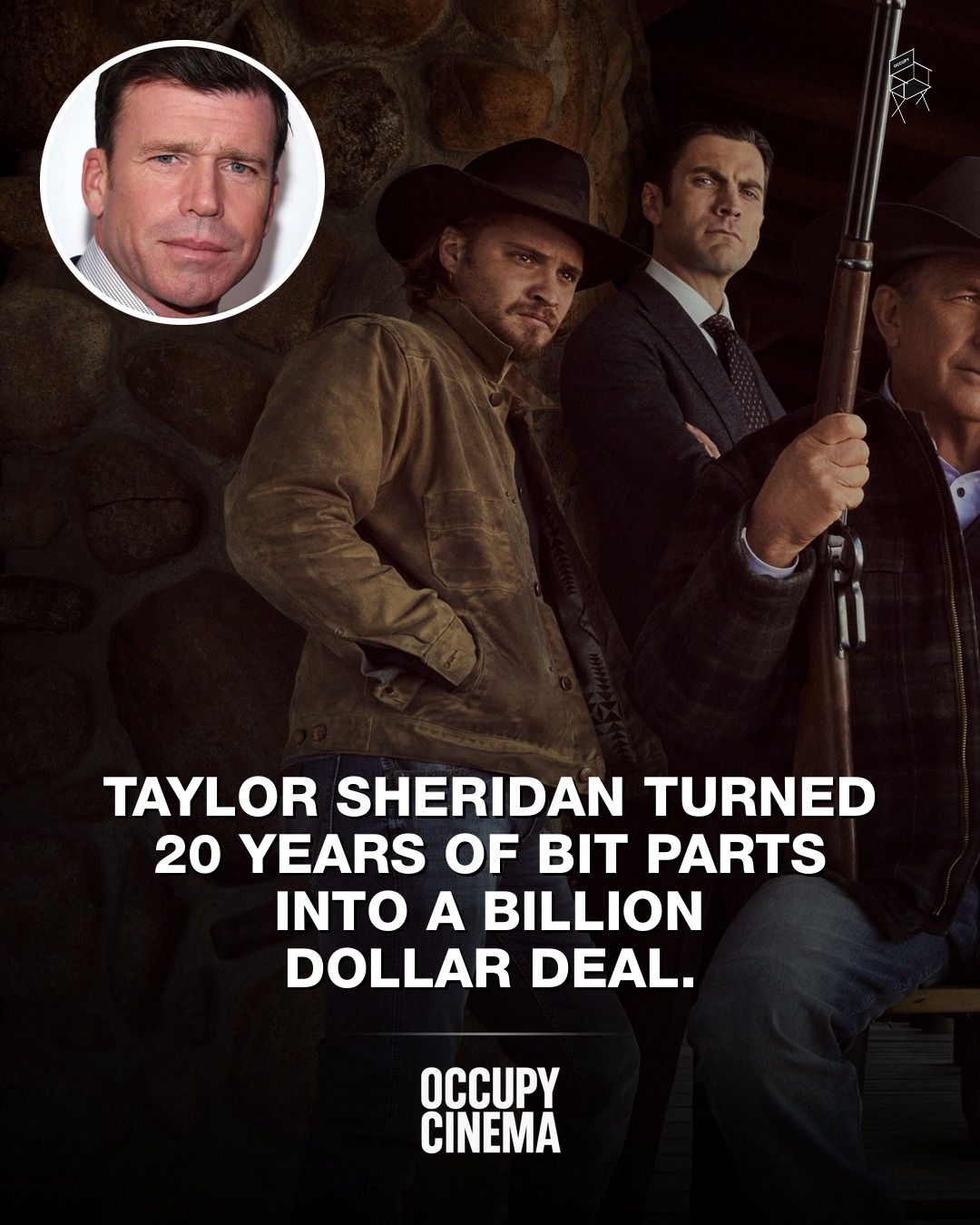
Taylor Sheridan is currently the most powerful television creator in American entertainment. His sprawling slate at Paramount Network and Paramount+ commands millions of weekly viewers, generating massive revenue across linear and streaming platforms. Yet his lucrative media empire was built on a foundation of professional frustration. Before writing his first line of produced dialogue, Sheridan spent nearly two decades working as a journeyman actor in Los Angeles. He accumulated working-class credits on episodic television shows, surviving on guest spots and recurring roles. That long period of working as a character actor proved to be the ultimate film school. It offered a masterclass in narrative efficiency, dialogue rhythm, and script structure.
Sheridan spent three seasons portraying Deputy Chief David Hale on the FX drama series Sons of Anarchy. During those twenty years on set, he spent thousands of hours reading television scripts sent by casting offices. Most of those pages were uninspiring. However, analyzing weak writing provided a unique education. By dissecting conventional procedural scripts day after day, Sheridan learned precisely what did not work on page or screen. He recognized lazy exposition, repetitive character beats, and bloated structural pacing. He resolved to eliminate those exact tropes when he finally sat down at the keyboard himself.
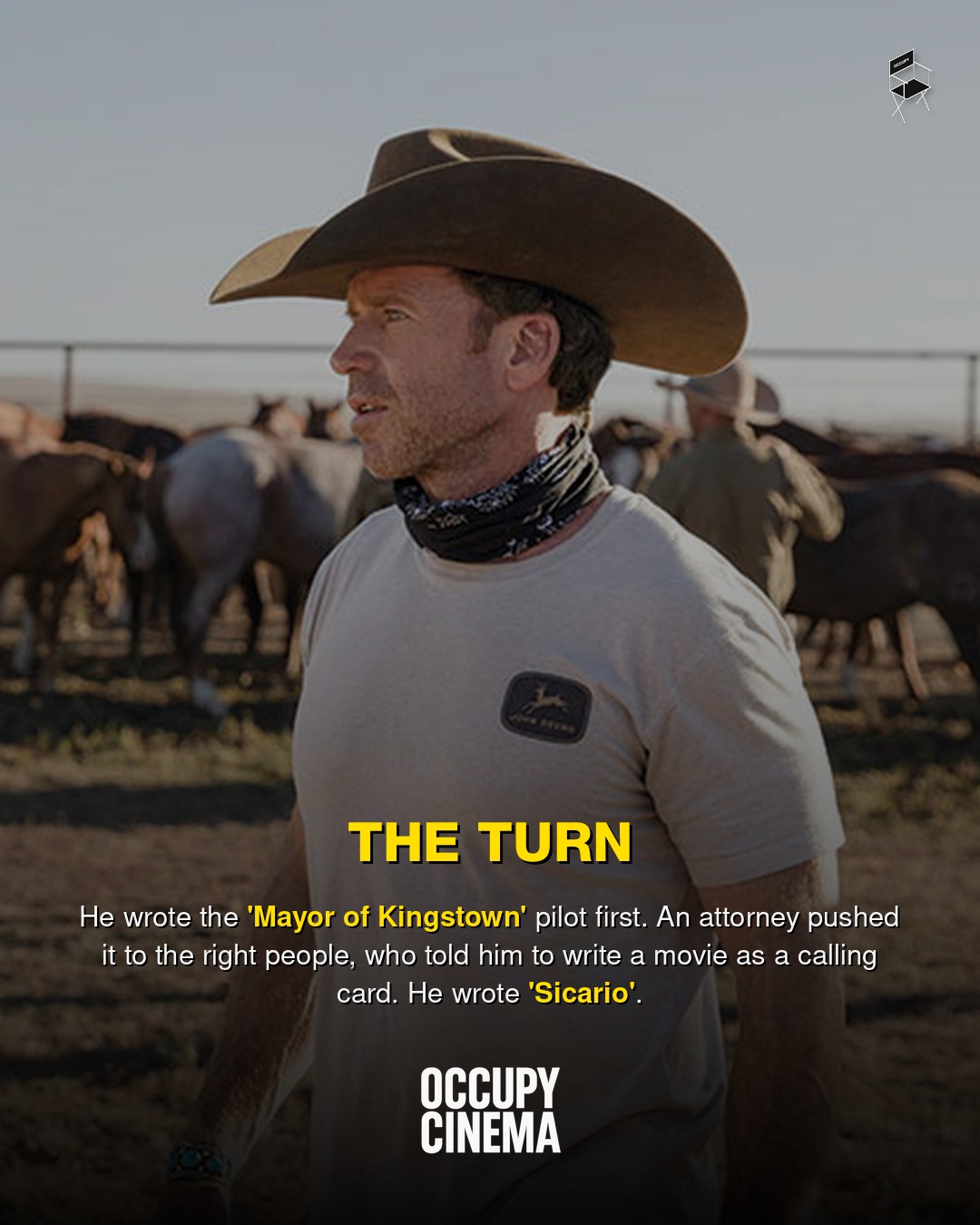
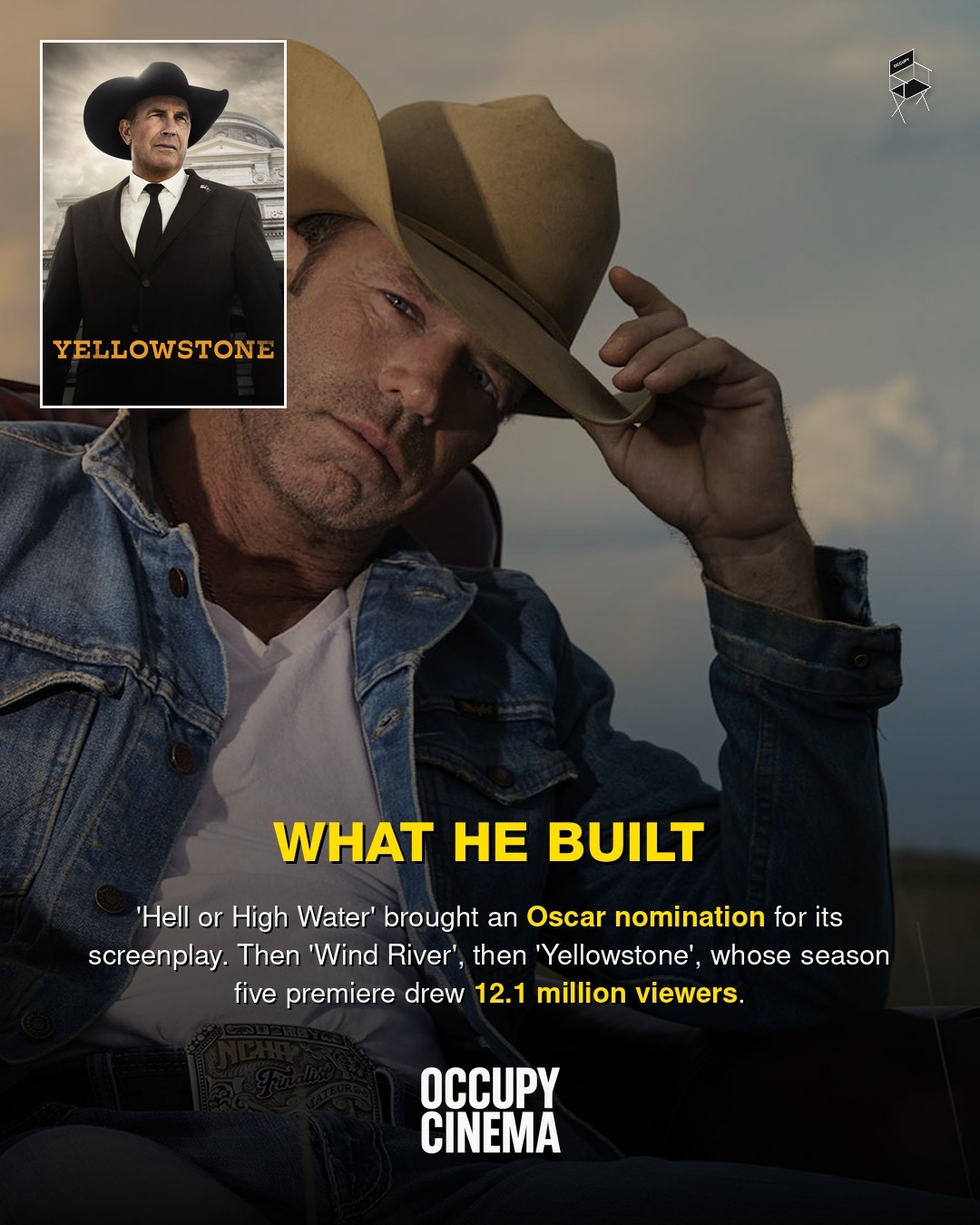
The transition from actor to screenwriter was immediate and explosive. Sheridan began by writing the pilot script for Mayor of Kingstown, which sat on a shelf while he pivoted to feature film spec scripts. His first produced film script was the border-thriller Sicario, directed by Denis Villeneuve and photographed by Roger Deakins. The project announced the arrival of a major cinematic voice. He followed it with Hell or High Water, directed by David Mackenzie, which earned Sheridan an Academy Award nomination for Best Original Screenplay. He completed this informal modern Western trilogy by directing his own script, Wind River, cementing his reputation for taut, localized thrillers.
From Spec Scripts to Paramount Dominance
The technical craftsmanship behind Sheridan's writing relies on absolute restraint. Having spent years performing expository dialogue as an actor, he stripped his screenplays of unneeded explanation. His work prioritizes silent tension, tactical realism, and clear geography over heavy dialogue. In Sicario, character motives are communicated through glances, silence, and environmental dread rather than lengthy monologues. That minimalist approach attracted top-tier directing talent and elite cinematographers, establishing a distinct visual and structural signature that studios rushed to finance.
That critical success in film served as a launching pad for linear and streaming dominance. In 2018, Sheridan created Yellowstone alongside John Linson for Paramount Network. The show transformed into a ratings juggernaut, leading Paramount Global to sign Sheridan to a massive multi-year overall production deal reported by Deadline. He expanded his television universe with prequels 1883 and 1923, alongside original series like Tulsa King, Mayor of Kingstown, and Special Ops: Lioness. His slate quickly became the single largest subscriber driver for Paramount+.
The Blueprint for Industrial Autonomy
Sheridan operates with a degree of creative control almost unheard of in contemporary Hollywood. While most premium television shows utilize expansive writers rooms, Sheridan frequently writes every single episode of his series himself. Industry trade The Hollywood Reporter has documented how his singular control over scripts, locations, and physical production on his Texas and Montana ranches gives his work an unmistakable industrial footprint. He bypasses traditional development notes by delivering finished scripts directly to production, relying on his instincts as both an actor and director.
The trajectory of Taylor Sheridan offers a sharp lesson for the modern entertainment industry. He transformed two decades of minor acting roles into a rigorous study of narrative craft. By learning what not to write, he engineered an entertainment powerhouse built on singular vision and spare, uncompromising storytelling. In an industry increasingly reliant on corporate IP and committee-driven writers rooms, Sheridan proved that practical set experience combined with austere craftsmanship remains the ultimate commercial engine.

Related reading: On Filmmaking.