Occupy Cinema › Development
Kristen Stewart and the Rebirth of Highland Park's Century-Old Landmark
Following in the footsteps of Quentin Tarantino and Jason Reitman, Kristen Stewart steps up to rescue the historic Highland Theatre from commercial redevelopment.
By Occupy Cinema ·

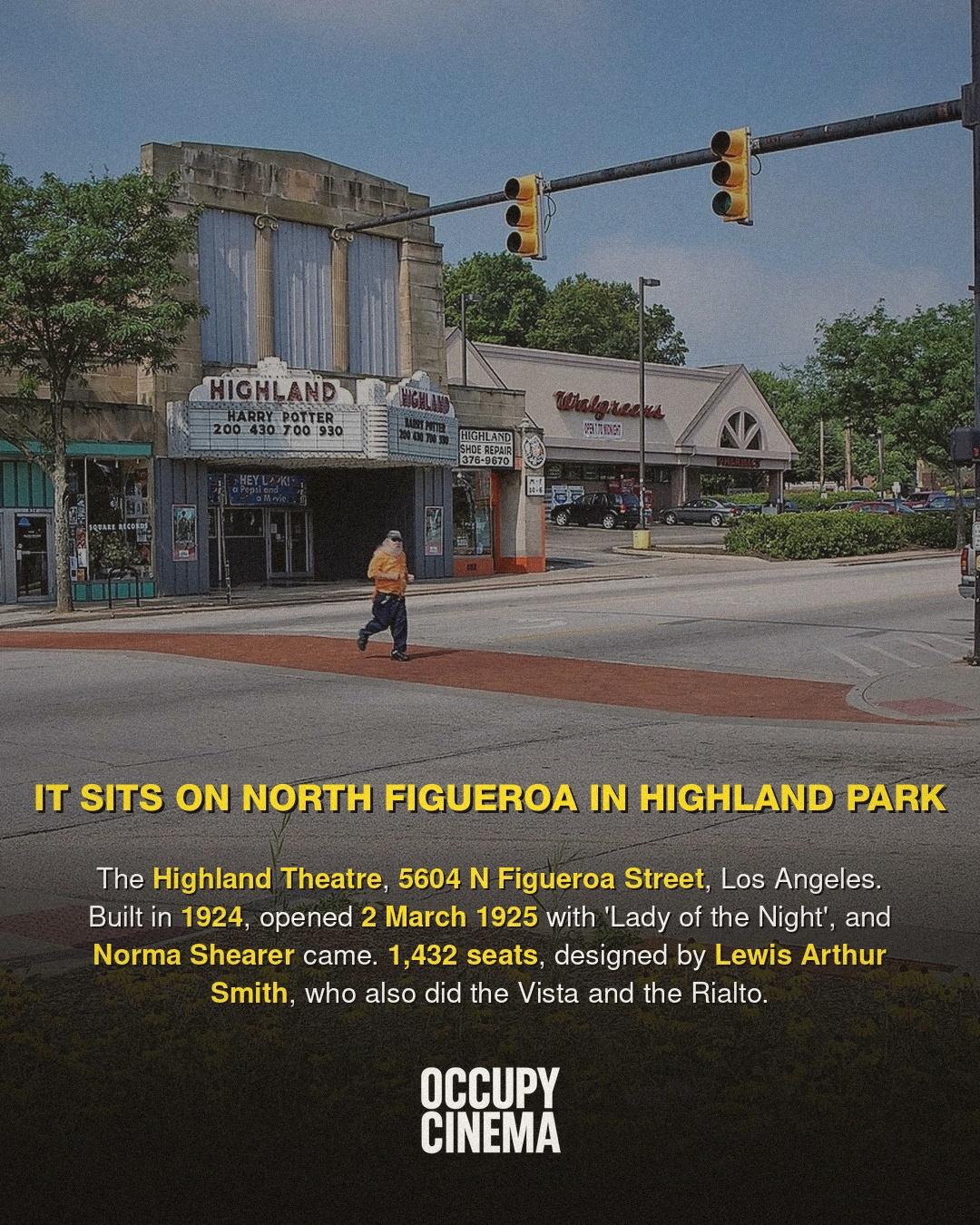
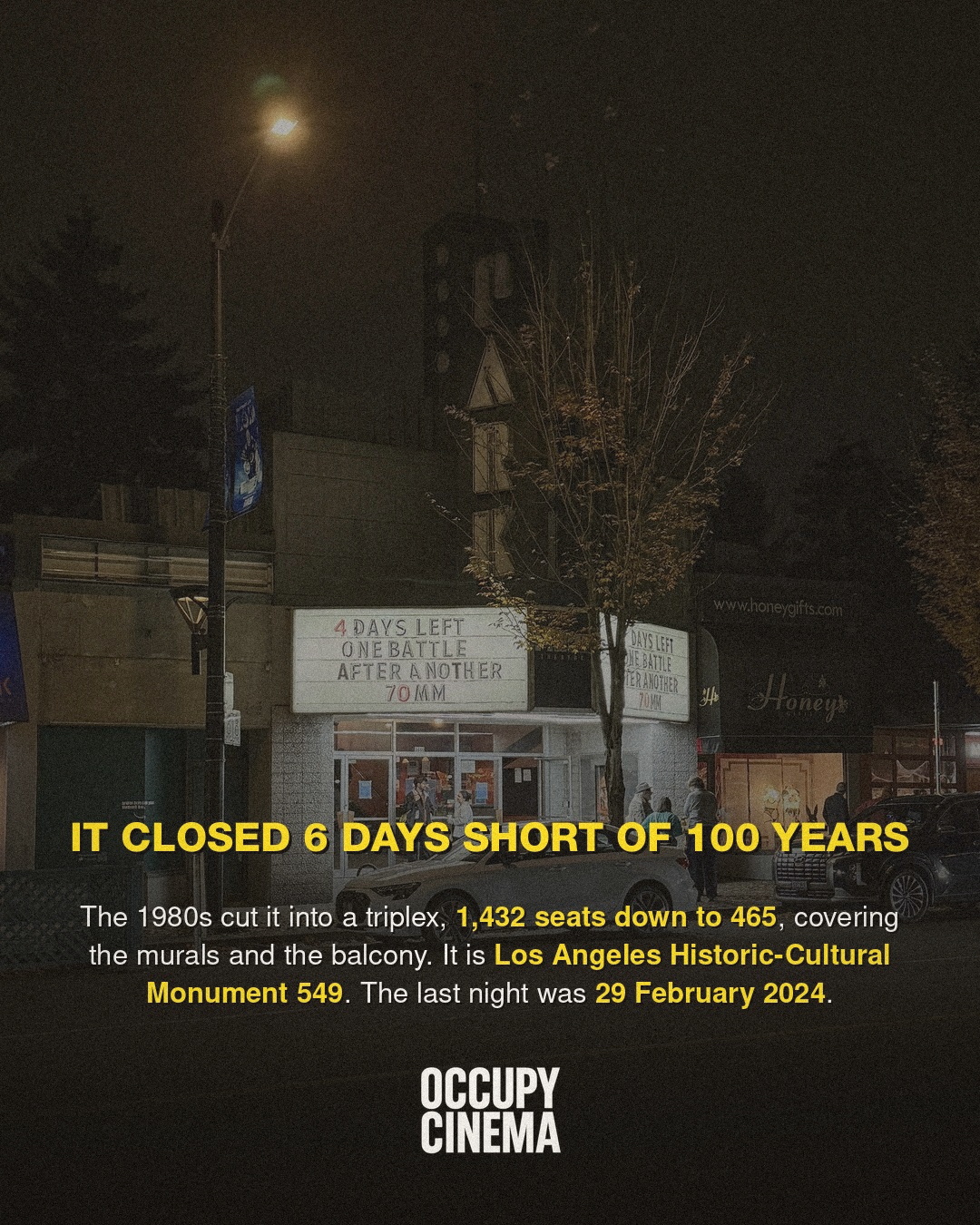
Los Angeles exhibition is currently witnessing an unprecedented wave of filmmaker-led preservation. Rather than leaving historic neighborhood houses to commercial retail conversion, top-tier industry talent is stepping in with private capital. The latest rescue effort centers on the Highland Theatre, the 99-year-old fixture located at 5604 North Figueroa Street in Highland Park, recently acquired by actor and filmmaker Kristen Stewart after shuttering its doors in February 2024.
Designed by architect Lewis Arthur Smith, the mind behind Los Feliz's Vista Theatre and South Pasadena's Rialto, the venue originally opened on March 5, 1925, with the Metro-Goldwyn-Mayer release Lady of the Night, attended in person by star Norma Shearer. At its launch, the Spanish Colonial Revival auditorium boasted a cavernous 1,432 seats. Like many mid-century single-screen palaces, the venue underwent structural compromises during the multiplex boom of the 1980s, carving the original hall into a triplex and reducing total capacity to 465 seats.
The Directorial Pipeline to Independent Exhibition
Stewart's intervention reflects a growing counter-strategy against theatrical consolidation. While mainstream circuits battle fluctuating release calendars and soft post-pandemic box office returns, neighborhood repertory cinemas across Southern California have posted resilient attendance figures. Stewart, who has expanded her industry footprint into directing with her upcoming adaptation of Lidia Yuknavitch's memoir The Chronology of Water, confirmed the purchase publicly, citing the immediate threat of the property transitioning into high-end retail space along the gentrifying Figueroa corridor.
This intervention places Stewart in an elite circle of creatives taking direct stakes in brick-and-mortar exhibition. Quentin Tarantino set the contemporary benchmark by acquiring the New Beverly Cinema and later the Vista Theatre, outfitting both venues strictly for celluloid projection. Earlier this year, a coalition of thirty filmmakers led by Jason Reitman banded together to purchase the historic Fox Village Theatre in Westwood, aiming to protect historic theatrical real estate from corporate redevelopment, as reported by The Hollywood Reporter.
Preservation Realities and the Road Ahead
Transforming a legacy cinema into a functional, modern venue requires substantial capital expenditure. Between seismic retrofitting, audio-visual upgrades, potential 35mm and 70mm projection installation, and modern seating configurations, independent operators often spend millions before turning on the marquee. Neighboring Eastside venues like the restored Vidiots foundation in Eagle Rock have demonstrated that curated programming, community membership models, and specialty event screenings can generate sustainable margins when standard theatrical windows narrow.
While representatives have yet to establish a formal reopening timeline or announce whether the triplex layout will be restored to a grand single-screen auditorium, the acquisition guarantees that the Highland Theatre reaches its centennial under film-focused stewardship. In an era when major studio output remains volatile and traditional distributors consolidate, the future of communal film culture is increasingly being secured by the artists who rely on it.





Related reading: On Filmmaking.