Occupy Cinema › Exhibition
Storm Damage Hits Capitol Theatre: Why Single-Screen Venues Refuse to Go Dark
High winds ripped the roof off Mount Gilead's historic Capitol Theatre, but the 105-year-old venue is keeping its doors open. Here is how small-town exhibitors survive structural crises.
By Occupy Cinema ·
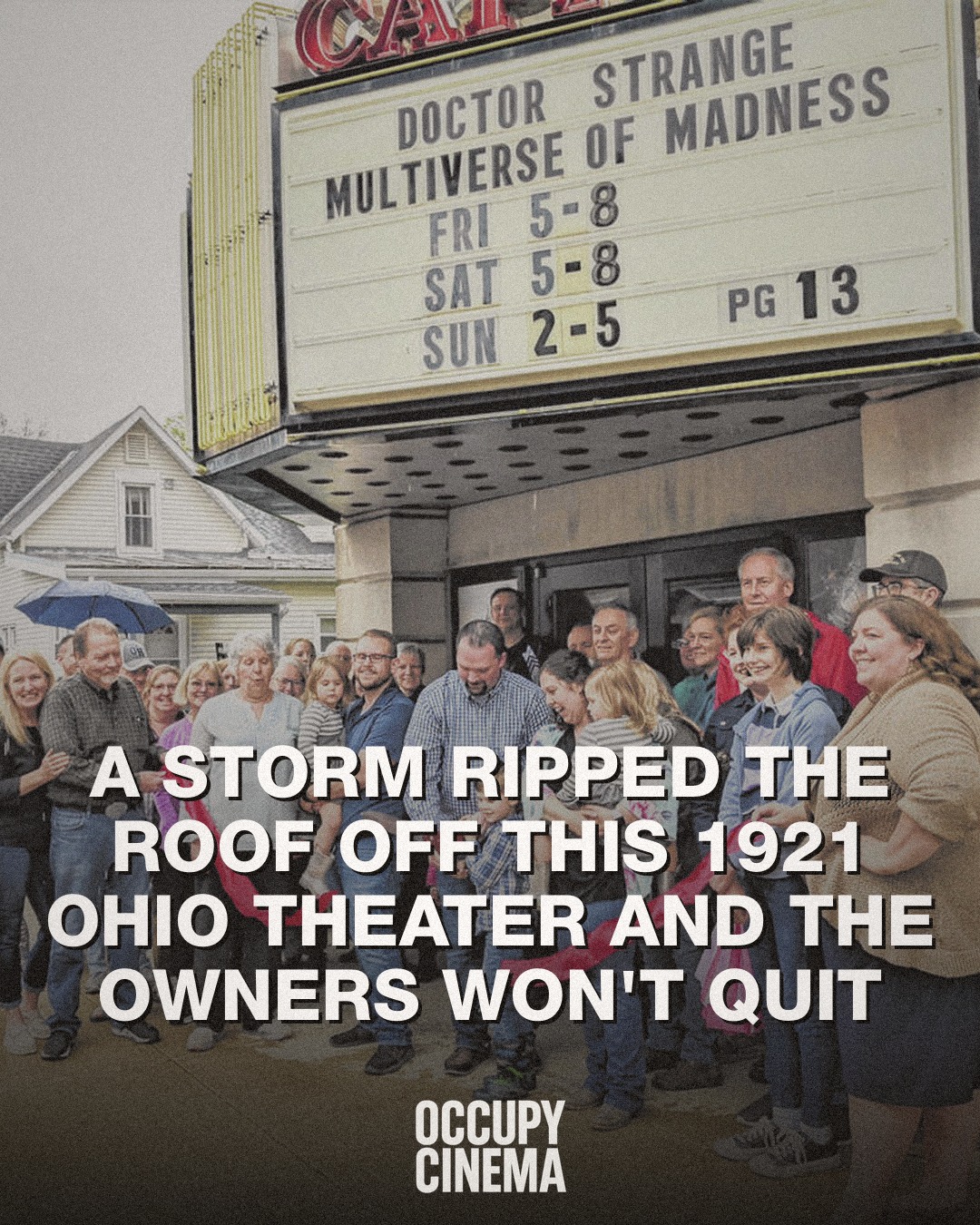
High winds took the roof off the Capitol Theatre on March 13, 2026. They did not take down the venue. In Mount Gilead, Ohio, the 105-year-old single-screen landmark lost a major section of its roof deck and main chimney structure during severe spring weather. Co-owner Joey Powell was on the roof with a local roofer the following morning, securing tarps over the auditorium ceiling and tightening remaining materials. The projection light did not go dark. Regular operations continue while the executive team scrambles to cover insurance deductibles through grassroots fundraising.
Independent exhibition is a business of brutal margins. When severe weather hits an art-house or historic picture house, it exposes the fragile economics of small-town exhibition. Jamie Brucker, Angela Powell, and Joey Powell took control of the venue in 2022, inheriting a historic space housed within a building that dates back more than 130 years. Operating legacy real estate requires constant capital outlay. Modern digital projection and server setups reside inside plaster and brick structures designed before the advent of synchronized sound.
The Economics of Single-Screen Survival
The situation in Morrow County reflects a broader tension across regional theatrical exhibition. As reported by Deadline, independent theater owners nationwide face escalating property insurance premiums alongside shortened studio distribution windows. For single-screen operators, missing two consecutive weekends of screenings can erase an entire quarter of net operating profit. Keeping the auditorium doors open during active structural repairs is an operational necessity, ensuring steady box office cash flow while contractors handle exterior masonry and roofing work.
Small-town screens operate as critical access points for physical film culture. The owners launched a targeted campaign to fund the insurance deductible and cover non-insured restoration expenses before rainwater could compromise the internal ceiling plaster, vintage seating, or screen surfaces. Independent venues serve as important secondary markets for major studio product and specialized indie titles alike. When a single screen darkens in rural Ohio, studio distribution footprints contract in non-metropolitan zip codes.
Preserving Historic Projection Spaces
Historic cinema preservation has become a key focal point across the film industry. High-profile directors including Quentin Tarantino have actively acquired legacy venues to protect physical exhibition infrastructure. As highlighted by IndieWire, regional art-houses and historic properties represent the front line of theatrical film preservation. Without committed local ownership groups, century-old cinema spaces frequently fall victim to commercial redevelopment or decay.
The technical hardware inside these century-old halls requires constant protection. The transition from legacy 35mm film platters to digital cinema initiatives (DCI) compliant laser and xenon projectors cost small exhibitors tens of thousands of dollars over the last decade. Structural water damage near the projection booth or main hall risks instantly destroying high-value optic systems and sound processors. Fast emergency response from owners on the ground remains the primary defense against total technical loss.
The Capitol Theatre stands as an enduring anchor for local exhibition history. The physical structure has weathered nineteenth-century storms, the silent film transition, multiplex saturation, and the rise of home streaming platforms. The current leadership team of Brucker and the Powells is mounting a direct defense of physical cinema. Survival in the modern exhibition landscape requires operational resilience, community backing, and owners who are willing to climb onto the roof the moment the storm passes.
Related reading: High-Rise: A Novel.