Occupy Cinema › Development
How Emily Wilson's Odyssey Translation Is Reshaping Hollywood's Classical Epics
A quiet revolution in classical translation is fundamentally altering how screenwriters and directors approach ancient source material for the screen.
By Occupy Cinema ·
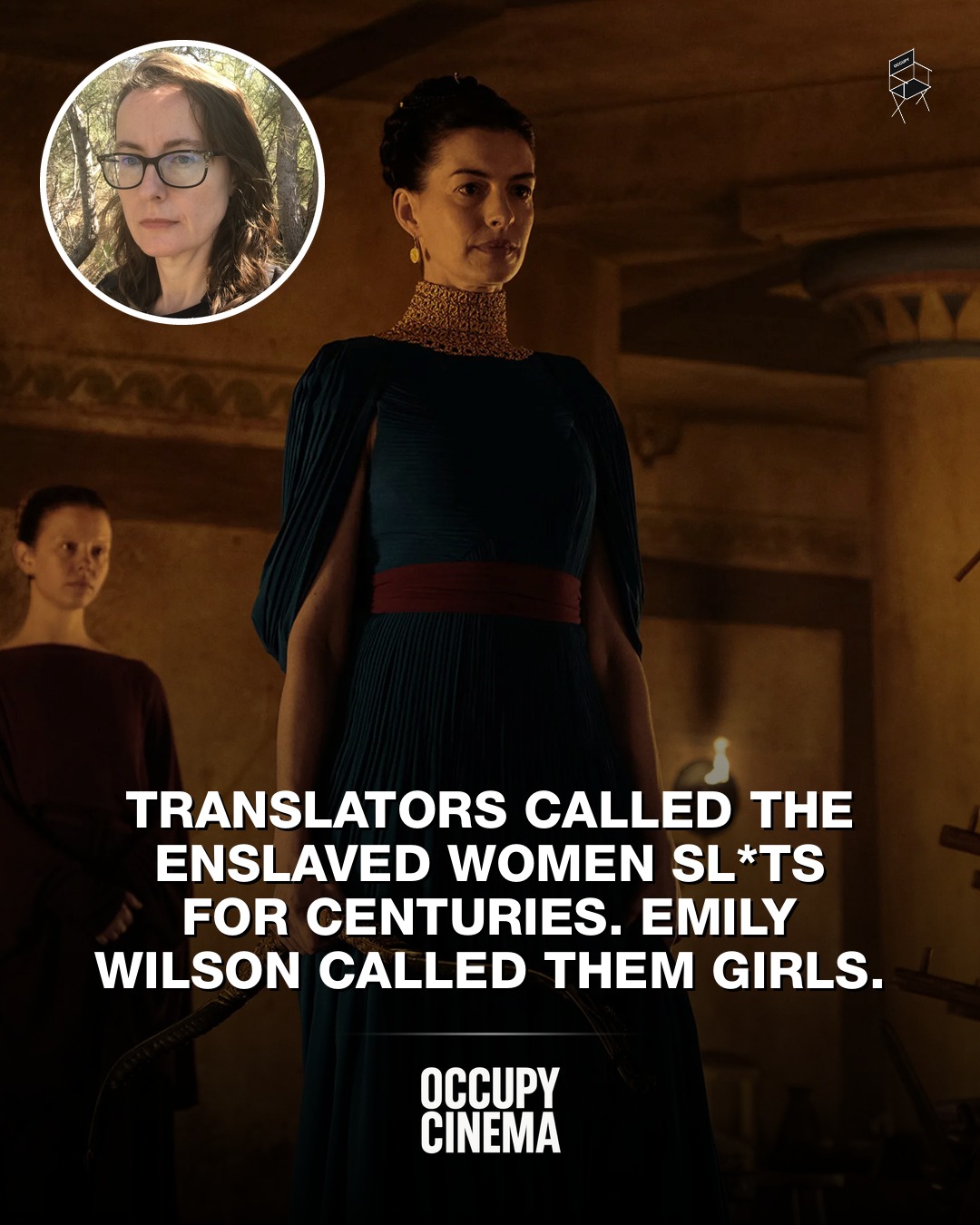
Hollywood has always operated on a simple economic formula when tackling ancient literature. Public domain intellectual property offers monumental scale without licensing fees. Yet every epic screen adaptation begins long before a director calls action on set. It begins with the translator. In 2017, classicist Emily Wilson published the first complete English translation of Homer's The Odyssey by a woman. Her work did not just shake up academia. It altered the foundational text that screenwriters, directors, and development executives rely on when translating classical antiquity to the screen.
Wilson made deliberate choices that stripped away centuries of Victorian flourishes and moralistic editorializing. She matched Homer's exact count of 12, 110 lines, employing a lean iambic pentameter that moves with cinematic speed. Her famous opening line, "Tell me about a complicated man, " instantly reframed Odysseus. Gone was the heroic posturing of early translation tradition. In its place stood a flawed, morally ambiguous protagonist tailored for contemporary prestige storytelling.
Reclaiming the Text for the Screen
The most fierce debate surrounding Wilson's work centers on her choice of vocabulary regarding status and power in Ithaca. Earlier English translators frequently inserted pejoratives like "sluts" or "whores" when describing the enslaved women in Odysseus's palace. Wilson returned strictly to the original Greek terms, using "slaves" and "girls." The misogynistic degradation present in twentieth, century English texts was an addition by male translators, not Homer. For filmmakers adapting the poem, this distinction changes the entire moral architecture of the narrative.
Cinema has wrestled with Homer for over a century. Mario Camerini's 1954 classic Ulisse, starring Kirk Douglas, treated the story as a muscular sword and sandal spectacle. Decades later, directors Joel Coen and Ethan Coen used the poem as the structural skeleton for O Brother, Where Art Thou? (2000), proving the enduring flexibility of the source material. According to coverage in The Hollywood Reporter, studio interest in classical adaptations remains high due to global brand recognition and spectacle potential.
The Craft of Adapting Antiquity
Translators act as the first line of script development for ancient texts. When a translator injects bias into dialogue or characterization, that bias travels directly into production design, casting calls, and screenplay revisions. Recent historical dramas, including Uberto Pasolini's 2024 film The Return starring Ralph Fiennes and Juliette Binoche, reflect a broader industry push toward gritty historical groundedness. Pasolini's focus on trauma and domestic wreckage aligns far more closely with Wilson's stripped, back tone than with traditional Hollywood pageantry.
As reported by IndieWire, the current film landscape demands rigorous character psychology over simple heroic tropes. Wilson's translation offers a template for this transition. By stripping away extraneous Victorian ornament, she revealed a narrative that reads remarkably like a modern screenplay, complete with sharp dialogue cuts and tight pacing.
The lesson for the film industry is clear. Intellectual property is only as good as the lens through which it is viewed. When screenwriters return to ancient source material, the choice of translation dictates the budget, tone, and ideological perspective of the movie. Accurate text leads to sharper film craft, proving that true narrative innovation often requires looking back with clearer eyes.
Related reading: The Odyssey (translated by Emily Wilson).