Occupy Cinema › FEATURED
Coroner Rules Hayden Panettiere Death an Accidental Multi-Substance Toxicity
Official findings from South Carolina medical examiners contradict early law enforcement leaks, detailing a complex toxicological profile involving fentanyl and prescription medications.
By Occupy Cinema ·
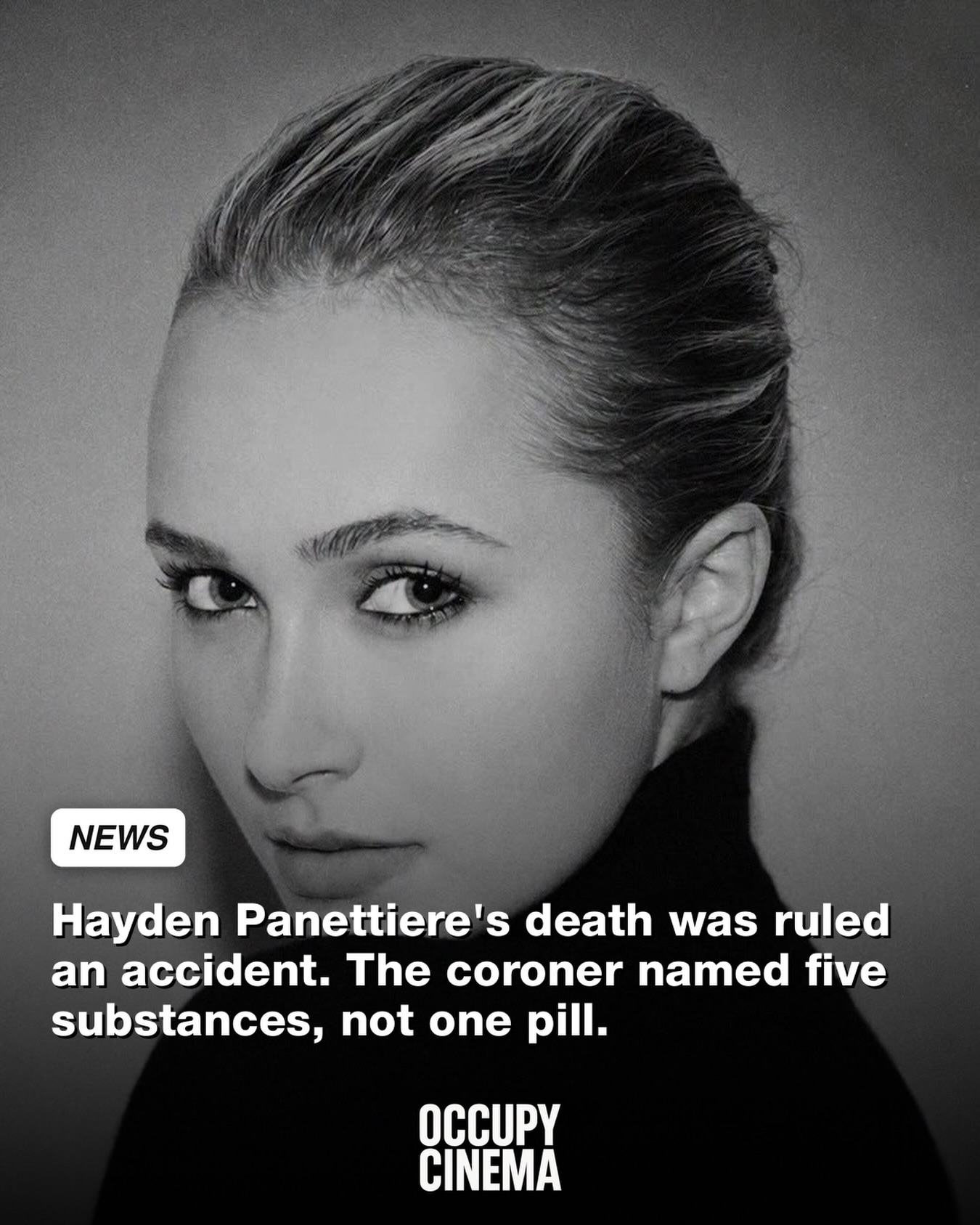
Official findings from the Greenville County Coroner's Office have provided legal and medical clarity surrounding the death of actress Hayden Panettiere at age 36. She was found dead in Greenville, South Carolina, on August 16. Following a comprehensive forensic post-mortem evaluation and multi-panel toxicology screen, the medical examiner ruled the manner of death as an accident. The cause of death was attributed strictly to the toxic combined effects of five distinct chemical compounds: fentanyl, 4-ANPP, alprazolam, methocarbamol, and quetiapine. The official ruling establishes a clear scientific baseline, replacing early media confusion with verified forensic evidence.
The formal findings mark a significant correction to early press accounts that circulated in the immediate aftermath of the tragedy. Unofficial leaks sourced to regional law enforcement officers had initially suggested that the death stemmed from a single counterfeit oxycodone pill. Representatives for Panettiere pushed back against those early statements at the time, accurately labeling the unverified law enforcement claims as premature and unconfirmed. The coroner's comprehensive ruling proves those early law enforcement assessments were incomplete. By documenting five distinct substances rather than a single isolated counterfeit tablet, the medical examiner presented a far more detailed chemical profile that reflects the complex realities of modern polydrug toxicity.
Panettiere operated as a major presence across American television and film for over two decades. Her breakout role as Claire Bennet in NBC's high-concept superhero drama series Heroes launched in 2006, delivering massive network ratings during the golden era of broadcast television. The series became a cornerstone for NBC Universal, driving international distribution deals and home video sales while transforming its young lead into a household name before her twentieth birthday. She subsequently transitioned into network television drama as country music star Juliette Barnes on ABC and CMT's critically acclaimed series Nashville. Across six seasons and 124 episodes, her performance anchored the franchise, earning her two Golden Globe nominations and generating significant syndication and soundtrack revenue for Lionsgate Television.
Her commercial footprint extended into major studio feature films. Panettiere brought established star equity to the horror genre, appearing as fan favorite survivor Kirby Reed in Scream 4, directed by Wes Craven in 2011. The entry pulled in over $100 million at the global box office, reinforcing her visibility among moviegoers. When filmmaking collective Radio Silence brought the franchise back to theaters, directors Matt Bettinelli-Olpin and Tyler Gillett brought Panettiere back to reprise her role in Scream VI in 2023. That film generated more than $169 million worldwide according to performance tracking from Deadline, standing as one of Paramount Pictures' highest earning domestic slasher releases in modern studio history.
Toxicology, Counterfeit Pharmaceuticals, and Industry Safeguards
The specific chemical findings in the coroner's toxicology panel carry critical medical implications. The identification of 4-ANPP, formally known as despropionyl fentanyl, is a key technical detail. The compound serves as a direct chemical precursor and byproduct in the illicit laboratory synthesis of fentanyl. Its presence alongside active fentanyl strongly indicates exposure to illicitly manufactured synthetic material rather than diverted pharmaceutical grade products. Furthermore, combining illicit synthetic opioids with alprazolam, a central nervous system depressant in the benzodiazepine class, creates an extreme hazard for fatal respiratory depression. The additional presence of methocarbamol, a skeletal muscle relaxant, and quetiapine, an atypical antipsychotic, compounding central nervous system suppression, further demonstrates how multi-substance interactions multiply systemic lethality.
The tragic circumstances surrounding her death shed light on ongoing structural challenges within the entertainment industry. Performers navigating grueling production schedules, demanding promotional tours, and intense public scrutiny often experience chronic physical pain, anxiety, and sleep disruption. When legal prescription regimens intersect with an increasingly contaminated illicit drug supply, the risk profile escalates rapidly. Labor organizations like SAG-AFTRA have expanded confidential mental health and substance dependency programs in recent years. However, the ubiquitous presence of lethal synthetic opioids in counterfeit street supply chains continues to pose a severe hazard to working artists across Hollywood.
Industry trades including The Hollywood Reporter and Variety have increasingly highlighted the necessity of rigorous forensic reporting when covering high profile losses. Early law enforcement commentary frequently simplifies complex medical situations, generating inaccurate narratives that spread rapidly across digital news feeds. The Greenville County Coroner's thorough multi-substance determination underscores why patience and scientific verification are essential. Jumping to conclusions based on preliminary police speculation distorts public understanding of substance toxicity and distracts from systemic solutions.
A Legacy Anchored in Screen Presence
Throughout her career, Panettiere demonstrated remarkable range and technical control. Her early work included vocal performances in major animated features such as A Bug's Life, alongside dramatic television roles that showcased an ability to handle complex emotional material. On Nashville, she recorded dozens of original songs that entered the Billboard country charts, demonstrating a legitimate vocal talent alongside her dramatic capabilities. Her work on set was defined by professional discipline, energetic charisma, and an innate ability to connect with broad television and theatrical audiences across multiple genres.
In the wake of this loss, film studios, television networks, and talent agencies are facing renewed calls to strengthen post-production care and ongoing wellness resources for creative personnel. Industry advocacy groups emphasize that medical support systems must extend beyond active production windows to offer continuous care during off-season periods and transitional career phases. Completion bond companies and production insurers are also reviewing protocols around mental health provisions, seeking to ensure that artists receive immediate, non-punitive assistance whenever substance use challenges arise.
The Greenville County Coroner's official report brings legal finality to the circumstances of Hayden Panettiere's passing. Her artistic legacy remains secured through her memorable roles on television and the big screen, leaving a lasting mark on contemporary popular culture. Beyond her creative contributions, her passing serves as a stark, urgent reminder of the lethal perils presented by synthetic opioids and multi-substance exposure, demanding sustained vigilance and comprehensive healthcare reform across the entertainment sector.