Occupy Cinema › Exhibition
Olivia Wilde Cuts the Safety Net: Inside the Chamber Piece Discipline of 'The Invite'
For her third feature, Olivia Wilde shot flashbacks to soften the tension of A24's apartment-bound comedy. Then early screenings convinced her to cut them all.
By Occupy Cinema ·
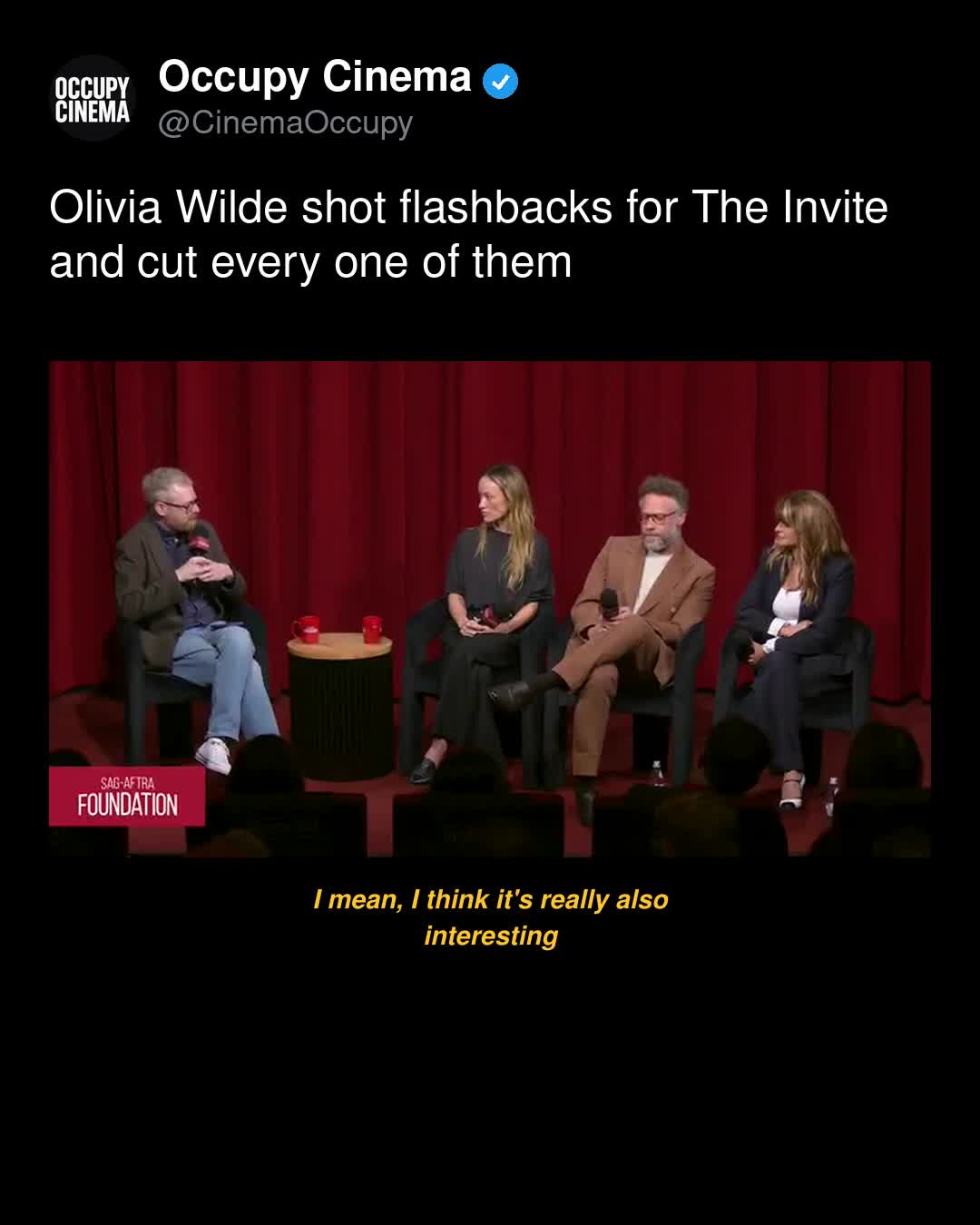
Olivia Wilde is radically changing gears. Following the relentless media spectacle and $87 million theatrical haul of Don't Worry Darling, the director has aligned with A24 for her third feature, The Invite. Dated for release on June 26, 2026, the project trades the expansive, sun-bleached desert mid-century nightmare of New Line's psychological thriller for the suffocating squeeze of a four-wall dinner party. It represents a deliberate retreat into pure craft, swapping visual effects and runaway budgets for theatrical tension and claustrophobic pacing.
The screenplay adapts Cesc Gay's acclaimed 2020 Spanish comedy Sentimental, which itself originated as Gay's hit stage play Los vecinos de arriba. The premise operates with deceptive economy: an established, quietly resentful couple invites their upstairs neighbors down for an evening of drinks, only for polite social pleasantries to unravel into candid sexual confessions and radical lifestyle propositions. In a commercial landscape where mid-budget cinema constantly inflates its visual scale to justify cinema ticket prices, Wilde is executing the exact opposite strategy. She is locking the audience inside the living room.
Killing the Flashbacks in the Cut
Filmmakers who adapt stage material frequently panic in post-production. The conventional studio instinct demands opening up the text, inserting street-level exterior breathers, secondary locations, or visual exposition to mitigate perceived spatial fatigue. Wilde initially flirted with that safety valve during principal photography. She shot a series of flashback sequences aimed at dramatizing the couple's historical grievances and offering visual relief across the back half of the narrative.
Yet early feedback delivered a blunt, uncompromising verdict. Escaping the apartment damaged the internal mechanics of the comedy. Rather than deepening the emotional stakes, the external cutaways released the toxic pressure cooker that gave the interpersonal sparring its velocity. Wilde made the decisive call to excise every flashback from the final cut. By refusing to break the geographical boundary, she preserved the real-time confinement that fuels the best chamber pieces. The camera stays trapped alongside the dinner guests, transforming domestic architecture into an emotional crossfire.
The High Stakes of Summer Counter-Programming
Positioning The Invite in late June 2026 places the film directly in the path of major franchise tentpoles. As tracked across Variety's film coverage, prime summer counter-programming has grown increasingly hostile to adult-skewing material unless the central hook is razor-sharp. A24 is wagering that an airtight, dialogue-forward comedy can capture adult audiences seeking an alternative to visual effects blockbusters, echoing the historical theatrical appeal of biting chamber dramedies like Roman Polanski's Carnage or Mike Nichols' early stage adaptations.
For Wilde, the project is a crucial reputational crucible. Her debut feature, Booksmart, established her instinct for rhythm, physical comedy, and dynamic youth ensembles, securing critical acclaim and substantial industry momentum. Her follow-up proved her ability to steer a complicated studio production through intense public scrutiny while still delivering profitable box office returns. The Invite strips away the peripheral machinery of both efforts. There are no expansive car chases, no period art direction, and no high-concept genre conceits to camouflage narrative weaknesses.
Embracing formal austerity requires supreme confidence in editorial cadence and actor blocking. By purging her own visual safety net in the edit suite, Olivia Wilde is staking the critical future of her directorial career on the rawest ingredients cinema has to offer: four performers, sharp dialogue, and nowhere left to run.
Related reading: The Graduate (The Criterion Collection) [Blu-ray].