Occupy Cinema › FEATURED
Why The Lobster Remains the Gold Standard for Modern Absurdist Cinema
A four-million-dollar budget, an unyielding deadpan aesthetic, and seventeen million dollars in box office returns proved that Yorgos Lanthimos could turn radical arthouse vision into an international industry powerhouse.
By Occupy Cinema ·
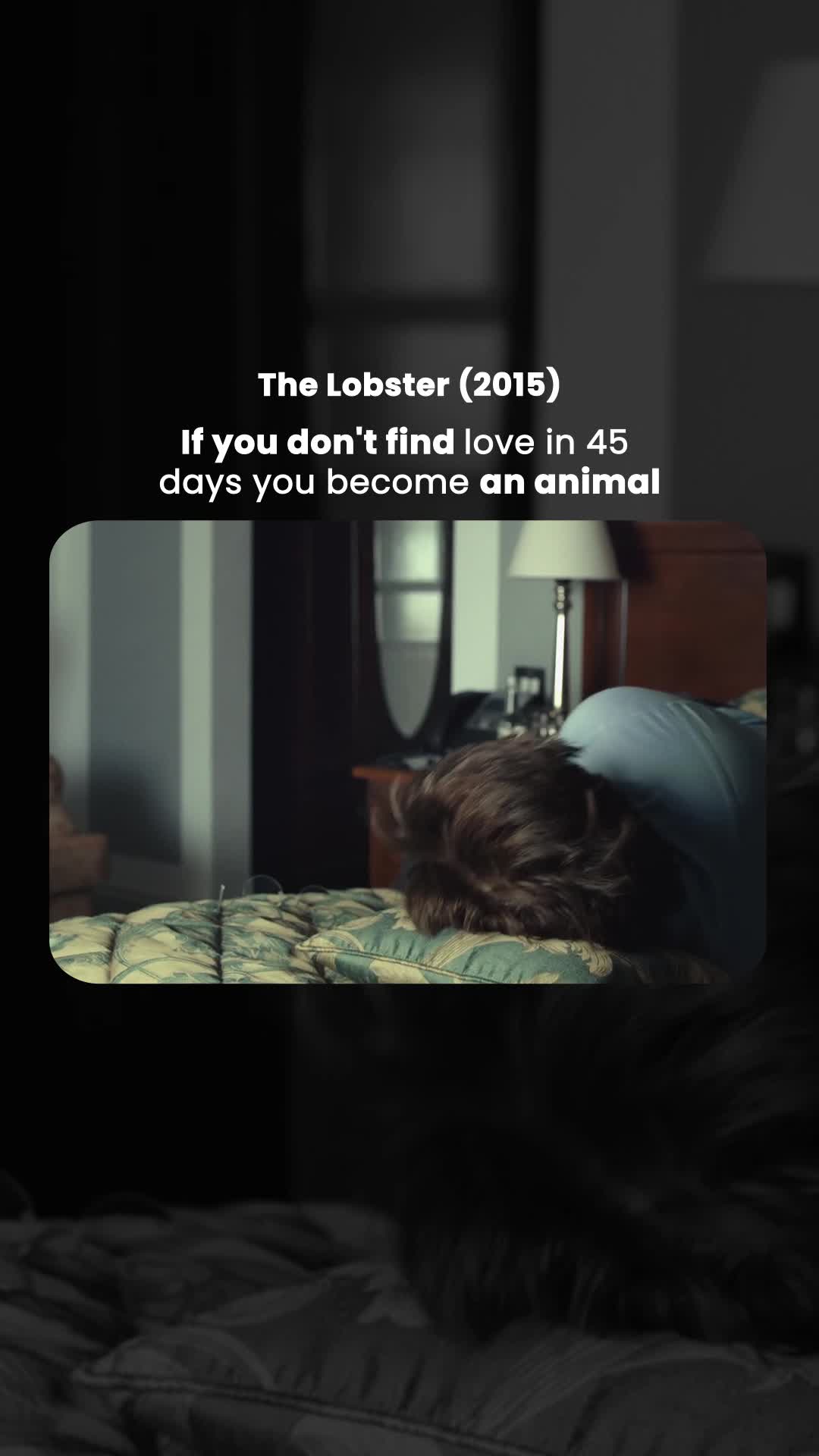
Numbers lead the story. In May 2015, an unsettling, low-budget absurdist satire walked into the Palais des Festivals at Cannes and reshaped indie cinema's commercial playbook. Produced for roughly $4 million, the English-language debut of Greek filmmaker Yorgos Lanthimos generated more than $18 million globally at the box office. It secured the Jury Prize at the Cannes Film Festival and eventually earned an Academy Award nomination for Best Original Screenplay. The film was titled The Lobster. Ten years later, it stands as the critical hinge point between specialized art-house isolation and high-budget international prestige.
The film arrived at a crucial inflection point for specialty distribution. The original domestic rights to The Lobster were acquired by Alchemy at Cannes in 2015. When Alchemy faced severe financial distress shortly before the planned release, A24 stepped into the breach, acquiring the U.S. distribution rights in early 2016. A24 mounted a tactical platform campaign in May 2016, opening on four screens in New York and Los Angeles to a per-screen average exceeding $55,000. That launch remains one of the strongest platform debuts for an original, non-franchise foreign co-production in the past decade. The movie ultimately cleared $9 million in North America alone, proving that mainstream audiences were hungry for uncompromised, surreal storytelling if marketed with precision.
The core conceit of The Lobster sounds like a fable written by a clinical sociologist. In a dystopian near-future, single people are brought to a seaside resort known as The Hotel. They are given 45 days to find a compatible romantic partner based on a shared physical or psychological trait. If they fail, they are transformed into an animal of their choosing and released into The Woods. David, played by Colin Farrell, selects a lobster. His reasoning is purely pragmatic: lobsters remain fertile for life, live for over a hundred years, and possess blue blood like royalty.
For Colin Farrell, the role marked a decisive turning point in his career trajectory. Far removed from his mid-2000s Hollywood action star persona, Farrell gained 40 pounds for the part, adopting a soft belly, a rigid mustache, and an aching, slumped posture. His performance strips away all traditional movie-star charisma, replacing it with quiet desperation. It earned Farrell widespread critical acclaim, including a Golden Globe nomination, and inaugurated a rich period of collaboration with top European auteurs that subsequently redefined the actor's late-career standing.
The Mechanics of Modern Dystopia
Lanthimos presents this surreal nightmare without a trace of overt comedy or meta-textual irony. Every piece of dialogue is delivered in a flat, monotone register. The characters speak as if translating an official manual into spoken prose. By instructing his actors to suppress emotional inflection, Lanthimos forces the audience to actively participate in the scene. The viewer must supply the subconscious dread and emotional weight that the characters on screen are forbidden to show. This clinical distance amplifies the horror of the world rather than softening it.
The brilliant twist of the screenplay, co-written by Lanthimos and his longtime collaborator Efthimis Filippou, lies in its refusal to offer a heroic alternative. When David escapes The Hotel and joins the rebel faction in The Woods, known as The Loners, he discovers that the underground resistance is just as totalitarian as the institution he fled. Led by a cold, uncompromising figure played by Léa Seydoux, The Loners strictly forbid romance, flirting, and sexual contact under threat of severe mutilation. The satire targets both forced conformity and forced rebellion. There is no neutral ground available to the individual outside the prevailing doctrine.
Cinematographer Thimios Bakatakis played an indispensable role in defining this suffocating atmosphere. Shot on location at the Parknasilla Resort in County Kerry, Ireland, the production operated almost entirely with natural daylight and practical interior illumination. Bakatakis avoided expressive lighting setups or glossy camera moves, opting instead for static, locked-off compositions and disciplined tracking shots. According to production coverage from IndieWire, the visual team eschewed heavy artificial light to capture the damp, gray maritime climate of western Ireland. This choice transforms both the manicured hotel carpets and the wet forest floor into deeply unsettling landscapes.
The Blueprint for an Auteur Empire
The international success of The Lobster provided the ultimate proof of concept for its lead production house, Element Pictures, led by producers Ed Guiney and Andrew Lowe. Backed by public and private finance including Film4, the British Film Institute, the Irish Film Board, and Canal+, the project established a sustainable financial blueprint for sophisticated art-house cinema. It demonstrated that international stars like Rachel Weisz, Olivia Colman, John C. Reilly, and Ben Whishaw would gladly accept scale pay rates to work inside uncompromising, high-concept European auteur projects.
The ripple effects of this production model changed the modern film landscape. The critical and commercial performance of The Lobster directly enabled Lanthimos to expand his scale without sacrificing his singular aesthetic. It paved the way for his follow-up feature, The Killing of a Sacred Deer (2017), which reunited Lanthimos with Farrell and A24. More significantly, it set the stage for his major studio breakthroughs, The Favourite (2018) and Poor Things (2023), both of which scored massive global box office receipts and dozens of Academy Award nominations. Industry reports on historical theatrical returns from Variety confirm that small-budget absurdist hits frequently act as the necessary loss-leader testing grounds for multi-million-dollar award juggernauts.
The Lobster remains a landmark release because it never cheated its audience or softened its edges for commercial comfort. It treated satire as a serious operational science, offering a cold diagnosis of how society commodifies intimacy and demands ideological totalization. Ten years after its premiere, its terrifying central thesis remains completely intact. Whether locked inside the regimented halls of societal expectation or wandering the cold forest of absolute isolation, the system always wins unless you are willing to tear your own vision apart.