Occupy Cinema › Box Office
Lucas Museum Finally Opens: A Billion-Dollar Bet on Narrative Art
After over a decade and a half of planning, design changes, and location shifts, George Lucas's ambitious Lucas Museum of Narrative Art is set to open its doors in Los Angeles, representing a monumental personal investment in storytelling.
By Occupy Cinema ·
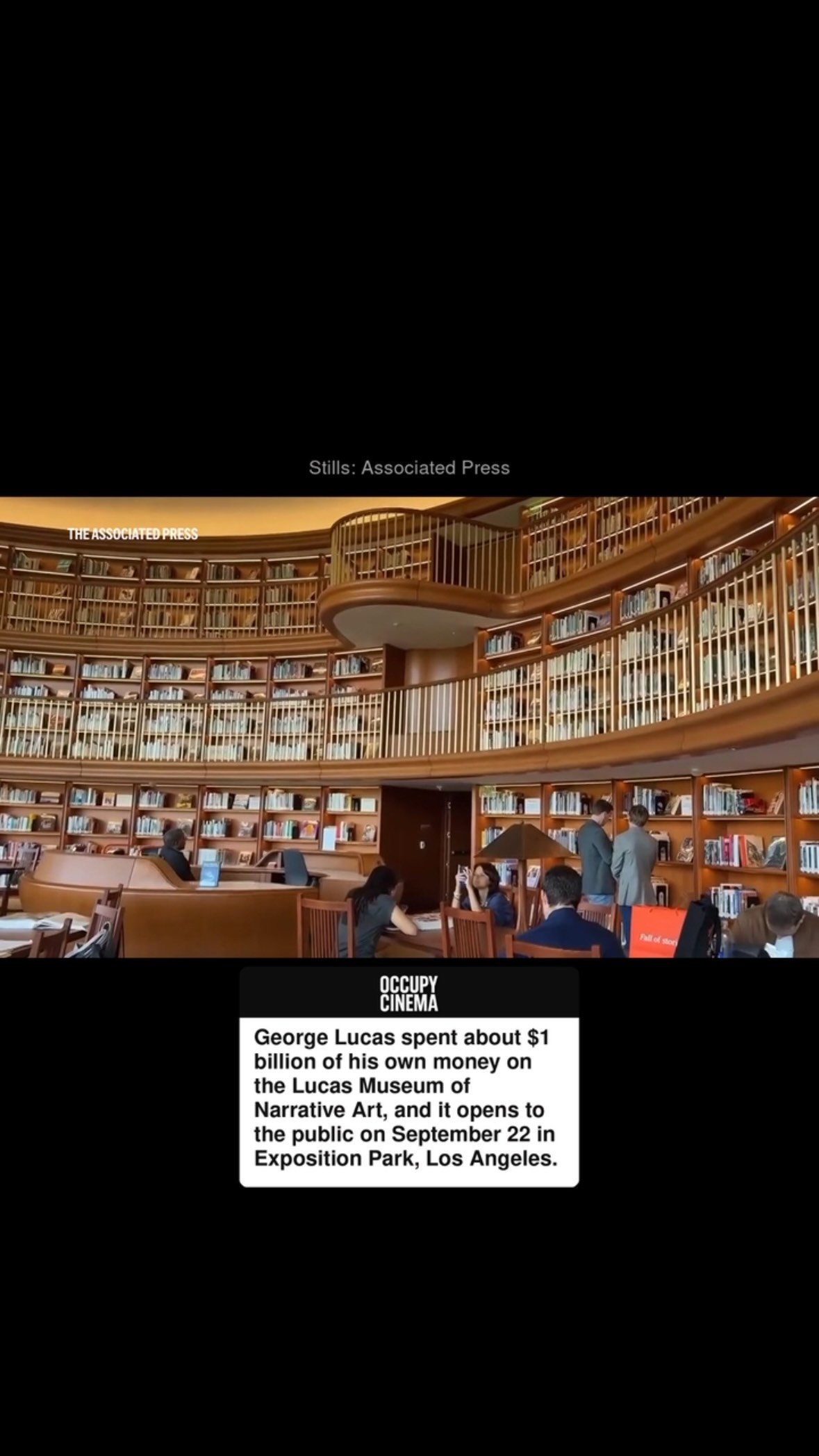
A Billion-Dollar Vision Realized
The Lucas Museum of Narrative Art will open its doors on September 22 in Los Angeles's Exposition Park. This marks the culmination of a 16-year saga for founder George Lucas, a project he personally funded to the tune of roughly $1 billion. The museum's journey was fraught with challenges, seeing initial plans for San Francisco and then Chicago fall apart before finding its permanent home in Southern California. This opening is not just a cultural event, but a testament to one individual's unwavering commitment to a singular vision, backed by unprecedented private capital.
The financial scale of the Lucas Museum is staggering. A personal investment of $1 billion places it among the most expensive privately funded museums ever conceived. This budget covered everything from land acquisition to the intricate architectural design and the housing of a vast collection. Unlike many cultural institutions that rely on extensive public funding or broad philanthropic campaigns, Lucas, alongside co-founder Mellody Hobson, has bankrolled this endeavor almost entirely himself. This financial independence has allowed for a level of creative control and ambition often unattainable in large-scale public projects, but it also reflects the intense personal passion driving its creation.
The Collection and Its Scope
Designed by Ma Yansong of MAD Architects, with Stantec serving as executive architect, the 300,000-square-foot building is a striking architectural presence. Its organic, spaceship-like form promises to be a landmark in itself, providing a unique backdrop for the museum's diverse holdings. The interior boasts approximately 30 galleries, housing more than 1,300 objects. This collection spans five decades of Lucas's personal acquisitions, reflecting his wide-ranging interests beyond just cinema. The breadth of the collection is genuinely expansive, encompassing fine art, illustration, comic art, photography, and an extensive array of costumes and props from film history.
The museum's focus on "narrative art" is deliberately broad, challenging traditional art historical classifications. It positions everything from Norman Rockwell paintings to concept art from Lucasfilm productions as integral parts of the storytelling continuum. This approach aims to democratize art, making it accessible through the universal language of narrative. The collection includes seminal works by artists like Edgar Degas and Pierre-Auguste Renoir, alongside pieces from illustrators such as Maxfield Parrish and N.C. Wyeth. The inclusion of original storyboards, costumes, and models from iconic films like Star Wars and The Lord of the Rings bridges the gap between high art and popular culture, aiming to demonstrate the shared principles of storytelling across different mediums.
This interdisciplinary approach is a key differentiator. The museum isn't just a shrine to science fiction or fantasy, nor is it solely a repository for traditional fine art. Instead, it seeks to explore how visual storytelling has evolved and been applied across various forms. This includes dedicated spaces for digital art and animation, reflecting the technological advancements that have shaped modern narrative. The educational component is also significant, with plans for classrooms, a library, and state-of-the-art theaters to host screenings and workshops, further cementing its role as a dynamic cultural hub.
For the city of Los Angeles, the Lucas Museum represents a significant cultural and economic boon. Located adjacent to institutions like the Natural History Museum of Los Angeles County and the California Science Center, it solidifies Exposition Park's status as a major cultural destination. The museum is expected to draw substantial tourism, creating jobs and further cementing L.A.'s reputation as a global center for arts and entertainment. Its arrival is particularly timely, as the city continues to expand its cultural offerings beyond the traditional Hollywood narrative, embracing a broader spectrum of artistic expression.
The opening of the Lucas Museum is more than just a grand unveiling of a new building. It is a powerful statement about the enduring power of narrative and its pervasive influence across human culture. It represents a private philanthropic endeavor on a scale rarely seen, driven by a desire to preserve and celebrate the art of storytelling in all its forms. Whether visitors come for the fine art, the film memorabilia, or the striking architecture, the Lucas Museum promises a unique and thought-provoking experience, redefining what a museum can be in the 21st century. It is a billion-dollar bet that narrative art, broadly defined, can captivate and educate audiences for generations to come, a legacy that extends far beyond the silver screen. Lucas's ambition here is not merely to display, but to inspire a deeper appreciation for the stories that shape us. It is a monumental undertaking, finally ready for public scrutiny and enjoyment.
Related reading: The Story of Film.