Occupy Cinema › FEATURED
The Last Projectionists Keeping 35mm Celluloid Alive in the Digital Age
Inside the Ambler Theater's projection booth, the trade craft of analog film preservation passes from master archivist Lou DiCrescenzo to operator Jesse Crooks.
By Occupy Cinema ·
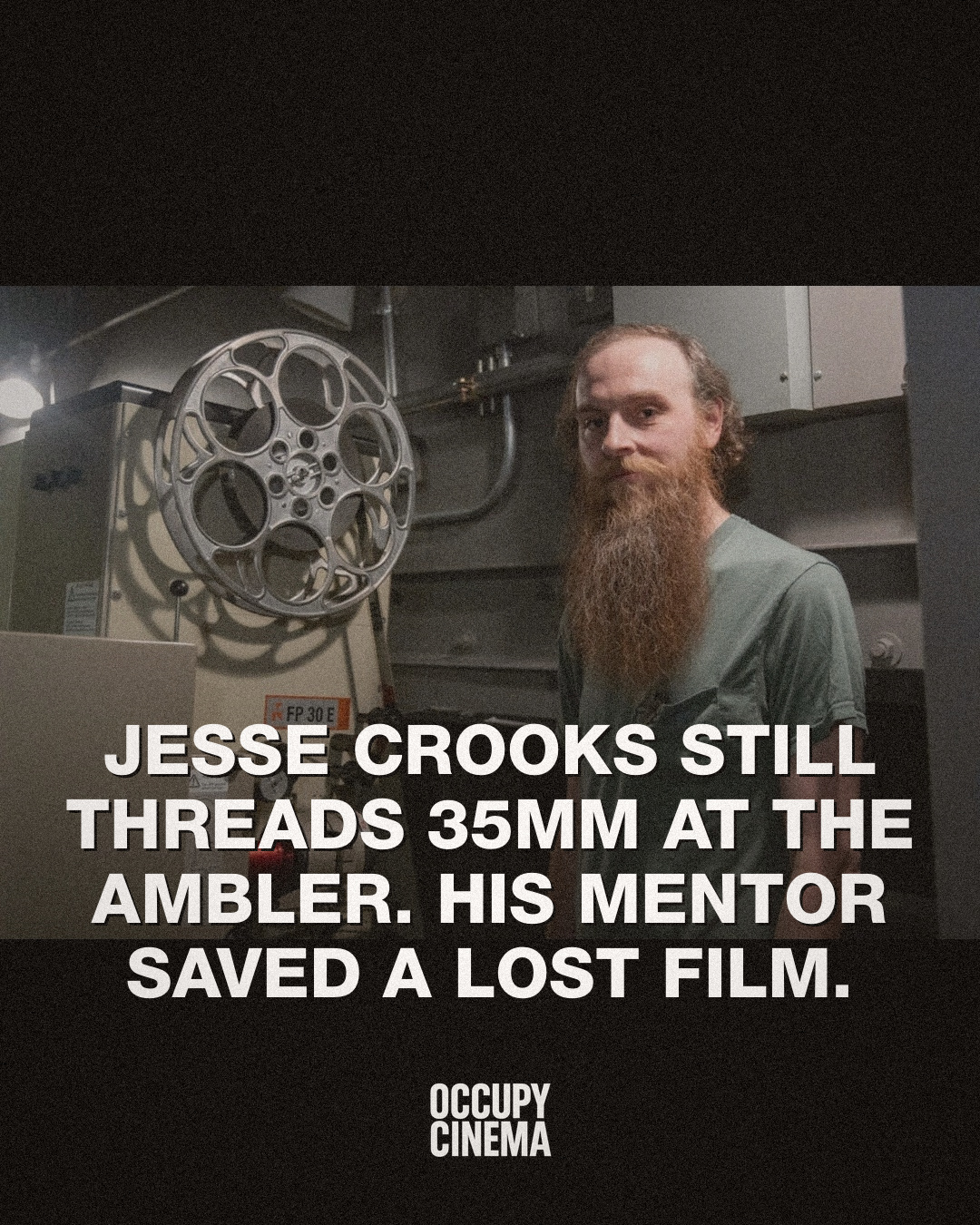
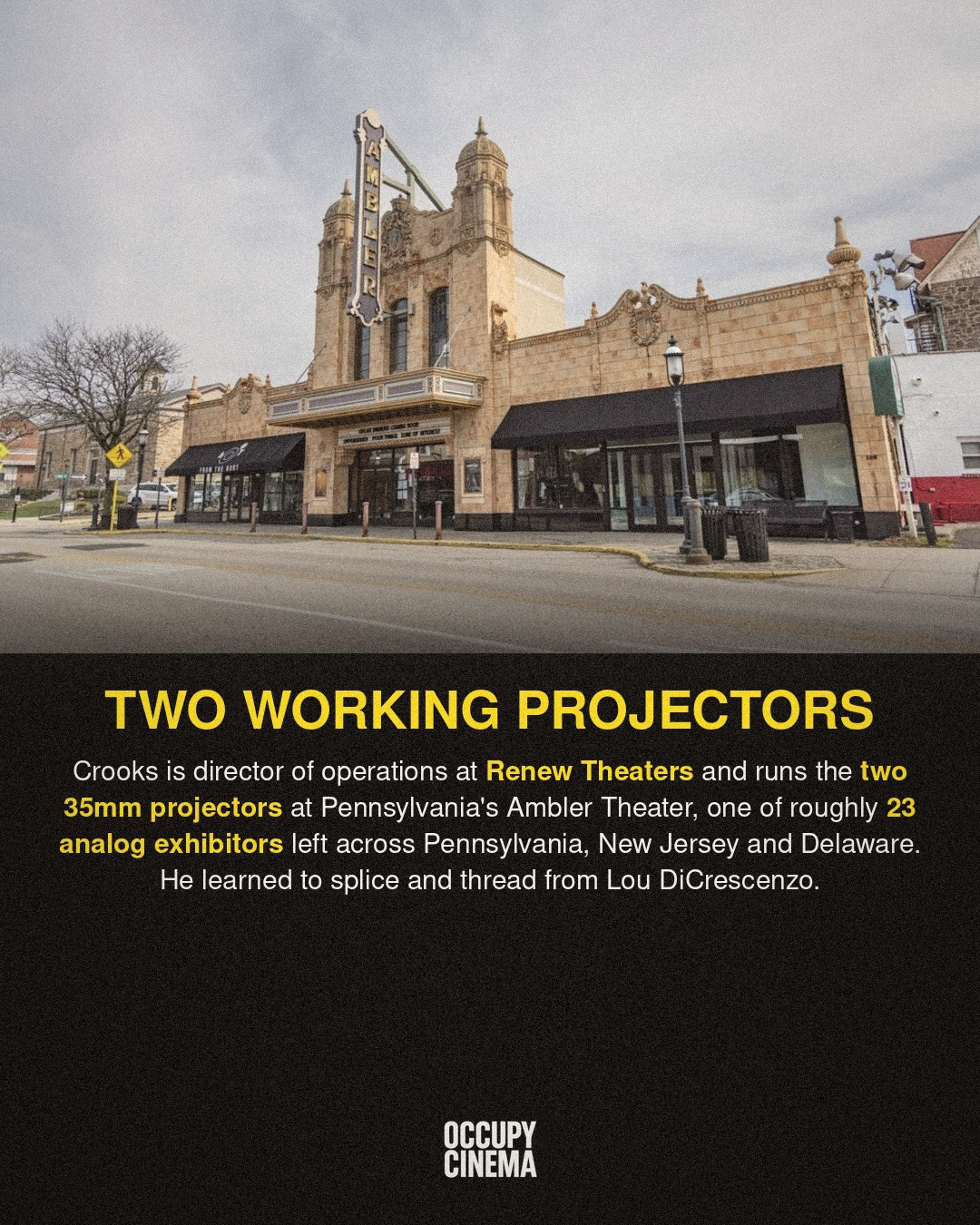
Across Pennsylvania, New Jersey, and Delaware, thousands of movie screens light up every night. Fewer than two dozen of them still run real celluloid. In an era dominated by hard drives, encrypted keys, and automated digital cinema packages, analog film exhibition has become a rare sanctuary art. At the center of this survival story is the Ambler Theater, a historic non-profit cinema in suburban Philadelphia operated by Renew Theaters. Inside the Ambler projection booth, director of operations Jesse Crooks operates a pair of working 35mm projectors. He keeps physical film alive for a dedicated audience. Crooks did not learn this trade from a manual or a corporate software training module. He learned it reel by reel from the late Lou DiCrescenzo, a legendary local projectionist and film archivist who spent six decades protecting silver halide history from being lost to time.
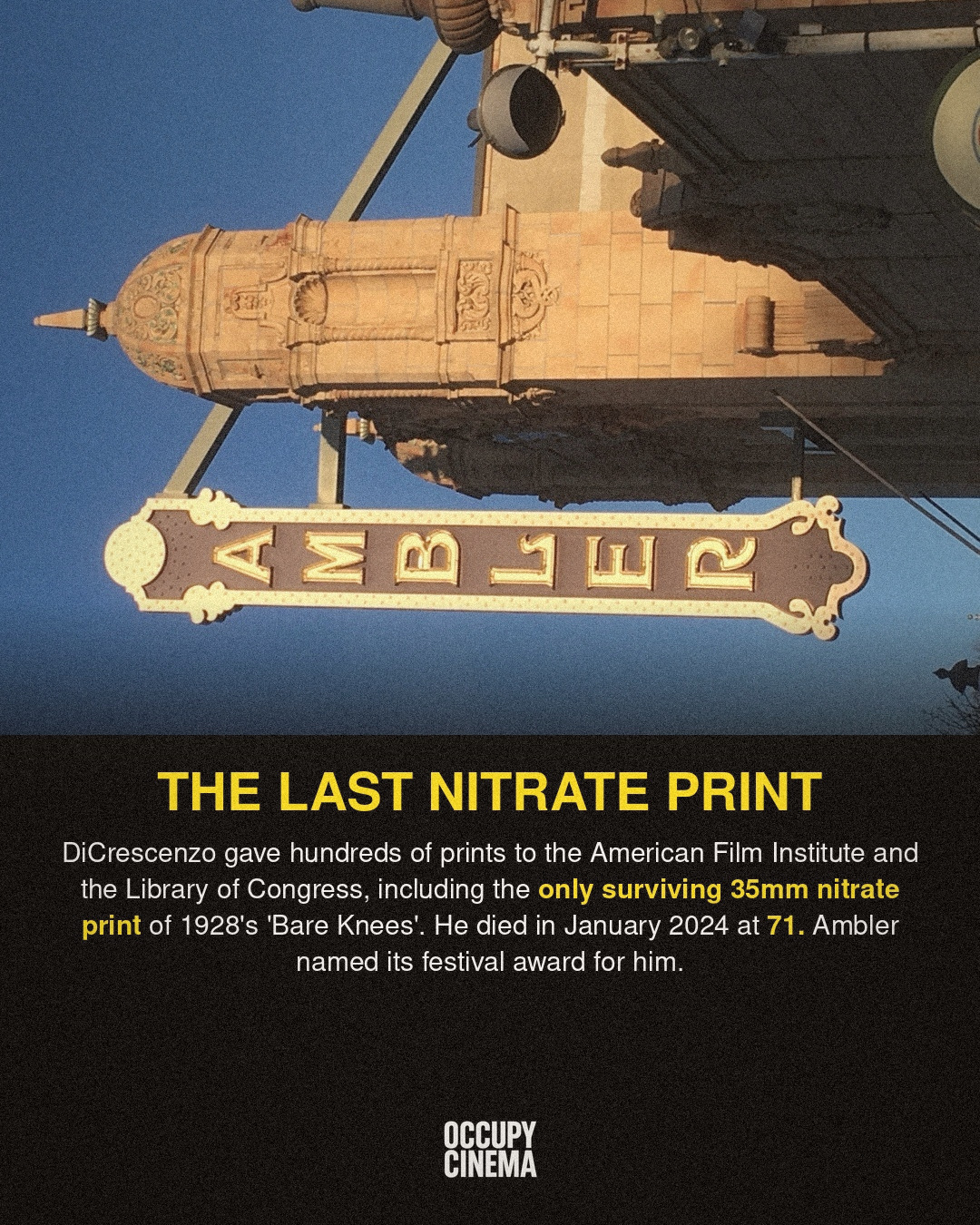
DiCrescenzo passed away in January 2024 at age 71. His passing marked the end of an era for East Coast film collectors, yet his influence remains permanently etched into the booth at Ambler. Over the course of his lifetime, DiCrescenzo acquired, maintained, and safeguarded hundreds of rare prints. Rather than hoarding them in private vaults, he quietly funneled priceless cinematic artifacts directly into the care of public institutions, including the American Film Institute and the Library of Congress. To honor his vast contributions to film heritage and labor, the Ambler Theater officially named its annual festival achievement award in his honor. This tribute cements his reputation not just as a projectionist, but as a crucial steward of American cinema history.
The physical labor of cinema preservation often happens away from glamour and red carpets. It happens in humid basements, estate sales, and narrow projection booths smelling of machine oil and acetate. DiCrescenzo understood the urgency of this work better than most. The Library of Congress estimates that roughly 75 percent of all silent feature films produced in the United States are lost forever. They perished due to physical decay, vault fires, or deliberate destruction by studios seeking to reclaim silver from unused nitrate film stock. Without independent collectors willing to salvage prints from closing theater attics, that percentage would be even higher.
The Rare Nitrate Save That Rewrote Film History
Among DiCrescenzo's most extraordinary discoveries was the only surviving 35mm nitrate print of the 1928 silent comedy Bare Knees. Directed by Erle C. Kenton and starring Virginia Lee Corbin, the Gotham Productions feature offers a vibrant glimpse into the jazz age flapper culture of the late 1920s. For decades, film historians assumed the movie was gone forever, buried in the vast graveyard of lost late silent cinema. DiCrescenzo located the nitrate print, protected it from chemical decomposition, and ensured its transfer to federal archives. His discovery gave researchers, scholars, and film lovers a living document of studio filmmaking on the eve of the sound revolution. Media coverage at Sight and Sound has long underscored how private collectors remain the unsung heroes of global film restoration efforts.
Nitrate film stock, used standard in commercial cinema until the early 1950s, is notoriously volatile. Made from nitrocellulose, the same compound found in guncotton, nitrate decomposes over time into an unstable jelly before off-gassing and igniting. It burns underwater, creates its own oxygen, and cannot be extinguished with conventional fire equipment. Transporting and housing such materials requires specialized climate-controlled vaults, rigorous hazardous materials clearance, and extreme financial backing. When DiCrescenzo identified and rescued the nitrate print of Bare Knees, he was not simply collecting memorabilia. He was handling hazardous material in order to rescue a unique piece of cultural heritage from permanent oblivion.
The transition from film to digital standard accelerated rapidly between 2008 and 2013, driven by studio cost considerations and Virtual Print Fee incentives. Shipping a single 35mm film print across the country in heavy metal cans costs anywhere from $300 to $500 in logistics alone. By contrast, distributing an encrypted digital file on a hard drive or via satellite costs a small fraction of that sum. As major multiplex circuits dismantled their mechanical projectors to make room for laser and DLP digital systems, thousands of veteran projectionists were laid off. According to reporting by IndieWire, the rapid disappearance of booth talent created an acute labor crisis for art-house theaters that wanted to keep repertory film screenings on their calendars.
Passing the Mechanics of the Booth to a New Generation
This labor crisis is precisely why the relationship between DiCrescenzo and Crooks matters so deeply today. Operating a 35mm projector is a tactile, highly skilled trade. It requires an exact understanding of film tension, mechanical timing, intermittent sprockets, optical soundhead alignment, and carbon arc or xenon illumination. A single missed frame or improperly set loop can shred irreplaceable print stock in seconds. Crooks learned how to inspect leader tape, repair brittle splices, manage dual-projector changeovers using cue marks, and maintain the precise mechanical tolerances required to run decades-old equipment. In a media landscape dominated by press-play automation, this hands-on knowledge represents a living bridge between silent-era craftsmanship and modern exhibition.
The survival of the Ambler Theater as an analog-capable venue reflects a broader economic reality in specialty exhibition. While mainstream multiplexes struggle with fluctuating theatrical windows and declining attendance, independent art-house cinemas running 35mm and 70mm events often enjoy record-setting attendance. High profile directors like Christopher Nolan, Quentin Tarantino, and Paul Thomas Anderson have leveraged their clout to keep physical film prints in commercial release pipelines. Beyond Hollywood blockbusters, however, local communities rely on regional hubs like Renew Theaters to experience classic cinema as it was originally presented. Industry analysts at The Hollywood Reporter note that analog film screenings routinely deliver higher ticket yields and stronger audience retention for independent venues.
When audiences sit down inside the Ambler Theater for a 35mm screening today, they are participating in an unbroken chain of custody. Every flicker on screen, every warm grain pattern, and every subtle pop of optical audio is the direct result of mentorship passed down in the booth. Lou DiCrescenzo saved lost treasures like Bare Knees so they could be archived for generations. Jesse Crooks continues to thread the projectors so audiences can experience film as a physical, breathing medium. In an industry increasingly defined by cloud storage and digital pixels, the quiet dedication inside the Ambler projection booth reminds us that film is not just an asset file. It is a tangible work of art that demands human hands to keep it moving.