Occupy Cinema › Exhibition
TIFF Classics Lineup Restores Fei Mu's 1948 Masterpiece and Artavazd Pelechian Rarities
The Toronto International Film Festival puts archival cinema front and center with 4K restorations of Fei Mu's influential drama and Artavazd Pelechian's montage gems.
By Occupy Cinema ·
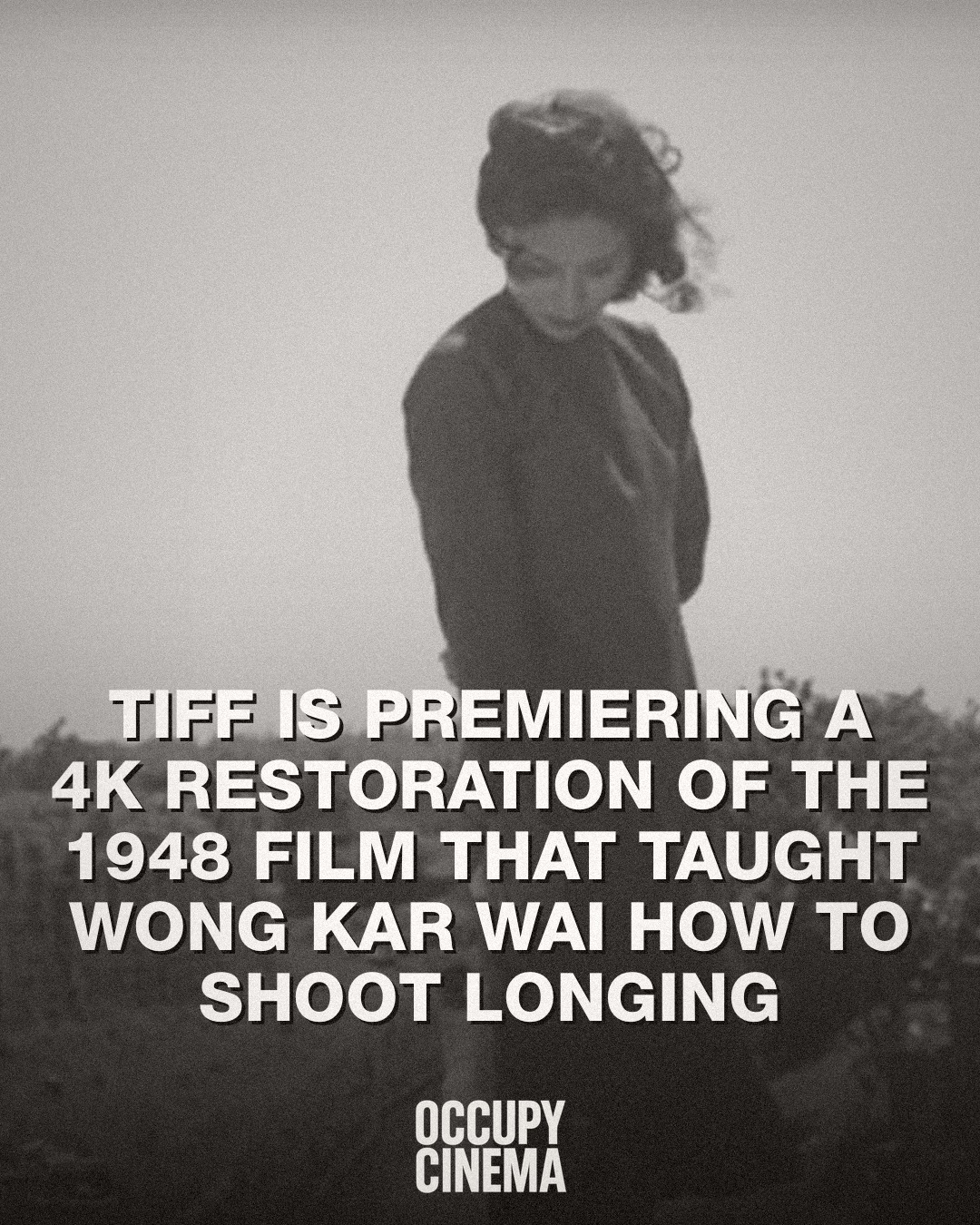
The Toronto International Film Festival has unveiled its Classics program, placing some of the most vital restorations in global film history alongside its contemporary premiere slate. Heading the bill is a 4K digital restoration of Fei Mu's 1948 Chinese drama Spring in a Small Town, presented courtesy of the China Film Archive. Long cited by scholars and cinephiles as one of the greatest films ever made in Asia, the project offers audiences a pristine look at a work that directly shaped modern art house cinema. Joining it is a rare retrospective showcase from Armenian director Artavazd Pelechian, whose newly restored shorts and mid-length works promise to reintroduce a titan of avant-garde editing to North American screens.
The Architecture of Modern Melancholy
Shot in the wake of the Second Sino-Japanese War, Spring in a Small Town operates on extreme restraint. The narrative centers on a ruined family estate, a bedridden husband, a lonely wife, and a visiting doctor who reawakens dormant passions. Fei Mu shot the film on limited resources during a turbulent political transition, relying on fluid panning movements, voiceover interiority, and delicate atmospheric depth. The film was largely suppressed in mainland China for decades before being championed during a late 20th-century critical revival.
Its DNA is visible across contemporary cinema. International film critics, writing for publications like Sight and Sound, have consistently ranked it among the finest achievements in world film history. Wong Kar-wai famously drew structural and emotional inspiration from its lingering tracking shots and restrained chamber drama tension for his 2000 masterpiece In the Mood for Love. The 4K digital cleanup by the China Film Archive repairs decades of emulsion degradation, stabilizing grey tones and restoring the delicate contrast of its original 35mm photography.
Distance Montage and Archival Economics
Complementing the Chinese classic is The Pelechian Project, a selection of five newly restored works by Armenian master Artavazd Pelechian. Known for pioneering the concept of distance montage, Pelechian developed an editing technique that juxtaposes sound and visual motifs across time rather than through immediate cut to cut contrast. Works like We (1969) and Inhabitants (1970) utilize archival footage, classical compositions, and rhythmic sound design to build hypnotic visual poems. Their North American premiere at Toronto offers festival audiences a rare big screen encounter with a legendary figure of Soviet era experimental film.
Archival programming at major fall festivals is no longer merely a curatorial footnote. According to festival coverage in The Hollywood Reporter, classic restorations have become high value acquisitions for specialty distributors like the Criterion Collection, Janus Films, and MUBI. Restoration initiatives serve as vital content pipelines for physical media releases and boutique subscription services, turning neglected film vaults into lucrative intellectual property.
The inclusion of these works signals a deliberate statement by Toronto programmers. In an autumn festival marketplace dominated by Oscar bait and studio publicity tours, preserving mid-century cinematic form remains a crucial priority. The 4K presentation of Spring in a Small Town demonstrates that quiet, character driven stories from 1948 still possess the power to command festival attention.
Related reading: In the Mood for Love (Criterion 4K).