Occupy Cinema › FEATURED
The Fading Light of Palas Cinema, a Call to Preserve Athens' Cinematic Soul
A beloved Athenian cinema, steeped in history and personal narratives, faces an uncertain future as development looms and a community rallies for its protection.
By Occupy Cinema ·
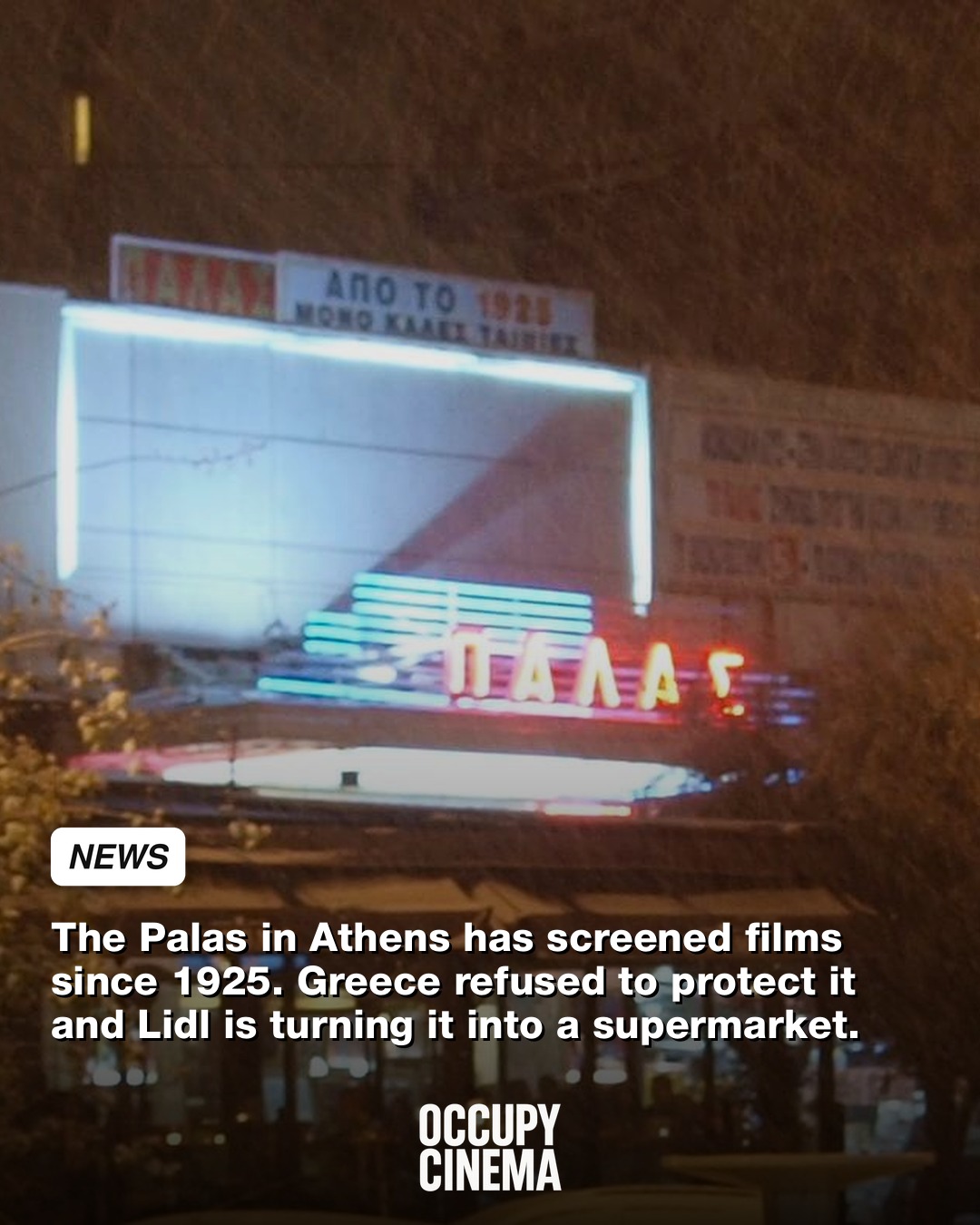
The light catches the dust motes dancing in the air of an old cinema, a quiet ballet before the projectionist presses play. Such is the fragile beauty of places like the Palas Cinema in Athens, a structure that has watched the city breathe and change from its perch on Ymittou Street since 1925. It promised, and still promises, only good films, a simple declaration that holds a universe of memories for generations of Athenians.
This is not merely a building, but a vessel of time. Consider Matthaios Potagas, who grew up within its walls from the age of eight, then took its reins in 1953, guiding its flickering beam until his passing in 2021 at 94. His life, so deeply interwoven with the Palas, echoes the lives of countless others who found solace, wonder, and escape within its darkened hall. The building itself, given its elegant Art Deco facade by Vasileios Kassandras in a 1935 rebuild, carries whispers of an earlier, more graceful Athens.
The Weight of History, The Threat of Silence
Beyond the silver screen, the Palas holds a much deeper, more poignant history. On a somber day in July 1944, during a period of profound struggle, a young resistance fighter, Vangelis Martakis, made a final stand from its rooftop, holding Security Battalion troops at bay for nearly two hours. This act of defiance, etched into the building's very fabric, speaks to a courage that transcends the cinema's primary purpose, connecting it to the broader narrative of a nation's resilience. Yet, despite such profound moments, official recognition proves elusive.
The Central Council of Modern Monuments, in a decision rendered on May 14, 2026, voted unanimously against listing the Palas, dismissing it as a common building of neighborhood character, devoid of notable architectural or historical significance. This assessment, unfortunately, overlooks the intangible, the collective memory, and the human spirit embedded in its walls. The irony is stark: while the rooftop summer cinema enjoys protection for its use since 1997, the winter hall downstairs, with its evocative red velvet seats, remains vulnerable, an unprotected heart beating faintly.
A Community Rises
The current owner, Lidl Hellas, plans a two, story supermarket, with construction slated for 2027. This impending transformation threatens to erase a significant cultural landmark. In response, local residents have galvanized, launching a campaign to urge the Ministry of Culture to revisit the file, to see beyond the cold assessment of brick and mortar, and to recognize the true value of the Palas. Preserving such spaces is not merely about nostalgia, it is about safeguarding the soul of a city, ensuring that the stories of its past continue to resonate for future generations. As we have seen in other cinematic preservation efforts, such as the fight for Rome's Sala Umberto, community voices can make a profound difference.
The Palas is more than a building, it is a testament to shared experiences, a silent witness to history, and a repository of collective dreams. To lose it would be to dim a vital light in Athens' cultural landscape, to silence a projector that has illuminated so many lives. It is a reminder that the true value of a place often lies not just in its visible grandeur, but in the echoes of human lives lived within its embrace, and the whispered promise of good films, forever waiting.
Luna Greenwood, World and Arthouse, Occupy Cinema.
Related reading: Making Movies by Sidney Lumet, a master class on the craft of filmmaking.