Occupy Cinema › Awards
Light, Chemicals, and Pure Instinct: How Terrence Malick Rewrote Cinema with The Tree of Life
A $32 million risk that yielded a Palme d'Or, Terrence Malick's 2011 masterpiece abandoned traditional screenwriting to redefine visual language.
By Occupy Cinema ·
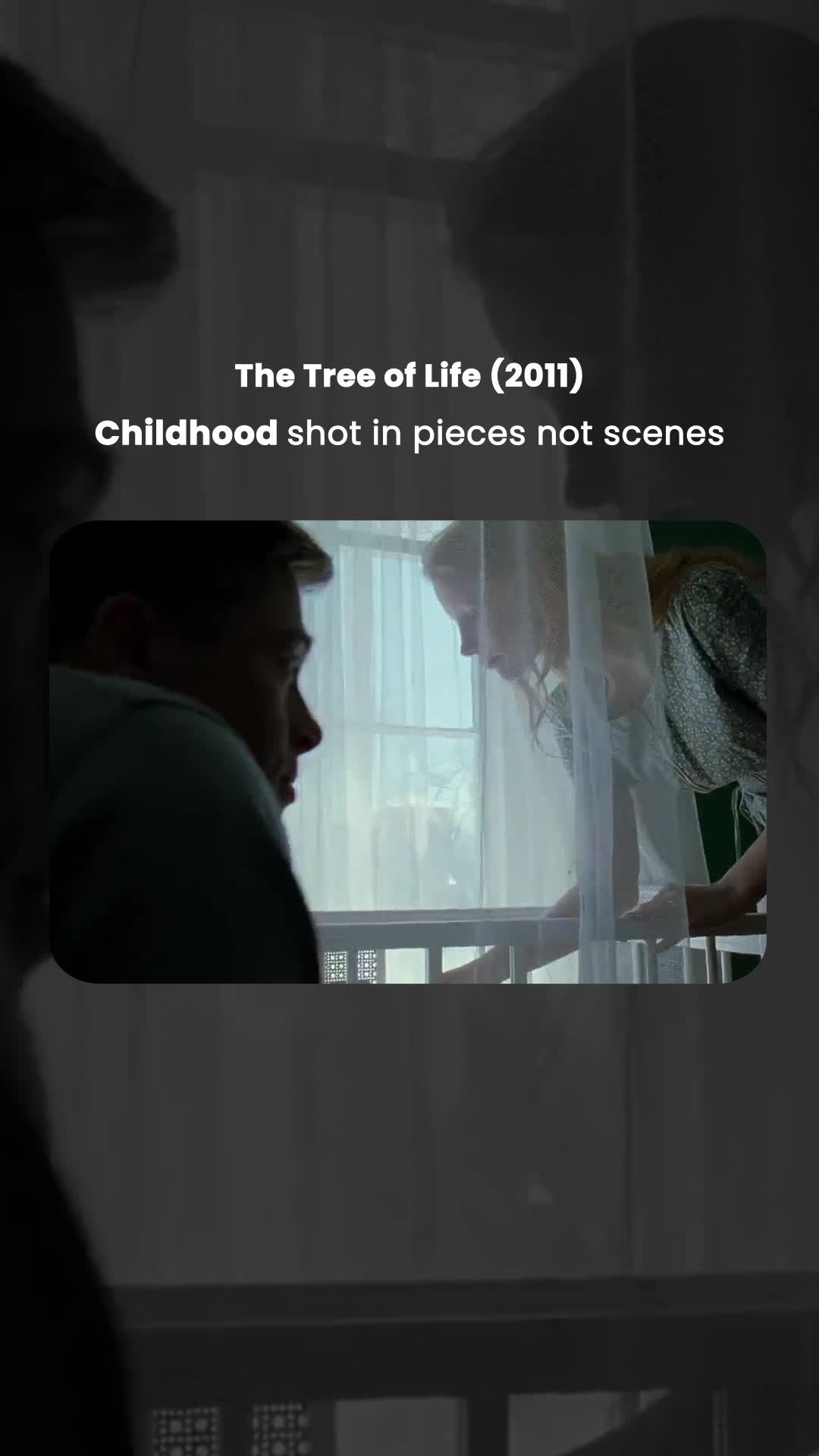
In May 2011, Fox Searchlight released a $32 million philosophical epic that divided audiences, mesmerized critics, and won the Palme d'Or at the Cannes Film Festival. Directed by Terrence Malick, The Tree of Life arrived in cinema history not merely as a narrative feature, but as a formal rupture. The film paired cosmic creation myths with a nostalgic drama set in 1950s Waco, Texas. It established a standard for poetic, impressionistic filmmaking that remains unmatched in modern American cinema. Financially, it was a high-risk bet for independent financiers River Road Entertainment and Plan B Entertainment. Artistically, it rewrote the rules of visual storytelling by discarding standard screenplay structures in favor of instinctual, sensory immersion.
The production originated years prior under the working title Q, envisioned by Malick as a sweeping meditation on the origins of the universe. When River Road CEO Bill Pohlad stepped in to finance the $32 million budget, the project acquired the capital required to execute its dual scale. The narrative balanced intimacy and infinity. On one side stood the domestic friction of the O'Brien family; on the other, the birth of galaxies and pre-historic earth. To handle the scale, Searchlight mounted a calculated platform release model that expanded across North America after its triumphant French debut, according to box office coverage on The Hollywood Reporter. The gamble paid off with a $54.3 million global theatrical gross, proving that uncompromising formal experimentation could find a sustainable theatrical footprint.
Dogma of Light: The Lubezki Protocol
Central to the visual identity of The Tree of Life was cinematographer Emmanuel Lubezki, who forged a revolutionary approach to camera movement and lighting. Malick and Lubezki established a strict visual manifesto during pre-production. They agreed to shoot exclusively in available natural light, avoiding artificial tungsten or hydrargyrum medium-arc iodide units whenever possible. Standard shot lists were eliminated. Actors received page fragments or abstract emotional cues rather than traditional scene dialogue. Lubezki equipped his team with ultra-wide lenses, operating handheld and Steadicam setups inches away from the performers. The camera moved constantly, behaving like an unseen participant in the scene rather than a passive observer.
To heighten the emotional hierarchy of the suburban household, Malick and Lubezki introduced strict spatial rules. Adults were photographed from lower angles looking up, exaggerating their looming authority over the children. Conversely, the young boys were framed from above or at eye level, capturing their vulnerability and playful spontaneity. When the sun dropped below the horizon, camera package units were packed away. Filming ceased immediately. This discipline forced the crew to chase physical moments rather than manufactured blocking, accumulating miles of raw motion picture stock that captured real, unscripted human behavior.
The editorial process was an unprecedented marathon. Malick gathered a formidable team of editors, including Hank Corwin, Jay Rabinowitz, Daniel Rezende, Billy Weber, and Mark Yoshikawa. Together, they combed through hundreds of hours of raw footage, filtering roughly fifteen hours of assembled long cuts down to the final theatrical runtime of two hours and nineteen minutes. The editing rooms operated more like radical assembly workshops than traditional post-production suites. Every cut sought tone, cadence, and internal rhythm over linear continuity, matching physical gestures across entirely different locations and timeframes.
Cosmic Practicality and Narrative Tension
The film's most famous set piece, a fifteen-minute sequence depicting the formation of the cosmos and the early development of life on Earth, rejected computer-generated imagery in favor of practical physical effects. Malick recruited legendary visual effects supervisor Douglas Trumbull, famous for his pioneering work on Stanley Kubrick's 2001: A Space Odyssey. Working in a specialized laboratory in Austin, Texas, Trumbull and visual effects supervisor Dan Glass experimented with fluid dynamics, chemical reactions, fluorescent dyes, inks, and high-speed photography. By photographing microscopic physical reactions at high frame rates, they captured galactic nebulae and organic cell divisions without relying on digital renders, achieving a timeless visual texture that earned wide acclaim in Sight and Sound analysis.
While the visual tapestry achieved critical legendary status, the non-linear process generated friction within the ensemble cast. Brad Pitt delivered a stern, compelling performance as the authoritarian patriarch, while the film served as a major career breakthrough for Jessica Chastain, whose luminous portrayal of grace announced her as a major talent. However, Sean Penn, who played the adult version of the eldest son Jack, expressed public confusion regarding his reduced role in the finished edit. Penn noted in interviews that the narrative thread he had filmed was drastically altered in the cutting room, illustrating the inherent risk of Malick's fluid, editing-driven methodology.
Industry reporting at the time highlighted the tension between traditional star-driven narratives and Malick's avant-garde ambitions, as analyzed by IndieWire. Despite internal narrative restructuring, the film resonated across the industry during awards season. Beyond the Cannes Palme d'Or, The Tree of Life secured three Academy Award nominations, including Best Picture, Best Director for Malick, and Best Cinematography for Lubezki. It codified a new visual language for modern prestige drama, influencing commercial directors, music video creators, and auteur filmmakers worldwide for over a decade.
More than a decade after its release, The Tree of Life remains an essential landmark in contemporary cinema. It proved that a $32 million production could bypass classical Hollywood storytelling, substitute emotional intuition for dramatic dialogue, and still capture international prestige alongside respectable box office returns. By prioritizing light, memory, and practical wonder over conventional scripting, Malick created a timeless cinematic liturgy. The film continues to instruct filmmakers on the endless possibilities of the visual medium when art takes precedence over formula.