Occupy Cinema › Casting
The Long Wait for the Payoff: Inside Inde Navarrette's Horror Breakout in 'Obsession'
Curry Barker's Blumhouse-backed thriller turned an eighteen-month dry spell into one of the year's defining genre breakouts.
By Occupy Cinema ·
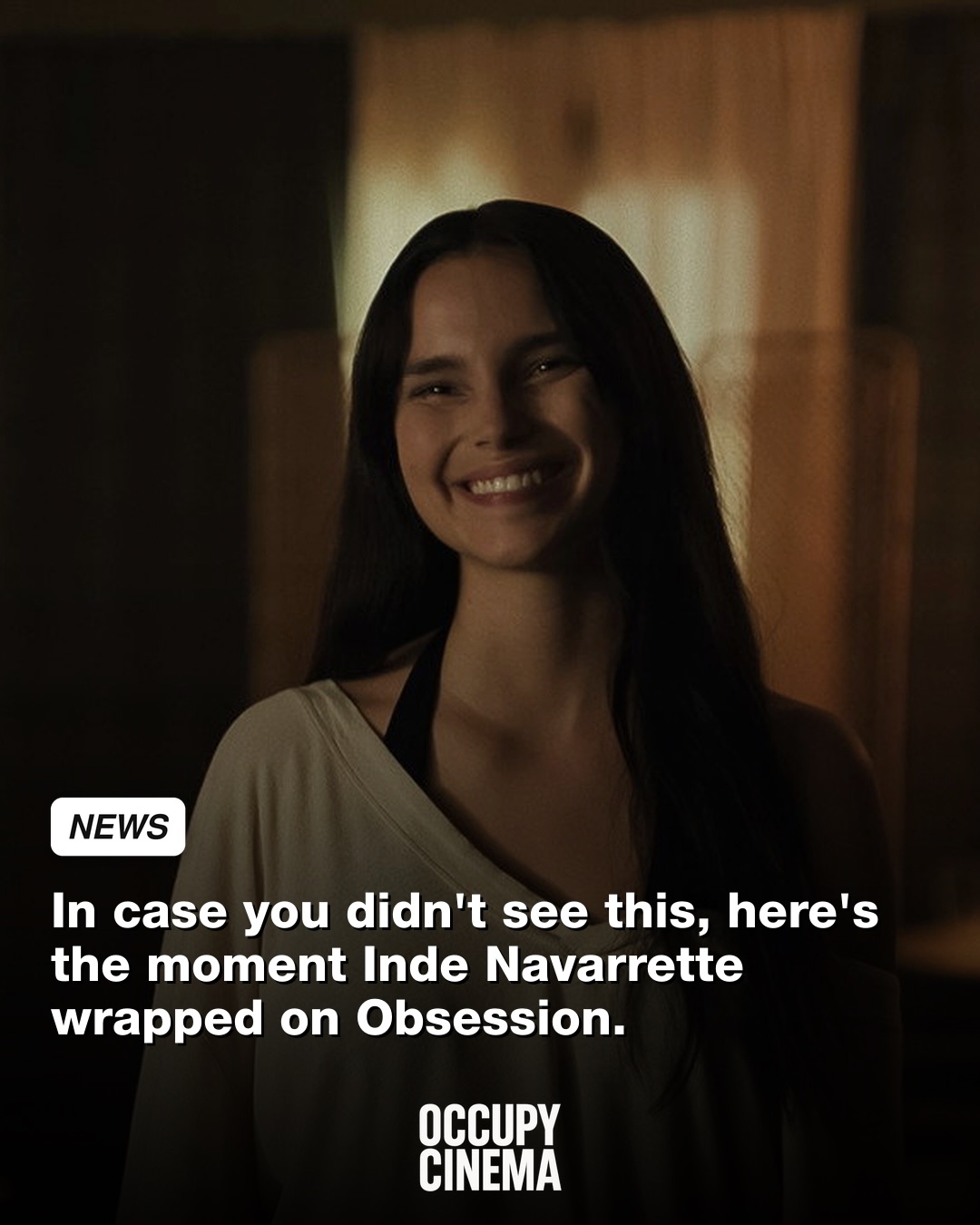
The reality of independent genre filmmaking is defined by the waiting game. An actor finishes a grueling shoot, the final slate claps, and the production machine grinds forward in silence while the market decides whether anyone will actually see the work. When Inde Navarrette wrapped production on Obsession, there were no immediate victory laps or packed casting schedules. The project entered the long, volatile pipeline of post-production and distribution, leaving its lead in a familiar holding pattern.
Written and directed by Curry Barker and produced by Blumhouse alongside Capstone, Obsession positioned Navarrette as Nikki Freeman, the central anchor of a tight, supernatural psychological nightmare. Barker, who built his early reputation on razor-sharp DIY horror before stepping into the studio-backed ecosystem, designed the film around relentless pacing, practical tension, and claustrophobic framing. Navarrette's performance required sustained emotional intensity across a fast, demanding schedule where every setup had to count.
The Blumhouse Engine and the Production Pipeline
The contemporary horror landscape thrives on strict fiscal discipline. Blumhouse has spent decades mastering the low-risk, high-reward theatrical formula, an operational model closely covered across Deadline and wider industry trade reporting. For Obsession, that structure meant a lean shooting window with zero margin for wasted camera time. The production favored gritty location work and tactile in-camera effects over expensive digital smoothing, placing the burden of suspense directly on Navarrette's physical reactions and Barker's spatial blocking.
Yet despite the strong creative pedigree on set, the standard post-wrap reality set in quickly. Following the final day of filming, Navarrette went a full eighteen months without booking another screen role. The modern casting ecosystem remains notoriously cautious, often refusing to gamble on talent until a finished film proves its commercial vitality on a public stage. For mid-budget and indie horror, wrap day is never the finish line; it is merely the start of an agonizing commercial gestation.
Festival Traction and Theatrical Breakout
The trajectory shifted entirely when Obsession made its debut at the Toronto International Film Festival. Screened before genre-focused festival audiences, the picture generated immediate critical momentum, establishing Barker as a vital new directorial voice and spotlighting Navarrette's grounded, visceral turn. As The Hollywood Reporter frequently notes in its coverage of festival acquisitions, early genre buzz at major autumn markets remains one of the few reliable levers for securing broad theatrical commitments.
By the time the film arrived in wide release the following spring, word of mouth converted directly into strong box office returns. Audiences exhausted by overstuffed franchise spectacles responded to the film's stripped-down, focused dread. Navarrette's performance grounded the supernatural mechanics in genuine vulnerability, proving that small-scale genre craft still delivers the most potent return on investment in commercial cinema.
The long gap between wrap and release underscores the brutal nature of modern screen acting. Talent alone rarely commands immediate momentum without theatrical validation. For Navarrette and Barker, Obsession serves as a reminder that in horror, the real breakthrough often happens quietly in the editing suite and festival trenches, long after the lights on set have been turned off.
Related reading: Respect for Acting.