Occupy Cinema › Awards
NAZA Shatters Venice Records, Ignites Political Debate on the Lido
A 25-minute standing ovation for the documentary NAZA at the Venice Film Festival has sent shockwaves through the industry, signaling a potent awards contender and a powerful political statement.
By Occupy Cinema ·
Venice Takes a Stand
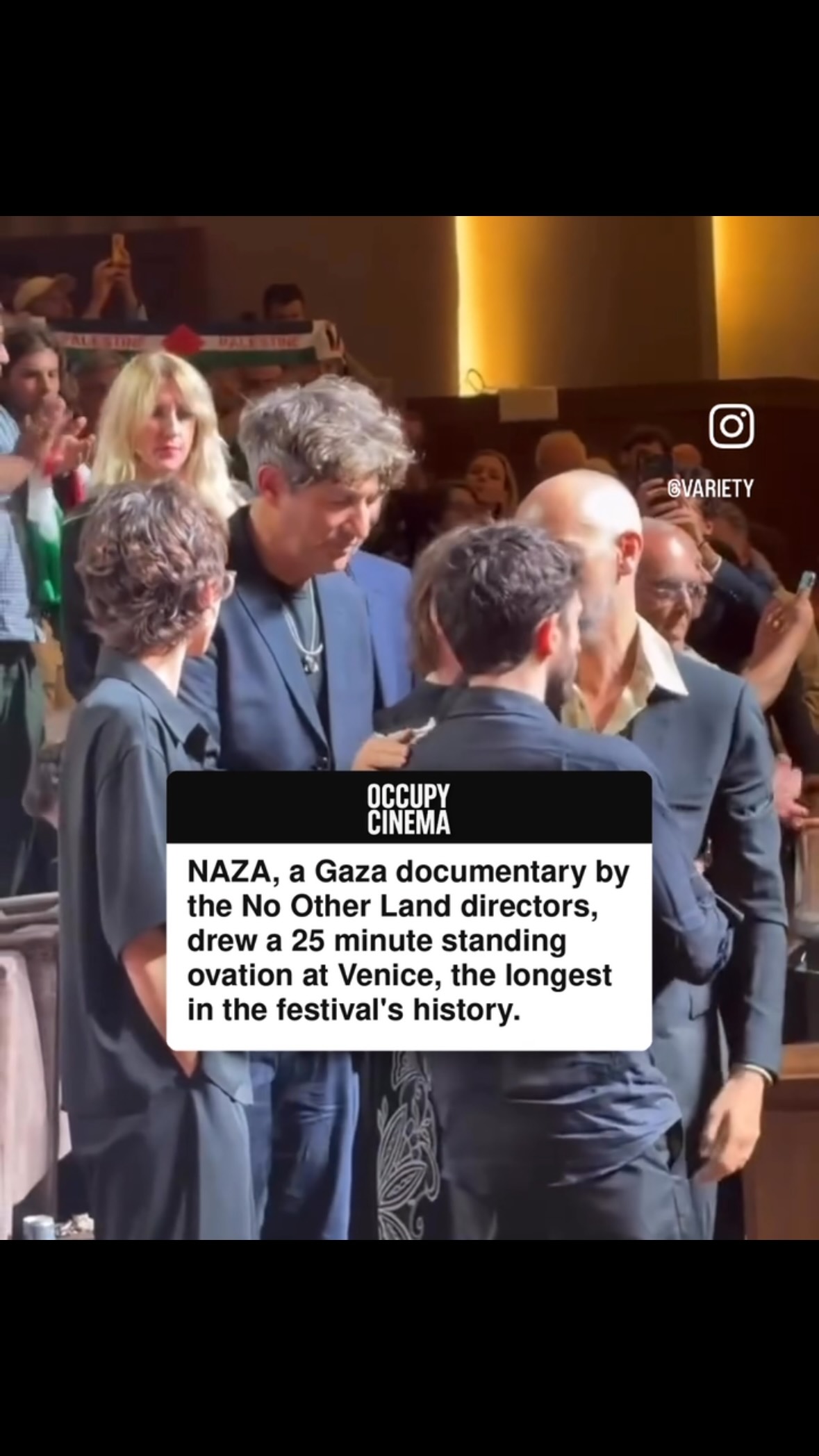
The 83rd Venice Film Festival witnessed an unprecedented moment on September 10. The Sala Grande erupted in a 25-minute standing ovation following the world premiere of NAZA, a documentary feature. This duration, as reported by Deadline, marks the longest ovation in the festival's storied history. Beyond the sheer endurance of applause, the scene was punctuated by the waving of Palestinian flags, transforming a cinematic triumph into a potent geopolitical statement. The film, which is the sole documentary in competition for the coveted Golden Lion, has immediately positioned itself as a frontrunner and a lightning rod for discussion.
The impact of such a reception cannot be overstated. A record-breaking ovation at a major festival like Venice does more than just flatter filmmakers, it signals a commercial and critical force. Distributors take notice, awards strategists begin plotting, and audiences anticipate a must-see event. For a documentary, this level of immediate, visceral engagement is particularly rare and valuable. It suggests that NAZA transcends its genre, tapping into a raw, collective emotional current that resonated deeply with the international critics, industry professionals, and cinephiles present.
The film's directors are Yuval Abraham and Rachel Szor. They are two of the four directors behind No Other Land, the documentary that secured the Best Documentary Oscar for 2025. This prior success lends significant weight and credibility to their latest offering, creating high expectations even before its premiere. The involvement of Jonathan Glazer as executive producer further elevates NAZA's profile. Glazer, a director known for his unflinching gaze and politically charged narratives, most recently with the Oscar-winning The Zone of Interest, brings a seal of artistic integrity and a certain gravitas to the project. His association suggests a film of rigorous craft and profound thematic depth.
The Stakes of the Golden Lion
Entering the main competition for the Golden Lion is an achievement in itself, but for a documentary to do so is exceptional. Narrative features typically dominate these top-tier festival slots. NAZA's inclusion underscores the programming committee's confidence in its artistic merit and its potential to stand shoulder-to-shoulder with the year's most ambitious fiction films. The win for No Other Land at the Oscars also places Abraham and Szor squarely in the spotlight, adding a layer of expectation and scrutiny to their newest work. This is not merely a film seeking recognition; it is a film by proven talents operating at the peak of their form.
The political dimension of the premiere, with the visible display of Palestinian flags, adds another complex layer to NAZA's narrative. Film festivals, particularly Venice, are often stages for cultural and political discourse. This demonstration highlights the film's likely engagement with pressing global issues, positioning it as a work that not only entertains or informs, but actively provokes thought and solidarity. Such moments can define a festival, creating a lasting memory that transcends individual film screenings and contributes to the broader cultural conversation. Variety captured footage of the ovation, further solidifying its place in festival lore.
The journey from a 25-minute ovation at Venice to potential awards season glory is long and arduous, but NAZA has secured an undeniable head start. Its record-breaking reception, coupled with the pedigree of its creators and executive producer, signals a documentary that will be impossible to ignore. The film now carries the weight of immense critical anticipation and the responsibility of its powerful, emotionally charged debut. Its performance at the box office, its reception in subsequent festivals, and its ultimate impact on the awards circuit will be closely watched. This is more than a film; it is a cultural event unfolding in real-time, demanding attention and conversation.