Occupy Cinema › FEATURED
How Kazuo Miyagawa Photographed the Dead in Mizoguchi’s Ugetsu
Kenji Mizoguchi and cinematographer Kazuo Miyagawa created the gold standard for supernatural cinema in 1953 using fog, diffusion, and unbroken takes.
By Occupy Cinema ·
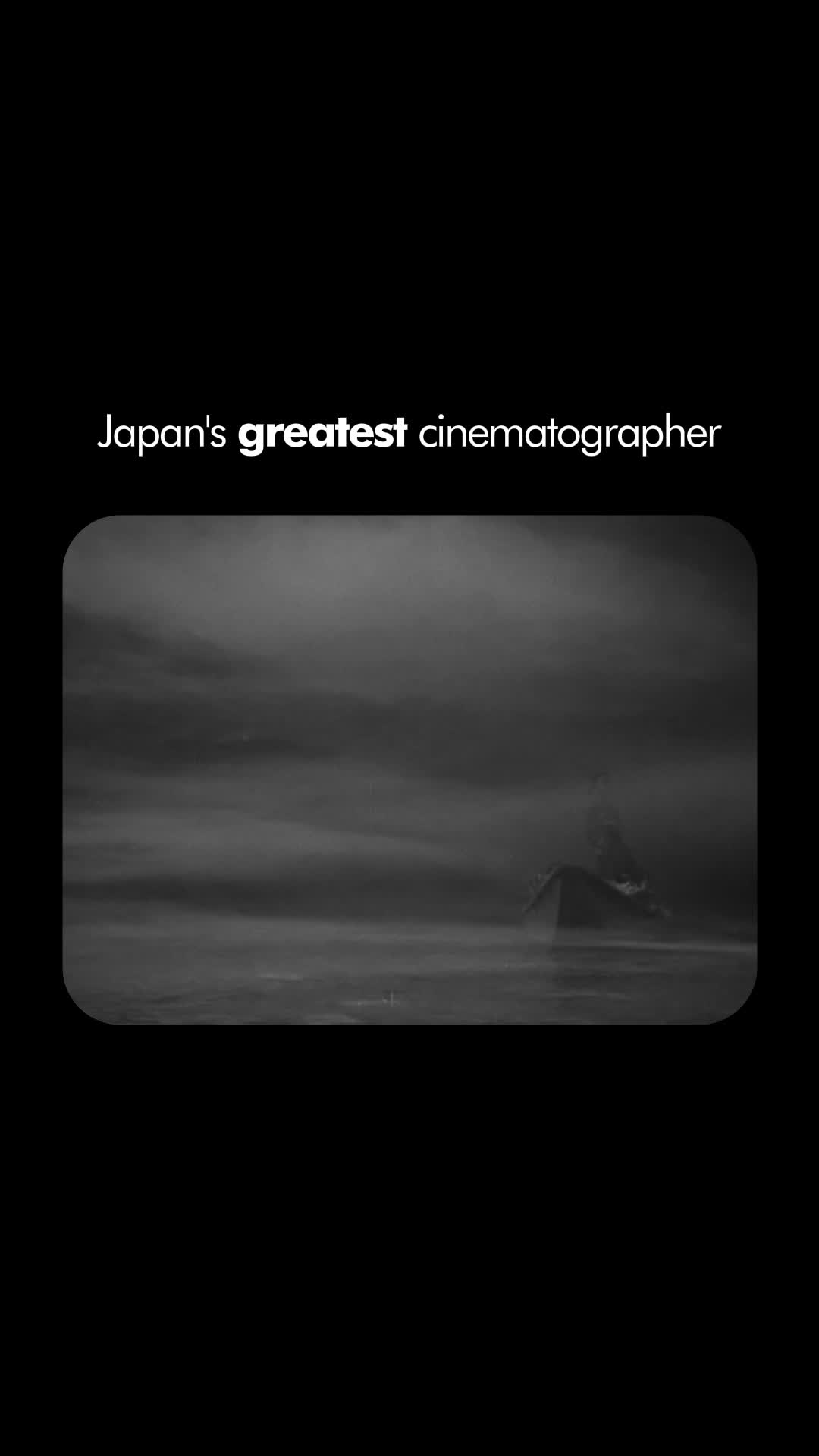
In September 1953, Daiei Film secured its second major international breakthrough in three years when Kenji Mizoguchi won the Silver Lion at the Venice Film Festival for Ugetsu. Coming off Akira Kurosawa’s Golden Lion victory for Rashomon in 1951, the win solidified postwar Japanese cinema as an unassailable artistic force on the global market. Produced by Masaichi Nagata, the film adapted classic ghost stories by Ueda Akinari into a sobering allegory of war, greed, and spiritual ruin. Yet the real triumph of Ugetsu belonged to its visual construction, where the boundaries between the living and the dead were dissolved through pure in-camera craft.
At the center of that visual architecture was cinematographer Kazuo Miyagawa. Miyagawa was already the premier director of photography in Japanese studio history, having shot Rashomon and later collaborating with Yasujiro Ozu and Kon Ichikawa. For Ugetsu, Miyagawa faced an unusual technical mandate from Mizoguchi. The director demanded phantom atmospheres without optical composites, superimpositions, or post-production visual effects. The supernatural had to exist within the physical space of the shot.
The Mechanics of Spectral Lighting
Miyagawa achieved this illusion during the famous Lake Biwa crossing scene by floating a custom dolly rig across a shallow, fog-choked studio tank. The camera moves silently over quiet water while dense smoke masks the edges of the frame. A lone boat emerges from the haze, moving from absolute obscurity into vivid sharpness in a single, uninterrupted take. By eliminating cuts, Mizoguchi and Miyagawa forced the audience to process the ghostly appearance in real time. There was no editing splice to cushion the transition, rendering the phantom boat as concrete as the wooden oars slicing through the lake.
The presentation of Lady Wakasa, played by Machiko Kyo, required a completely separate photographic grammar. Miyagawa lit her character with a specialized setup designed to make her appear as an internal light source rather than an object reflecting external studio lamps. Using fine gauze over the camera lens alongside soft, low-intensity key lights, he wrapped Kyo in a faint, radiant haze. While the surrounding actors remained grounded in hard, naturalistic shadows, Lady Wakasa glided through long takes looking slightly out of focus, floating above the physical reality of the sets.
A Legacy Carved in Fog and Silver
Mizoguchi’s preference for long takes, often described as "one scene, one shot," demanded extraordinary discipline from the camera crew and cast. Sequences were rehearsed for days so that lighting cues, focus pulls, and dolly tracking matched the precise movements of the actors. According to historical retrospectives published by Sight and Sound, Miyagawa personally tested dozens of Japanese incense and fog formulas to find a smoke density that held steady under high-intensity studio tungsten lamps without irritating the actors' eyes.
The resulting imagery defined ghost cinematography for generations. Western releases distributed by Edward Harrison introduced American filmgoers to a lyrical, terrifying rhythm that diverged sharply from Hollywood monster movies of the era. Rather than relying on sudden jump scares or elaborate monster makeup, Ugetsu demonstrated that dread stems from atmosphere, duration, and tone.
Decades later, Ugetsu remains a testament to the power of pure photographic discipline. Mizoguchi and Miyagawa proved that the supernatural does not require digital intervention or complex laboratory tricks. It requires precise lighting, spatial control, and the patience to let a shot breathe until the real world quietly gives way to the unreal.