Occupy Cinema › FEATURED
Jeremy Irons and the Art of Not Playing the Outcome on Set
Watching two young performers telegraph a plot twist during a motel scene shoot, Oscar winner Jeremy Irons broke down the cardinal rule of screen acting: live in the present second.
By Occupy Cinema ·
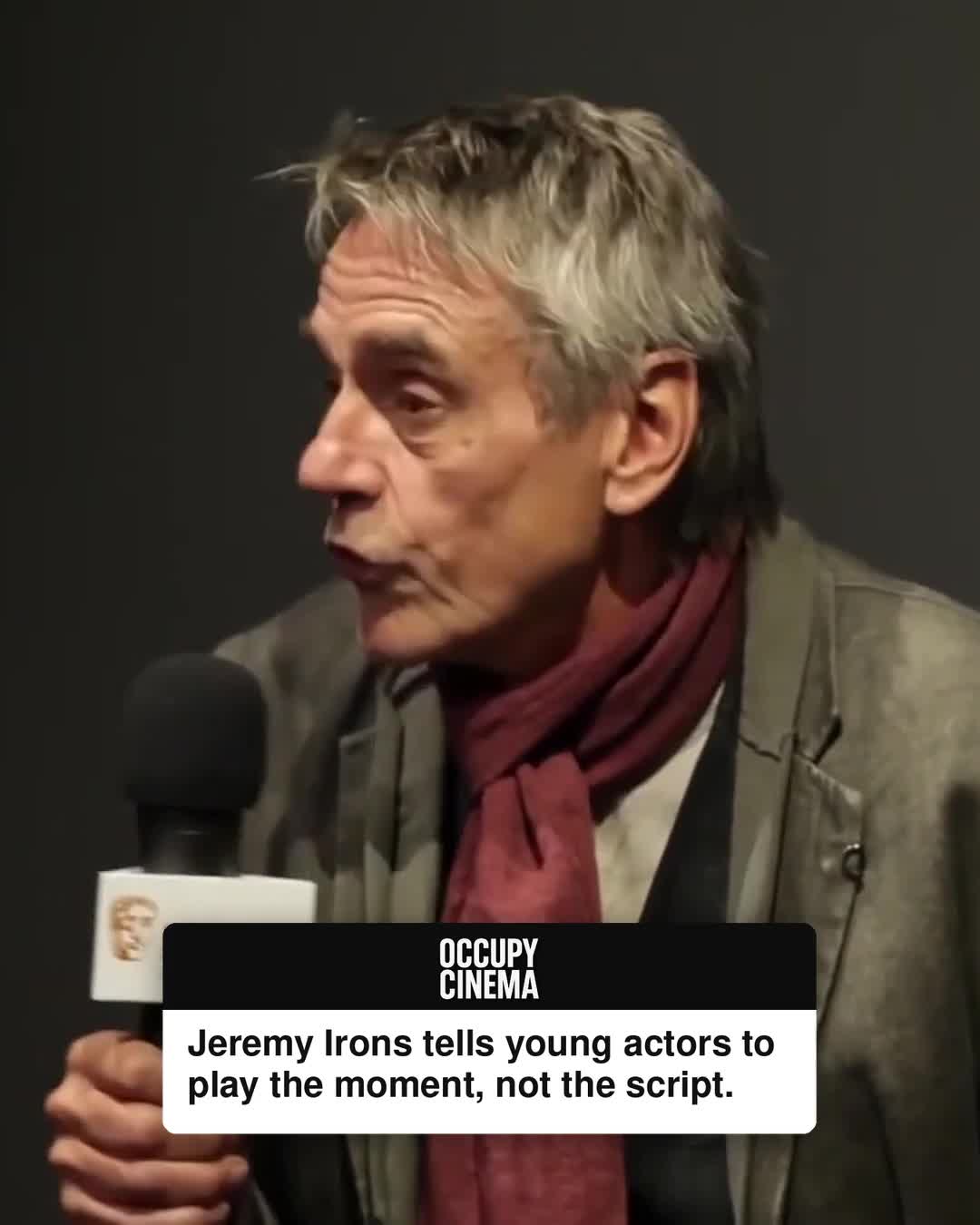
In film production, the deadliest flaw in screen performance is anticipation. Actors read the script, memorize the climax, and subconsciously leak the outcome into the opening scene. Oscar winner Jeremy Irons addressed this exact trap while observing two young performers shooting a tense motel sequence. The scene called for a sudden knock on the door. The actors, knowing precisely who was standing on the other side of the frame, were already telegraphing dread before the timber even vibrated. Irons intervened with a fundamental truth of modern screen craft: a knock at the door could be room service, a housekeeper, or a lost guest. In life, human beings do not react to events before they occur. To play the surprise rather than the present moment is to destroy the very engine of dramatic suspense.
That piece of set observation cuts to the core of what separates veteran stage-trained screen titans from novice performers. Irons, whose career spans over five decades across West End theater, prestige television, and high-stakes Hollywood cinema, built his reputation on precise restraint. From his breakthrough role in Charles Sturridge and Michael Lindsay-Hogg's 1981 adaptation of Brideshead Revisited to his Academy Award winning turn as Claus von Bülow in Barbet Schroeder's 1990 drama Reversal of Fortune, Irons has consistently demonstrated that screen acting is an exercise in economy. Audiences leaning into a performance want to see a mind actively working in real time, not an actor executing a pre-planned emotional roadmap.
The distinction between knowing the script and inhabiting the character's immediate perception remains one of the hardest adjustments for emerging actors. On stage, projection and deliberate pacing are necessary to carry across an amphitheater. In front of a camera lens, particularly with modern high-resolution sensor packages paired with prime lenses at close range, the camera reads micro-expressions that the actor may not even realize they are broadcasting. When an actor plays the outcome, their posture, breathing, and eye movements tighten in anticipation. According to industry coverage on acting techniques published by IndieWire, the camera acts as a psychological detector, registering internal foresight as artificial performative effort rather than genuine human behavior.
The Mechanics of Present-Tense Suspense
Dramatic tension relies on an asymmetrical distribution of information between the audience and the character. In classic suspense construction, dramatic tension flourishes when the audience knows a threat exists while the characters remain completely oblivious, chatting casually about mundane topics. If the actor plays the impending threat rather than the mundane conversation, the tension vanishes instantly. Irons' advice points directly to this structural necessity. When a character in a motel room hears an unexpected knock, their immediate cognitive baseline is simple curiosity or minor irritation. The sudden transition from routine existence to shock or terror is precisely what creates narrative impact for the viewer.
Irons mastered this philosophy across some of the most complex psychological studies in modern cinema. In David Cronenberg's 1988 psychological thriller Dead Ringers, Irons played twin gynecologists Beverly and Elliot Mantle. The technical feat required him to play opposite split-screen markers and motion-control setups, reacting in real time to non-existent performers while maintaining distinct internal consciousnesses for both brothers. Later, in J.C. Chandor's 2011 financial thriller Margin Call, Irons stepped onto a high-intensity ensemble set alongside Kevin Spacey, Zachary Quinto, and Stanley Tucci as CEO John Tuld. In trade coverage from Variety detailing the production of Margin Call, cast members noted how Irons commanded the boardroom scenes not through theatrical bluster, but by playing a man entirely comfortable in the exact present second of corporate triage.
The director and cinematographer depend entirely on the actor's ability to remain in the immediate present. When a scene is covered across multiple takes, master shots, medium setups, and extreme close-ups, an actor who plays the surprise early creates severe continuity and editing headaches. In the cutting room, an editor seeking to cut between a medium tracking shot and a tight close-up requires the actor's physical state to match the precise moment of discovery. If the actor shifts their weight or changes their facial expression before the audio cue occurs, the cut breaks fluid visual movement.
Unlearning the Script on Set
The pressure on modern independent and mid-budget film sets compounds this issue. With tight shooting schedules often demanding six to eight pages of script coverage per day, young actors frequently over-prepare, memorizing emotional beats down to the exact second. They treat the script as a musical score to be recited flawlessly rather than a framework for living interaction. Veteran directors and acting coaches frequently emphasize that true preparation involves memorizing dialogue so thoroughly that the actor can forget it entirely once the camera rolls, allowing raw environmental stimulus to dictate their immediate physical response.
This approach mirrors the classical techniques advocated by legendary drama theorists and directors throughout cinema history. From classical stage techniques emphasizing the immediacy of the present task to physical repetition exercises designed to strip away performative anticipation, performance theory consistently wars against forward-looking acting. In modern filmmaking commentary detailed by The Hollywood Reporter, top casting directors routinely note that the most magnetic screen tests are those where the performer appears genuinely unaware of what sentence is coming next, even when reading off familiar sides.
Ultimately, Jeremy Irons' lesson to those two young actors in a motel room scene extends far beyond a single shoot. It articulates the essential paradox of cinema acting: complete mastery of a script requires the complete willingness to abandon foresight when the director calls action. The human mind in the real world only experiences the present fraction of a second. By stripping away anticipation and allowing the unknown to remain unknown until it crashes through the door, an actor transforms a rehearsed routine into living, breathing cinema.