Occupy Cinema › Awards
Ramsay's Trauma: The Deconstructed Hitman of 'You Were Never Really Here'
Lynne Ramsay's 2017 thriller, 'You Were Never Really Here,' continues to resonate years after its Cannes debut. A masterclass in minimalist violence and psychological depth, the film subverted genre expectations on a modest budget, cementing its place in modern cinematic discourse.
By Occupy Cinema ·
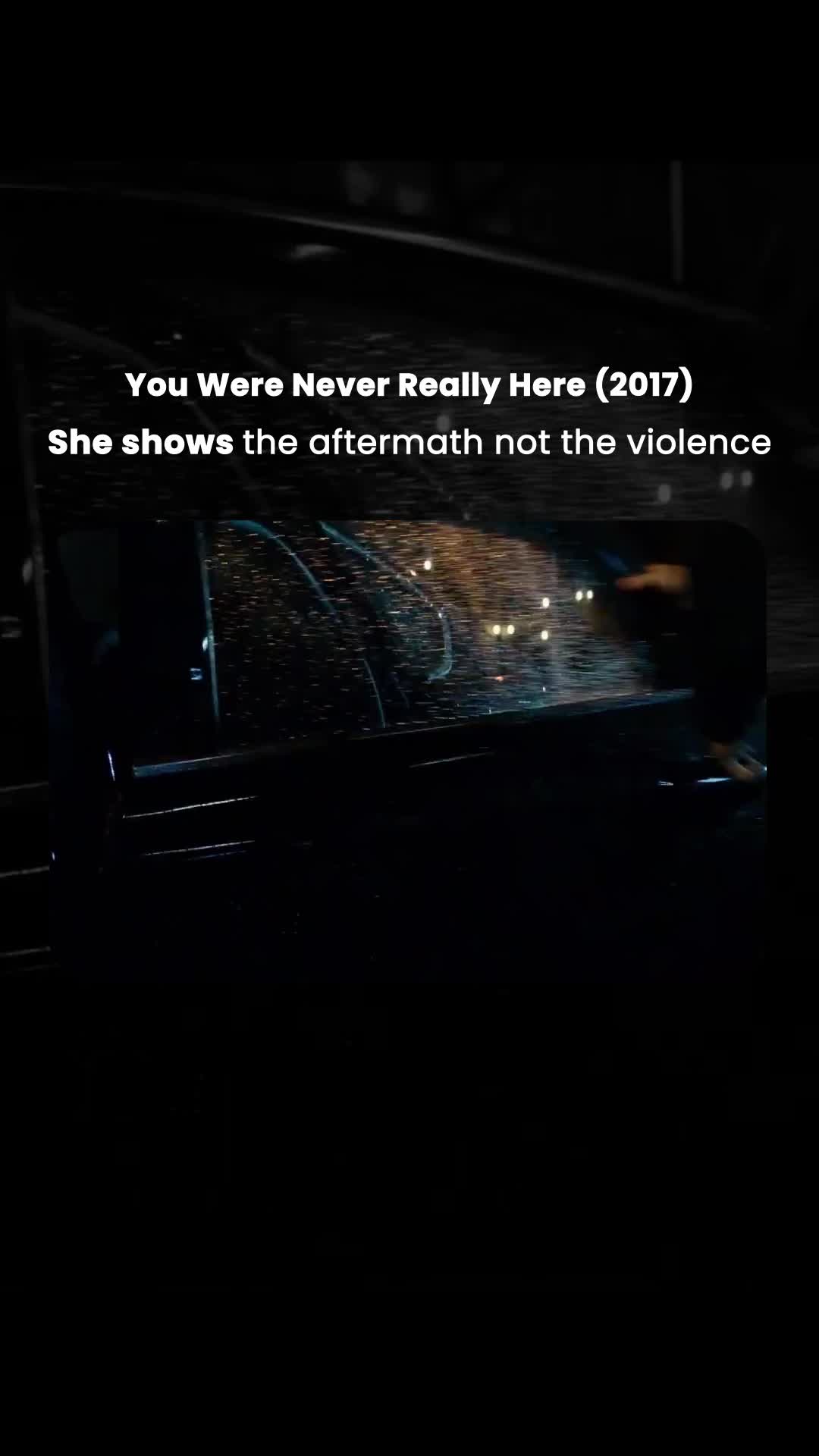
Five years after its premiere, Lynne Ramsay's You Were Never Really Here remains a stark, uncompromising vision that challenged the very fabric of the hitman genre. It was a critical darling, earning accolades at the Cannes Film Festival for its star, Joaquin Phoenix, and Ramsay's sharp screenplay. More than just an awards contender, it was a lean, mean cinematic machine, delivering profound emotional impact with an efficiency that few films achieve, especially on its modest budget.
The film, clocking in at a brisk 89 minutes, was produced for an estimated $9 million. This lean financial footprint allowed Ramsay significant creative control, resulting in a project that feels intensely personal and uncompromised. Its impact far outstripped its production cost, demonstrating that bold storytelling and directorial vision can triumph over blockbuster budgets. The critical reception at Cannes was immediate and strong, with Phoenix securing the Best Actor award and Ramsay sharing the Best Screenplay honor. This recognition amplified its standing as a significant independent achievement, proving that art house sensibilities can still capture major festival attention.
Deconstructing Violence and Performance
Ramsay's approach to depicting violence is central to the film's power. Rather than graphic depictions, she opts for implication. The camera frequently cuts away from the moment of impact, focusing instead on the aftermath or the protagonist's silent contemplation before or after a brutal act. We see Joaquin Phoenix's character, Joe, enter a room, and the next shot often reveals the violent consequences without explicit gore. This technique forces the audience to confront the psychological toll of violence rather than its spectacle. An exception to this rule, the security camera sequence, offers a chilling inversion: we witness the killing unfold visually, but the sound is stripped away, creating a disorienting, voyeuristic experience that underscores Joe's detachment and the pervasive nature of his world.
Joaquin Phoenix's portrayal of Joe is a masterclass in physical and emotional transformation. He meticulously prepared for the role, undertaking a physical regimen that allowed his body to convey both menace and fragility. He lost significant weight while building muscle, crafting a physique that reads as both a weapon and a canvas for trauma. Phoenix himself noted that he aimed to embody the immense weight his character carried, translating into every movement being slower, heavier, and burdened. This internal and external commitment earned him his Cannes Best Actor award and cemented his reputation as one of his generation's most compelling performers. His performance, combined with Thomas Townend's intimate cinematography, ensures that Joe's fractured psyche is always at the forefront, even in moments of extreme action.
Sonic Landscapes and Genre Subversion
The film's sonic landscape, orchestrated by Jonny Greenwood, is another critical component of its disquieting atmosphere. Greenwood's score is not merely background music; it is an active participant in Joe's psychological journey. His compositions often blend discordant electronic textures with classical elements, creating a sense of unease and dread that mirrors Joe's internal turmoil. The score amplifies the film's themes of trauma and memory, often feeling like a direct extension of Joe's fragmented thoughts rather than an external commentary. Greenwood's work here, much like his collaborations with Paul Thomas Anderson, is instantly recognizable and deeply integral to the film's identity, providing a haunting counterpoint to the visual minimalism.
At its core, You Were Never Really Here is a brutal deconstruction of the hitman genre. Ramsay strips away the cool professionalism, the slick action sequences, and the moral ambiguity often romanticized in such narratives. What remains is the raw, unvarnished trauma of a man haunted by his past and trapped by his violent present. The film refuses to glorify Joe's actions, instead focusing on the psychological scars and the relentless cycle of violence he inhabits. It's a character study masquerading as a thriller, an unflinching examination of a broken man attempting to save others while barely holding himself together. This unflinching honesty, combined with its compact runtime and expert craftsmanship, ensures its enduring power and relevance.
Ultimately, You Were Never Really Here is a testament to the potency of focused, intelligent filmmaking. It proves that a strong vision, a committed lead, and a modest budget can yield a film with profound artistic and emotional resonance. Ramsay's ability to evoke so much with so little, to convey the weight of a character's entire world in fleeting glances and implied violence, solidifies her as a singular voice in contemporary cinema. The film did not just win awards; it redefined expectations for what a genre piece could be, leaving audiences disturbed, provoked, and deeply moved.
Related reading: Reflections: Twenty-One Cinematographers at Work.